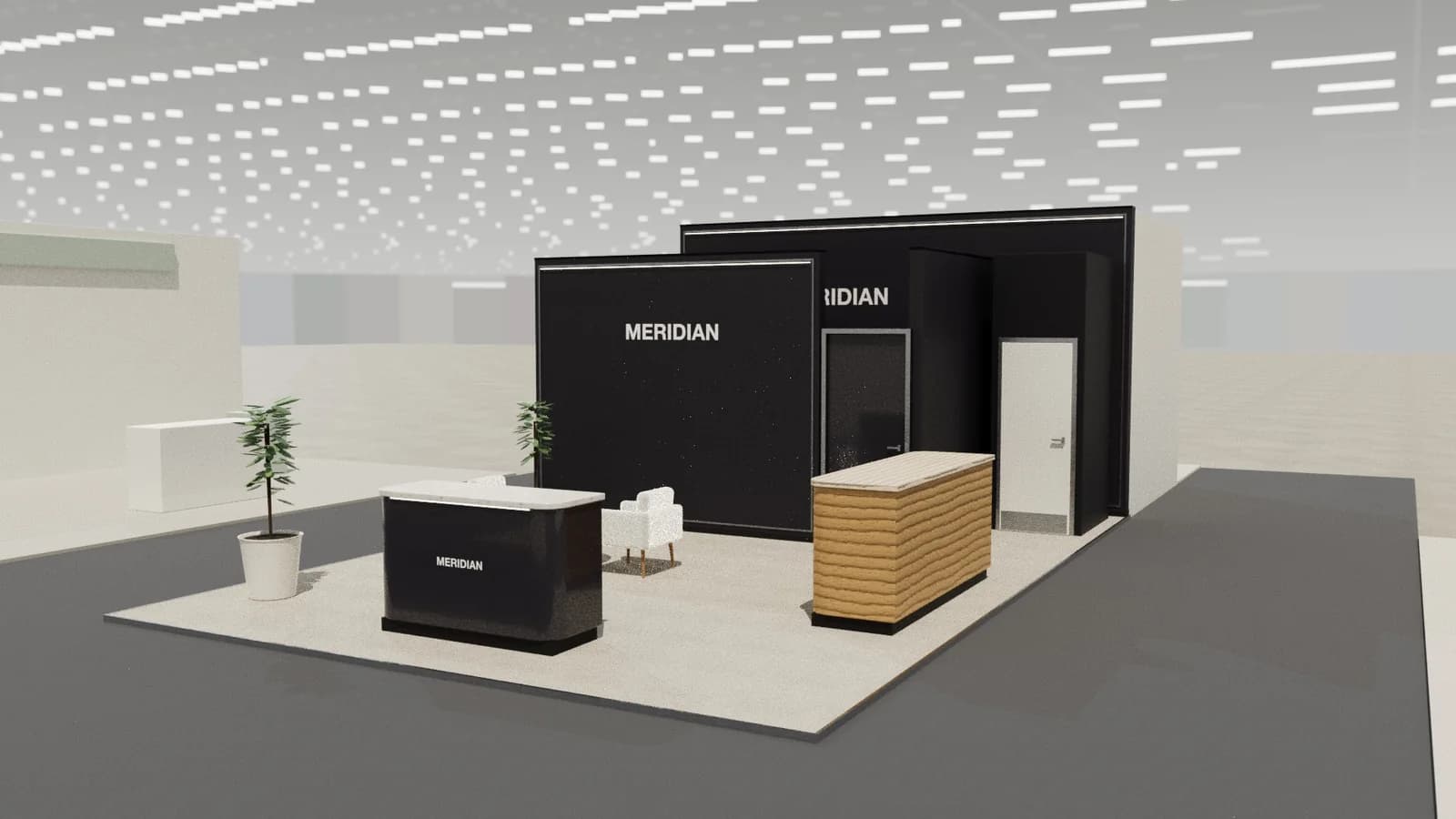
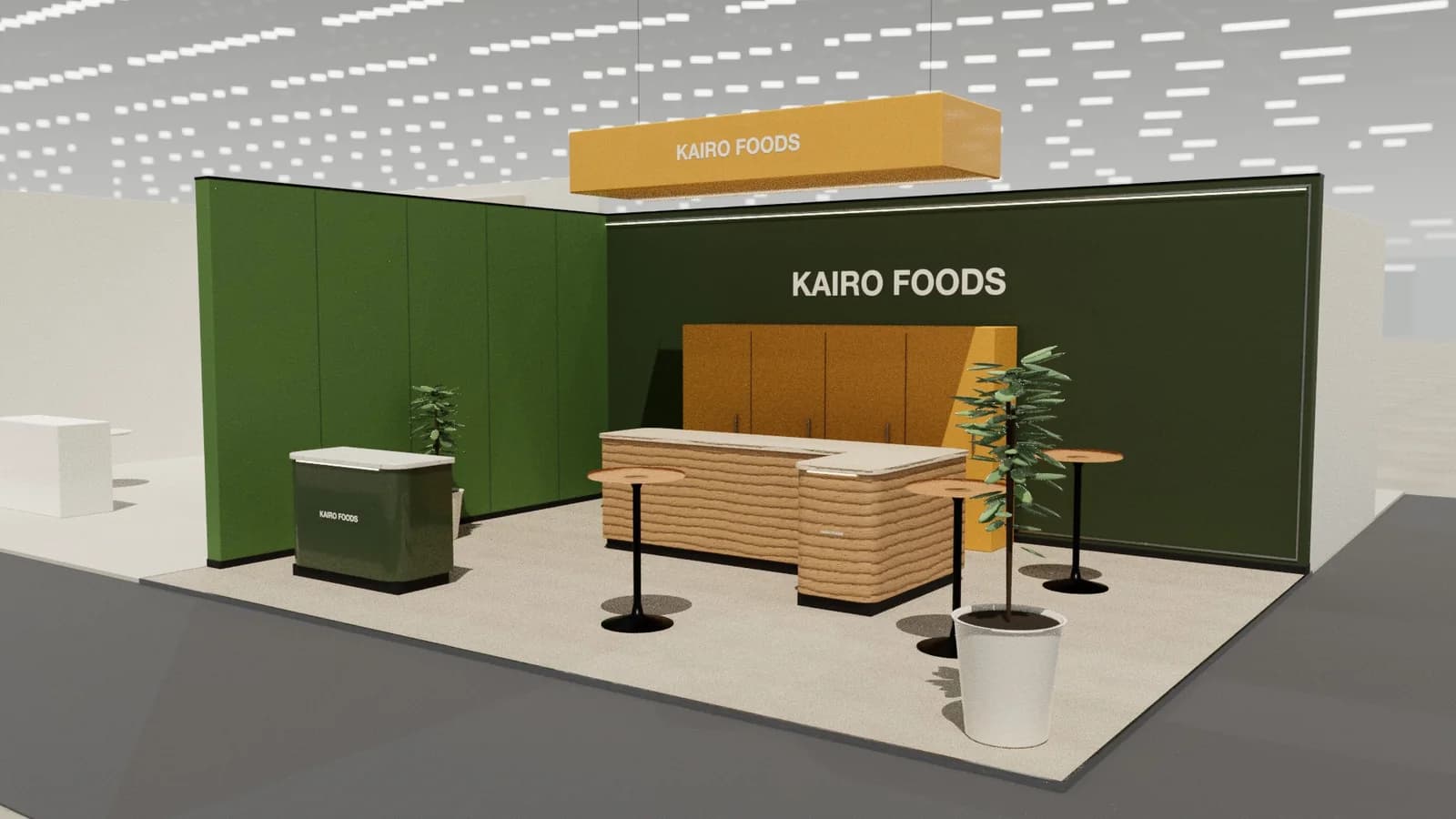
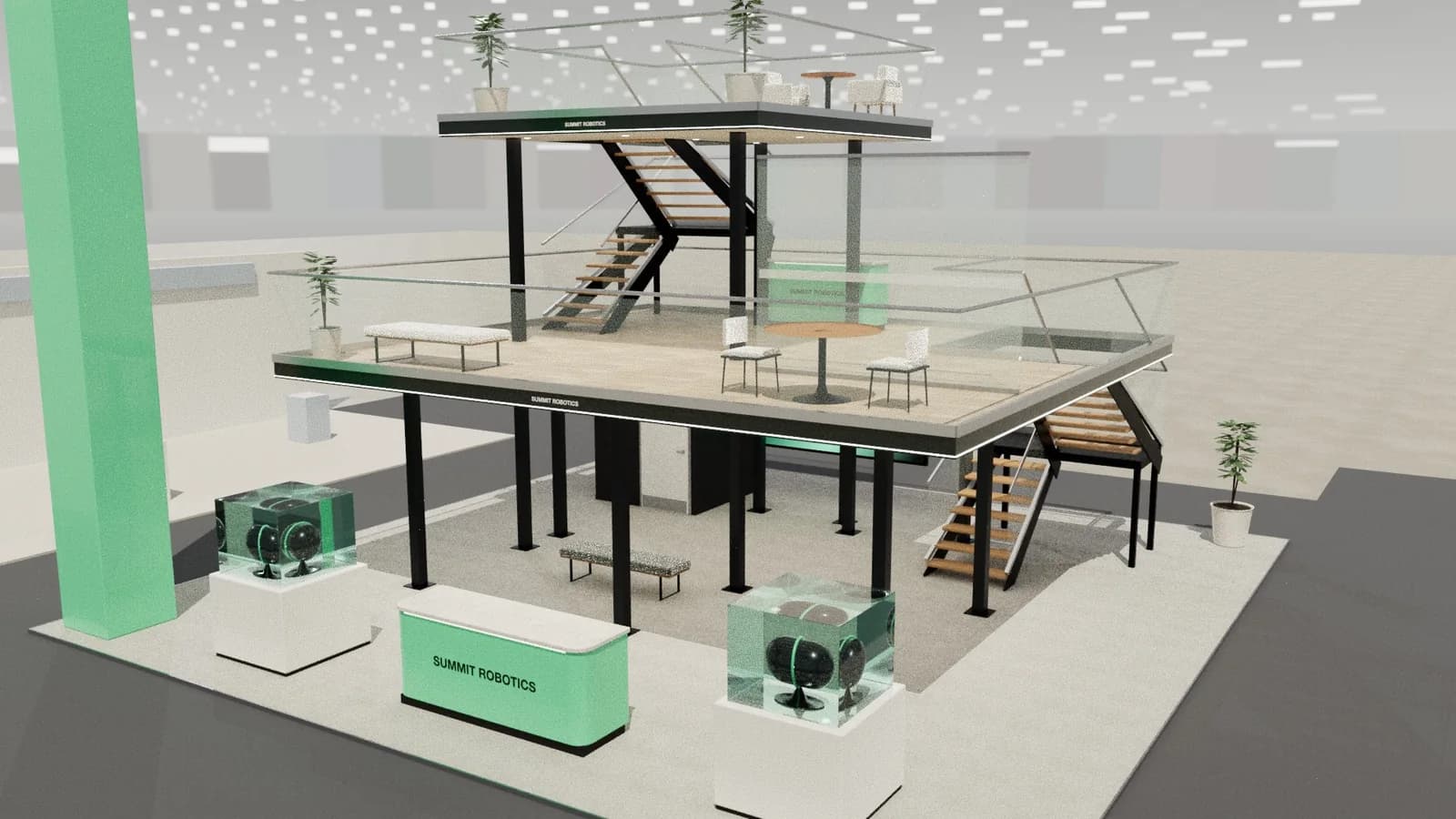
In short
Electronics booths win engineers with working hardware. Show boards running, give people a real measurement to look at, and organise by application rather than part number. Keep application engineers on the floor, and keep a closed room for roadmap talks. Small products need big context, so use magnified views and live data.
Key points
- Application demos, Bench, Distributor desk, Closed room are the core zones.
- Avoid: part-number walls.
- Avoid: demos that depend on hall Wi-Fi.
- Avoid: no engineers on the stand.
- See the template and trade show guides linked below for electronics and semiconductor companies.
Who visits and what they want
Hardware design engineers, purchasers, distributors and application specialists.
What to show
Evaluation boards, reference designs, modules, test equipment and development tools.
Zones for a electronics and semiconductor stand
| Zone | Purpose | Where it goes |
|---|---|---|
| Application demos | Working systems | Front |
| Bench | Hands-on evaluation | Centre |
| Distributor desk | Stock and pricing | Side |
| Closed room | NDA roadmap talks | Rear |
On a 3 × 3 m stand, keep the first two zones and book meetings elsewhere. From about 36 m² every zone fits; see stand sizes for what fits at each size.
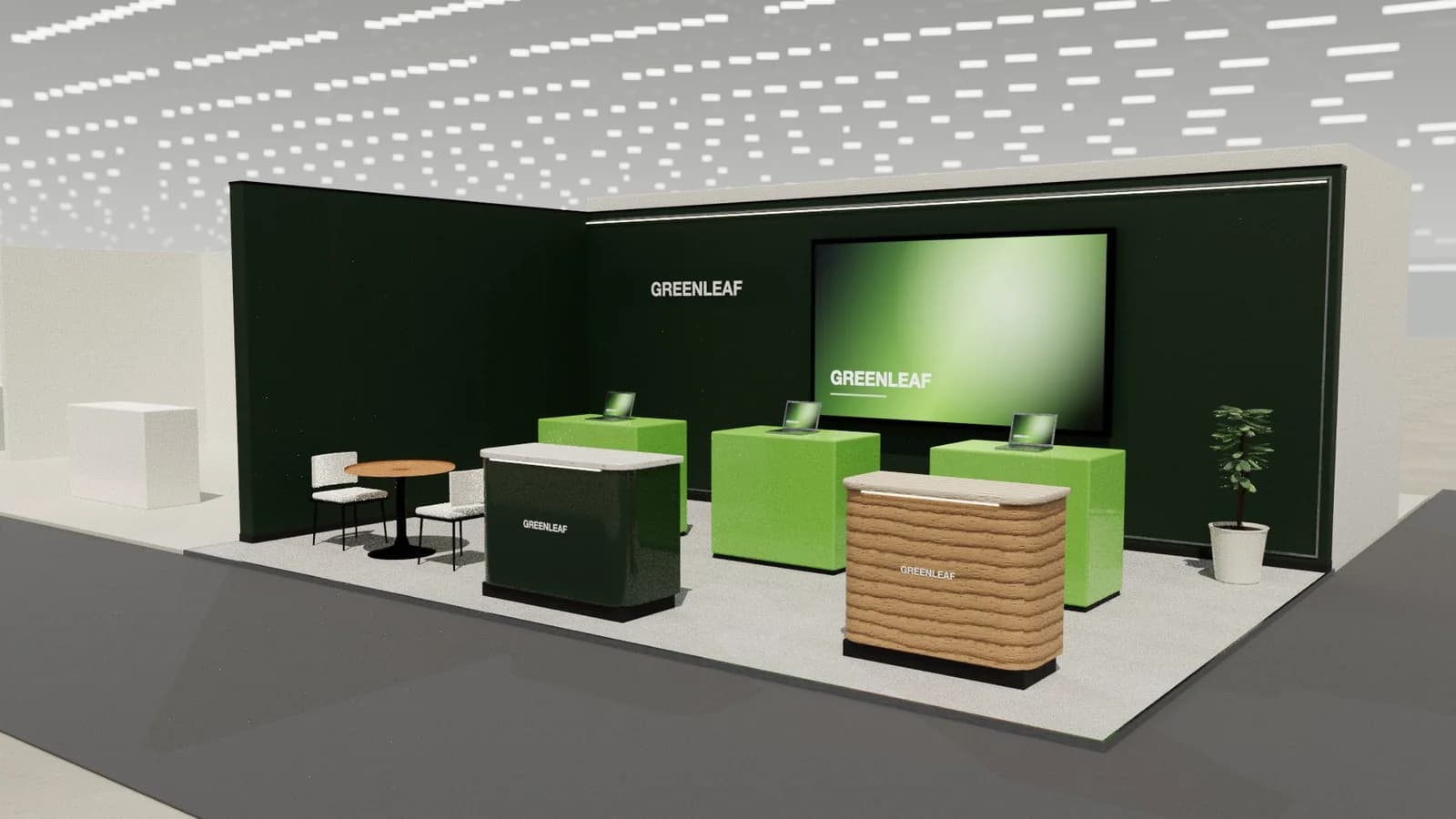
Materials, lighting and graphics
Precise and technical. Thin lines of light, dark surfaces and large macro images help tiny products read at a distance.
For detail on light levels and colour rendering, see stand lighting; for wall graphics, see graphics and branding.
Starting conversations and capturing leads
Ask what the engineer is designing, then go to the right demo. Offer an evaluation kit if the project is real.
Rules and practicalities
Radio and wireless demos may need licensing or shielding. Protect boards against static.
Venue rules on height, open sides, fire safety and services still apply; see venue approval.
Common mistakes
- Part-number walls.
- Demos that depend on hall Wi-Fi.
- No engineers on the stand.
Trade shows for electronics and semiconductor companies
Show-specific guides: electronica, embedded world. For more, see stand design by trade show.
Frequently asked questions
01How do I make a small component visible?
Use macro imagery, a live camera or a big screen next to the real part.
02Do I need an NDA room?
If you show roadmaps, yes. A closed room with a door is standard for larger stands.
03What size stand does a electronics and semiconductor exhibitor need?
Size to the activities: about 9 m² for one conversation point, 18–36 m² to add demos and a meeting table, and 50 m² or more for meeting rooms and hospitality. See [stand sizes](/guides/topics/exhibition-stand-sizes).
04Can AI design a electronics and semiconductor booth?
AI can produce a complete concept quickly: [Studio](/ai-booth-designer) lays out the zones above at real scale and renders the result. A stand builder still checks structure, services and compliance before building.
Put it into practice
From a client brief to a 3D stand concept in minutes
An editable 3D exhibition stand concept from a written brief and the brand's website, at your exact size.
Guidance here reflects common practice. Venues, organisers and countries set their own rules: always check the exhibitor manual and work with a qualified stand builder and engineer for structures.