In short
Exhibition stand lighting should make the stand brighter than the aisle, light the brand and the hero product most, and render colours accurately. Use LED with a colour rendering index (CRI) of 90 or more, a neutral 3000–4000 K colour temperature, spotlights on products, backlit graphics for the brand, and soft indirect light for meeting areas.
Key points
- Halls are already bright; your stand needs to be brighter to stand out.
- Light the brand and hero product most; let the rest step down.
- CRI 90+ for products, food and skin tones.
- Backlit fabric graphics make the brand glow without spot glare.
- Plan power early: count fixtures, screens and appliances.
Brightness: a hierarchy, not a blanket
Exhibition halls are typically lit to a few hundred lux. To draw the eye, light the most important things on your stand well above that, and let secondary areas be calmer. A practical hierarchy:
| What | Relative brightness | How |
|---|---|---|
| Hero product | Brightest (3–5× ambient) | Narrow-beam spots, product lighting in plinths |
| Brand wall or header | Very bright | Backlit fabric lightbox or lit letters |
| Demo and counters | Bright | Spots and LED lines under worktop lips |
| Circulation | Ambient | Overhead wash |
| Meeting areas | Softer, warm | Indirect light, pendants, no glare |
Colour temperature and colour rendering
- 3000 K (warm white) feels hospitable: lounges, food, luxury.
- 4000 K (neutral white) is crisp and technical: products, demos.
- Do not mix many colour temperatures; two at most, used deliberately.
- CRI 90+ makes products, packaging, food and skin look right. Cheap LEDs flatten colour.
Fixtures that work on stands
- Track spotlights on truss or wall arms: flexible, aimable at products.
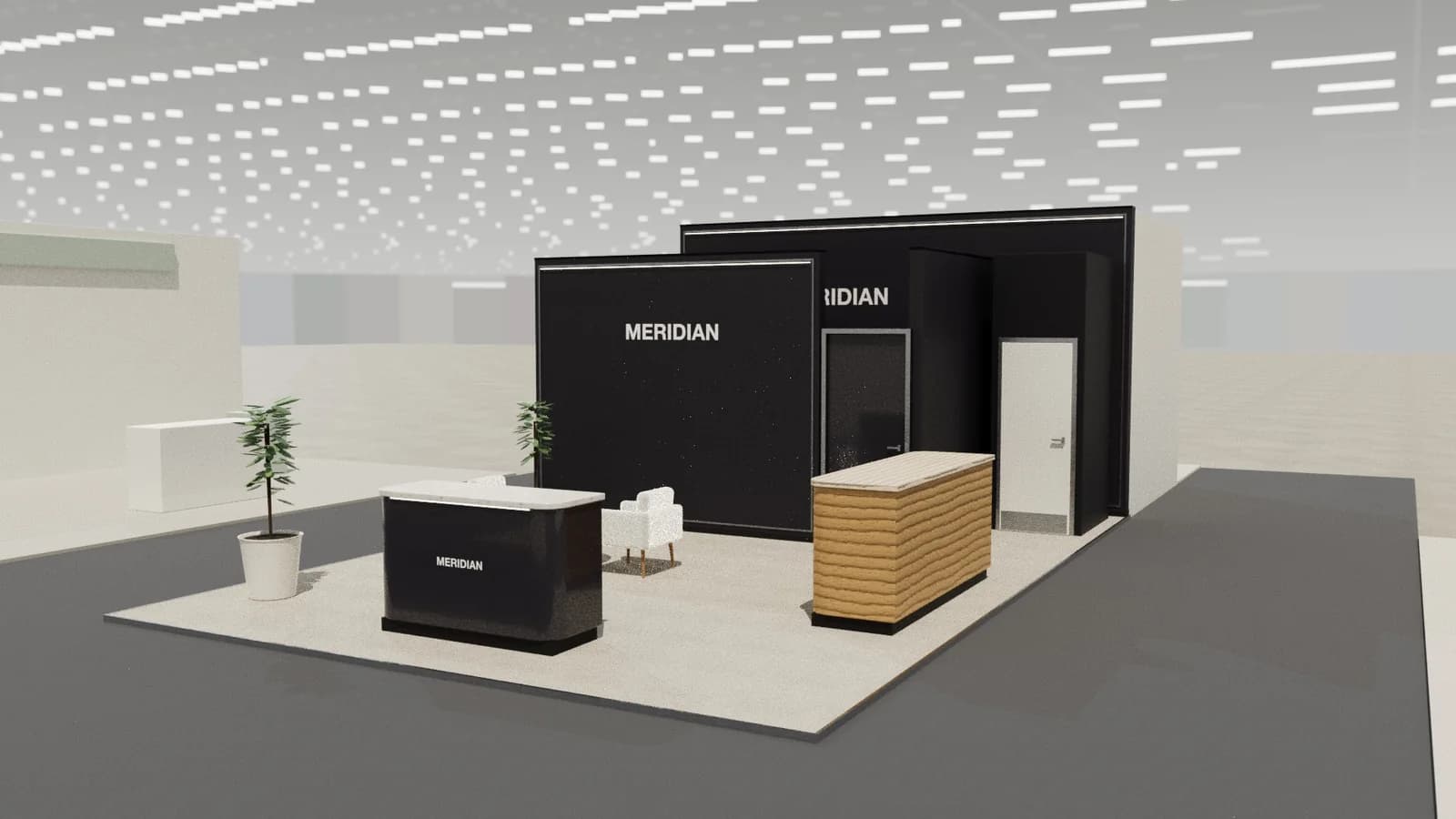
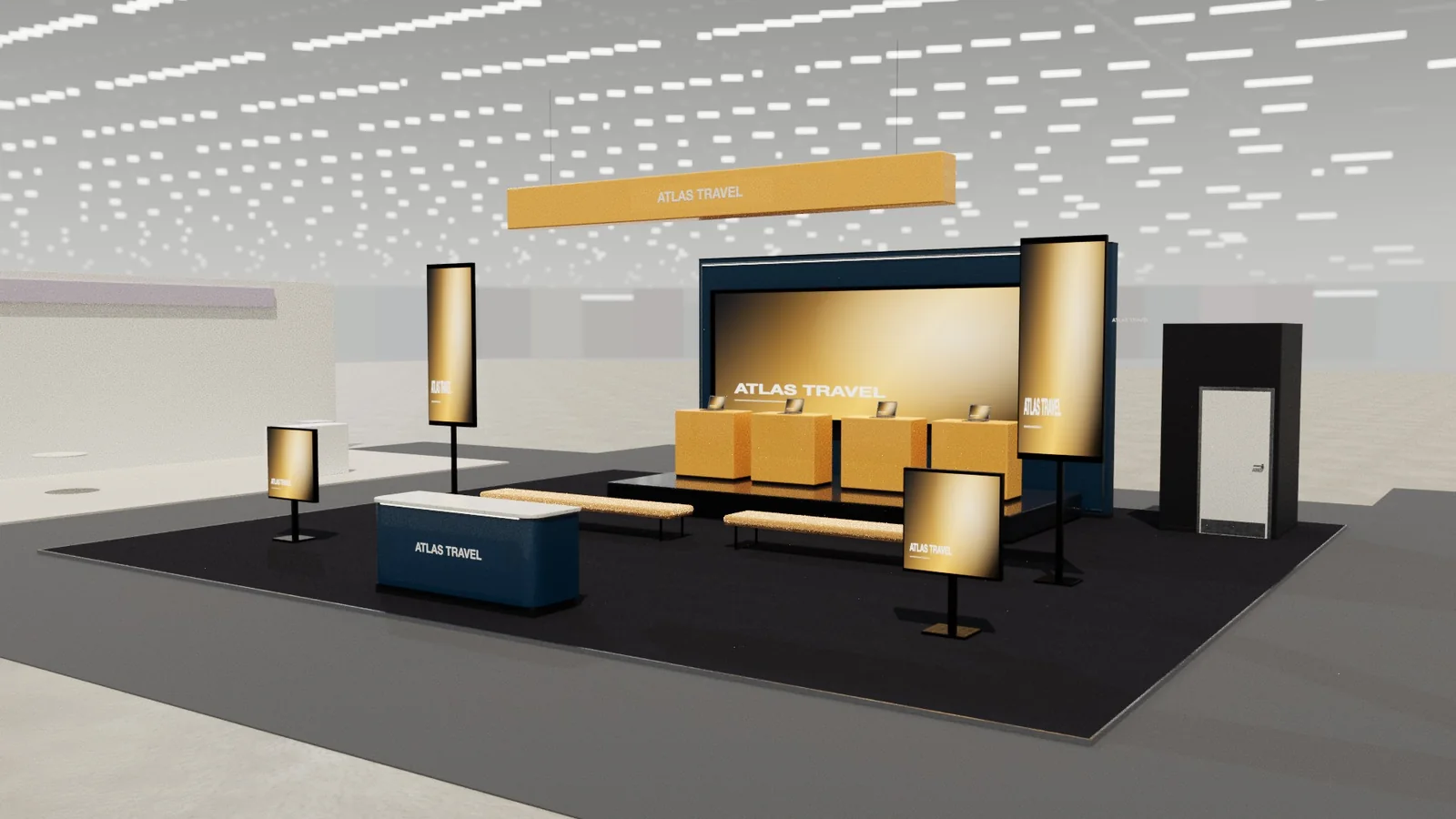
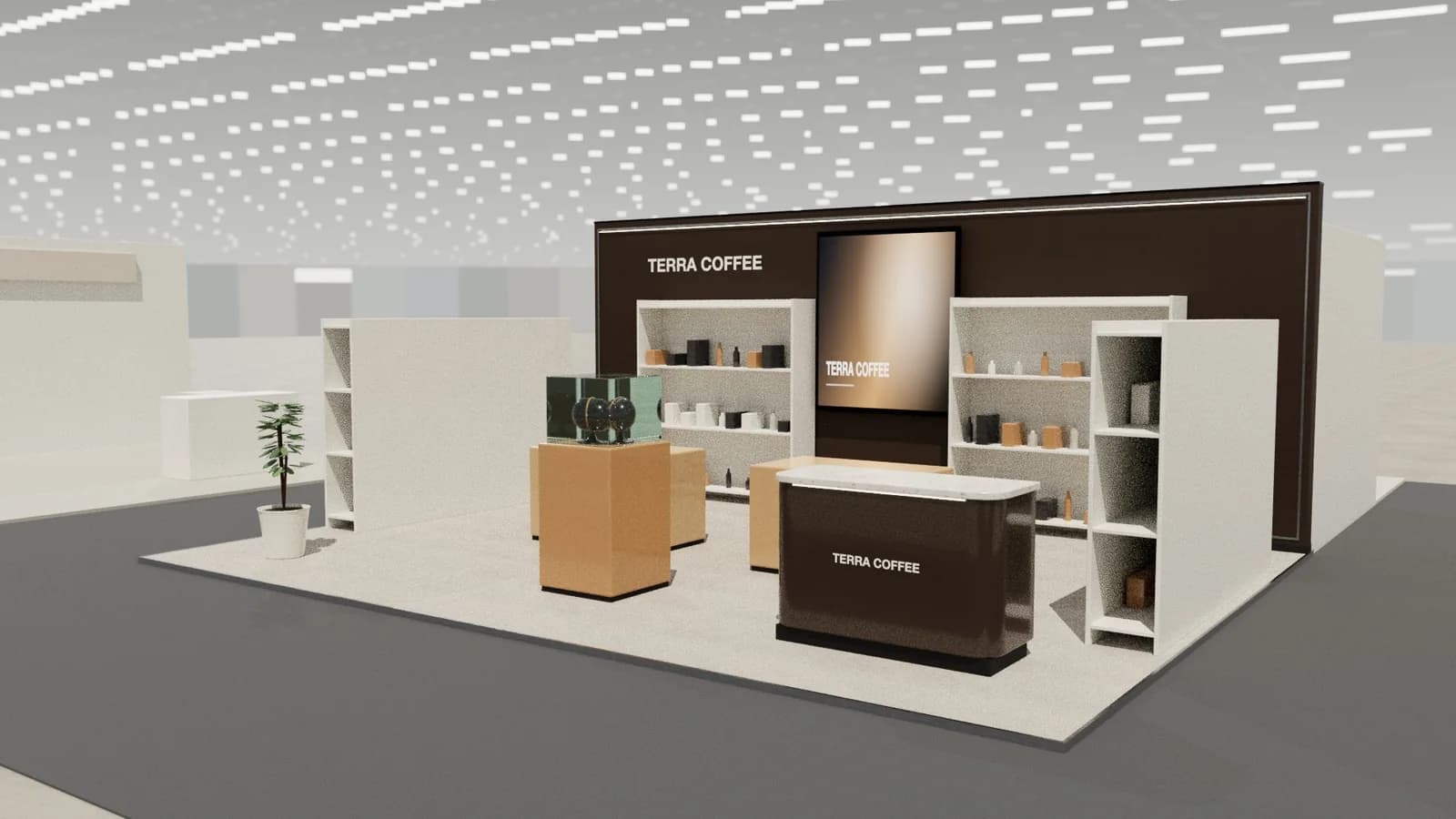
- Backlit fabric lightboxes: the most effective way to make a brand wall glow evenly.
- LED lines in shadow gaps, under counter lips and around plinths: they define edges and look premium.
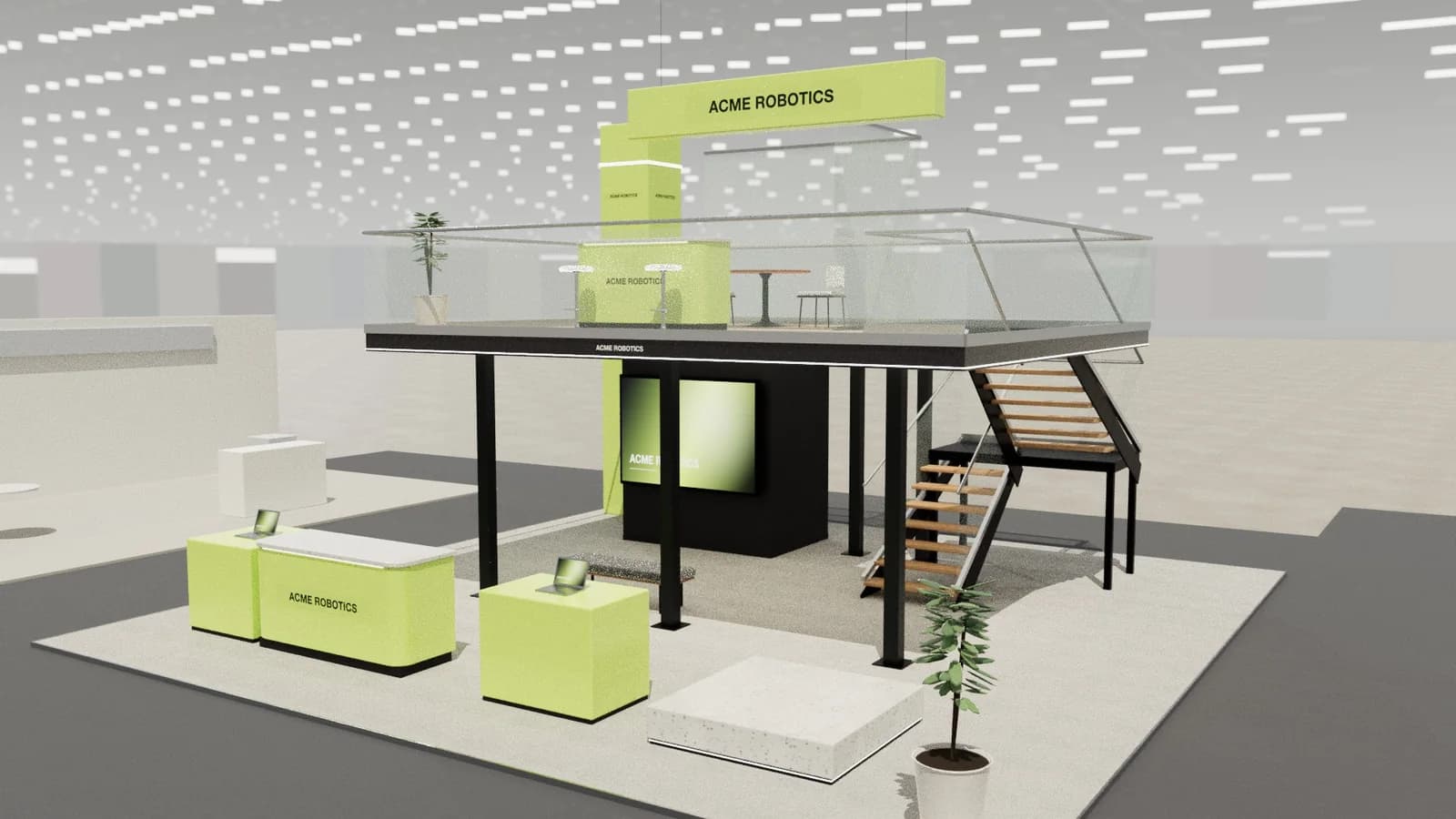
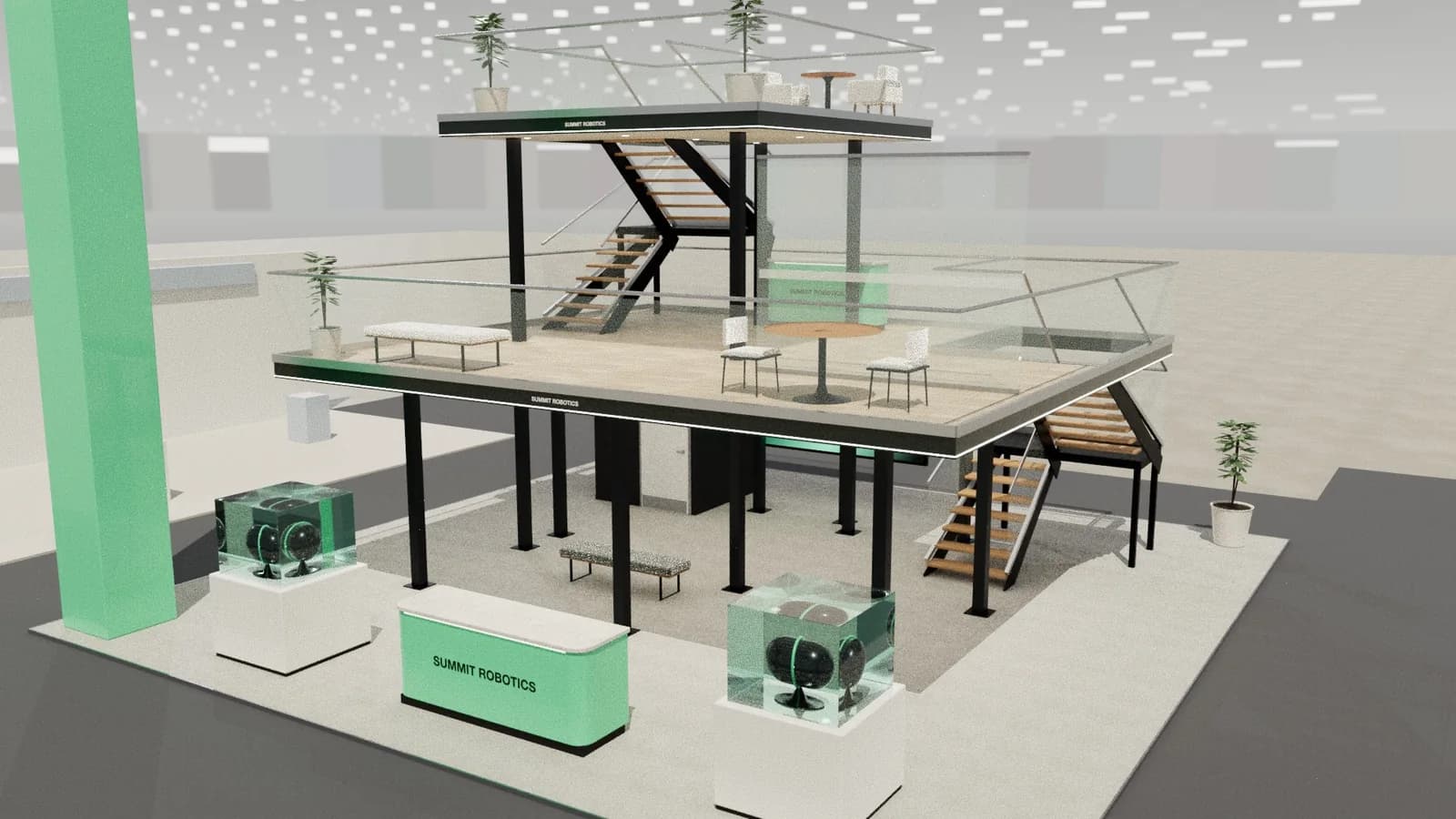
- Downlights in ceilings and canopies: give a stand a room-like feel; essential under double-deck floors.
- Pendants over tables in meeting and hospitality zones.
Plan the power
Order electrics from the organiser with a socket and lighting plan. Add up the load of every light, screen, LED wall, fridge and coffee machine with headroom; LED walls and kitchens are the big consumers. Many venues require a qualified electrician to connect stand wiring and test it.
Common mistakes
- Spotlights aimed at visitors' eyes instead of the product.
- Reflective surfaces (gloss, glass) catching glare from the hall lights.
- Screens washed out by spots pointed at them.
- Dark corners under decks and canopies.
- Mixed warm and cold lights that make the brand colour look off.
Lighting by zone
| Zone | Approach |
|---|---|
| Brand wall | Backlit fabric or wall-washers; even, no hot spots |
| Products and plinths | Narrow spots from the front at about 30°, plus integrated LED lines |
| Counters | LED under the top lip and a spot on the logo panel |
| Screens | Keep spots off the screen face; light the surround instead |
| Meeting rooms | Warm, indirect light and a pendant over the table |
| Under decks and canopies | Downlights so the space does not read as a dark hole |
Aiming and angles
Spotlights aimed at about 30 degrees from vertical light the face of a product without glaring into visitors' eyes. Aim from the front and slightly to the side so shadows fall behind the object. For glossy products, move the light until the reflection falls outside the visitor's sightline from the aisle. Check this in the 3D model at eye height before ordering fixtures.
Frequently asked questions
01What colour temperature is best for an exhibition stand?
Neutral 4000 K for technical products and demos, warm 3000 K for hospitality, food and luxury. Avoid mixing several temperatures.
02What CRI should stand lighting have?
90 or higher, especially for products, packaging, cosmetics and food, so colours look true.
03Are lightboxes worth it?
Yes, for the brand wall. Backlit fabric gives even, glowing graphics that read from far down the aisle and photograph well.
04How much power does a stand need?
Add up every fixture, screen and appliance with headroom. LED walls, kitchens and fridges dominate; order power from the organiser with a plan.
Put it into practice
Booth renders that start from the brief, not a blank prompt
Photoreal exhibition booth renders made from a dimension-controlled 3D model, with the brand's colours and logo.
Guidance here reflects common practice. Venues, organisers and countries set their own rules: always check the exhibitor manual and work with a qualified stand builder and engineer for structures.