In short
Automotive stands are built around the vehicle: a raised platform or turntable, lighting that sculpts its form, clear viewing around it, and space for people to sit inside or examine details. Plan floor loads, how the vehicle enters the hall and the stand, and hospitality for buyers and press. Premium, reflective materials need careful lighting to avoid glare.
Key points
- Vehicles on low platforms or turntables, with clear space around.
- Lighting sculpts the bodywork; avoid hot spots and glare.
- Check floor loads and the route for the vehicle into the stand.
- Hospitality and meeting areas for buyers and press.
- Reflective floors and finishes need lighting planned with them.
Showing the vehicle
- A low platform (with bevelled edges) lifts the car and defines its space.
- Allow at least 1–1.5 m clear around the vehicle for viewing and opening doors.
- Turntables need power, space for rotation and safe barriers or edges.
Lighting cars
Car paint is a mirror. Large, soft light sources overhead (light boxes or diffused ceilings) create long, flowing reflections that show the form; small spots create harsh highlights. See stand lighting.
Logistics
| Topic | Check |
|---|---|
| Floor load | Hall floor and stand platform rated for the vehicle |
| Access | Route and doors into the hall; when the vehicle enters during build |
| Fuel and batteries | Venue rules on fuel levels and battery disconnection |
| Security | Keys, barriers and overnight security |
Beyond the vehicle
- Configurators on screens or tablets so visitors explore options.
- Detail displays for interiors, batteries, wheels or technology.
- A hospitality lounge for buyers, dealers and press.
- A stage for reveals and press conferences on major show days.
Layout
Vehicles are the stars, so give them the most visible positions facing the main aisles, with hospitality and meeting rooms behind or upstairs on a double-deck. Keep circulation generous around cars so visitors can walk all the way round and open doors.
Floors and finishes
Floors under vehicles are often polished or glossy to reflect the car, which makes lighting even more important; matte floors are easier to light but less dramatic. Use durable finishes where visitors step in and out of vehicles, and protect platform edges. Neutral, premium materials (dark timber, stone-effect, brushed metal) let the vehicle colour lead.
Frequently asked questions
01How do cars get onto exhibition stands?
Usually driven or pushed in during build-up through large hall doors, often before the stand walls close off access. The organiser sets the timing.
02Do vehicles on stands need empty fuel tanks?
Many venues limit fuel and require batteries to be disconnected. Check the exhibitor manual.
03How should cars be lit at shows?
With large, soft overhead light sources that give smooth reflections, rather than many small spotlights.
04What platform height suits a car display?
Low platforms of a few centimetres to around 20 cm are common, with bevelled edges or ramps.
Put it into practice
Booth renders that start from the brief, not a blank prompt
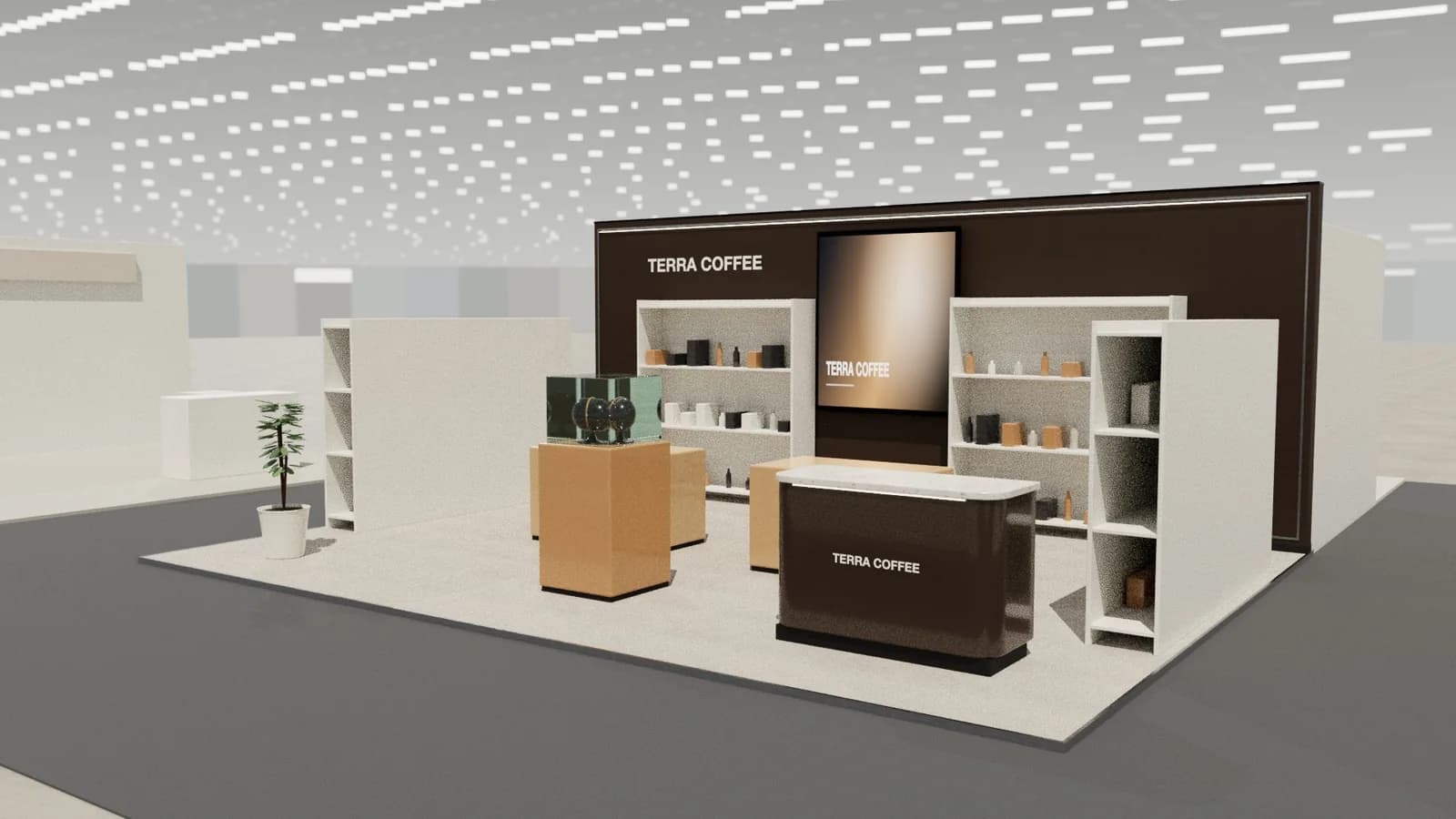
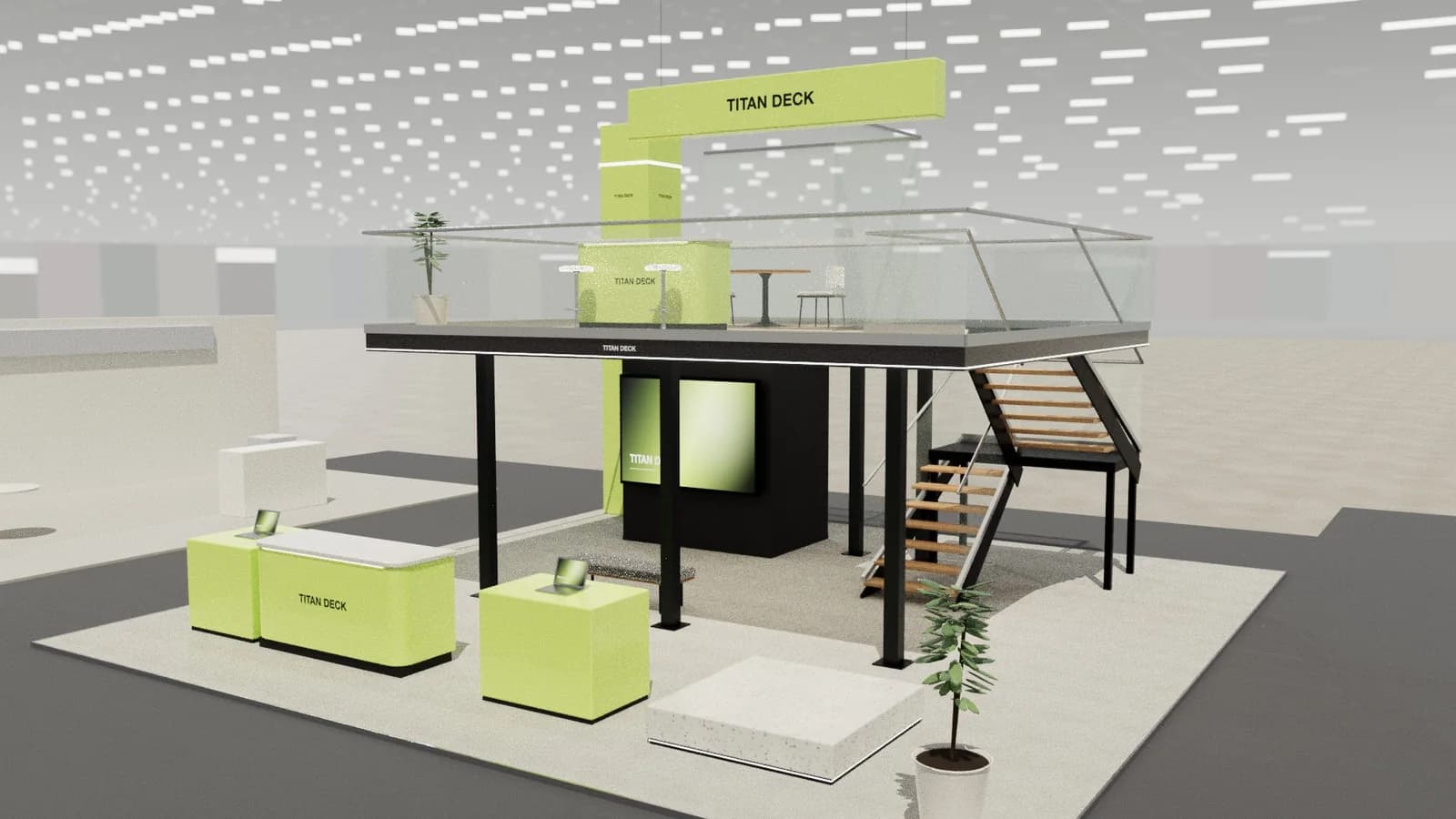
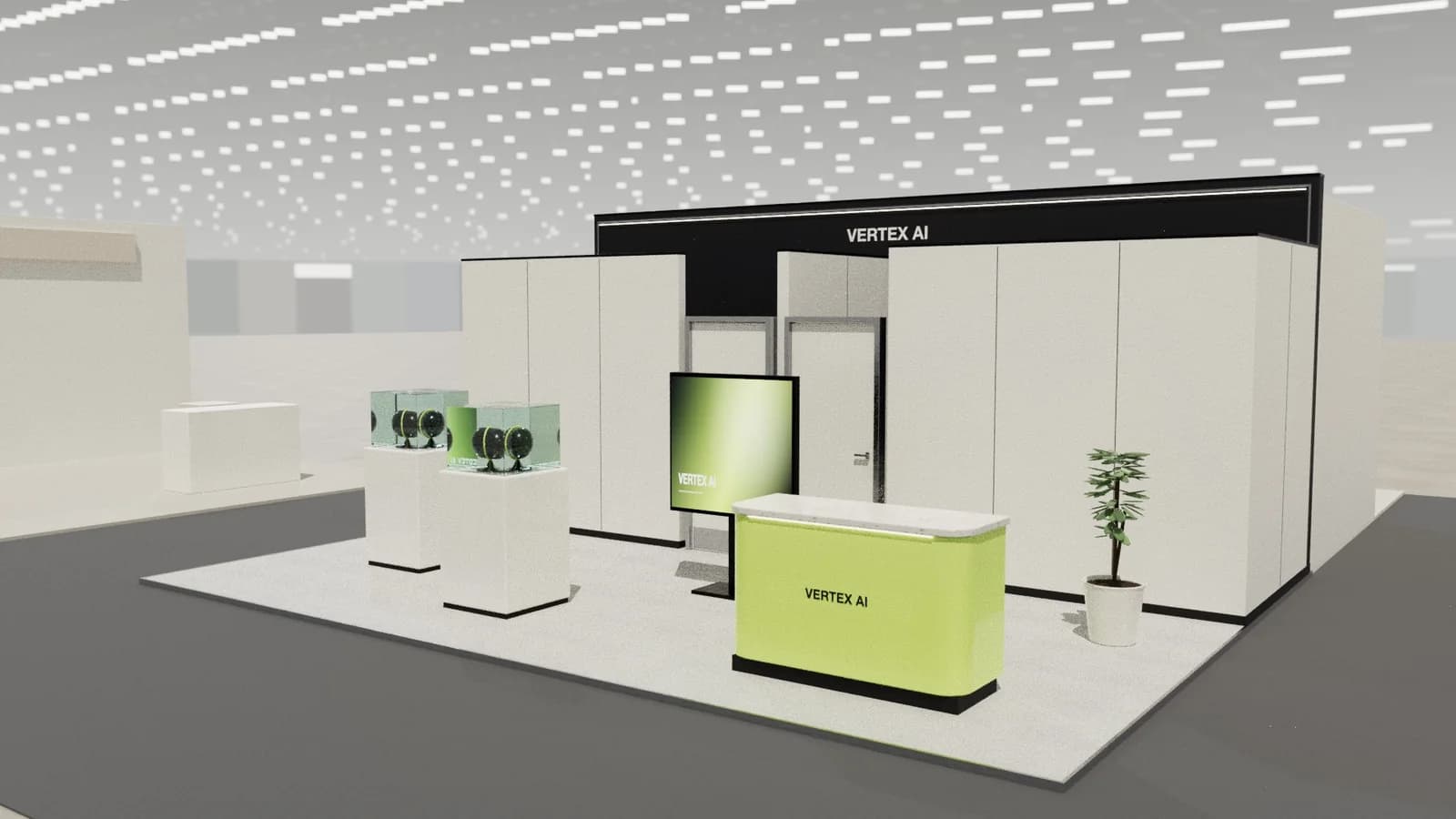
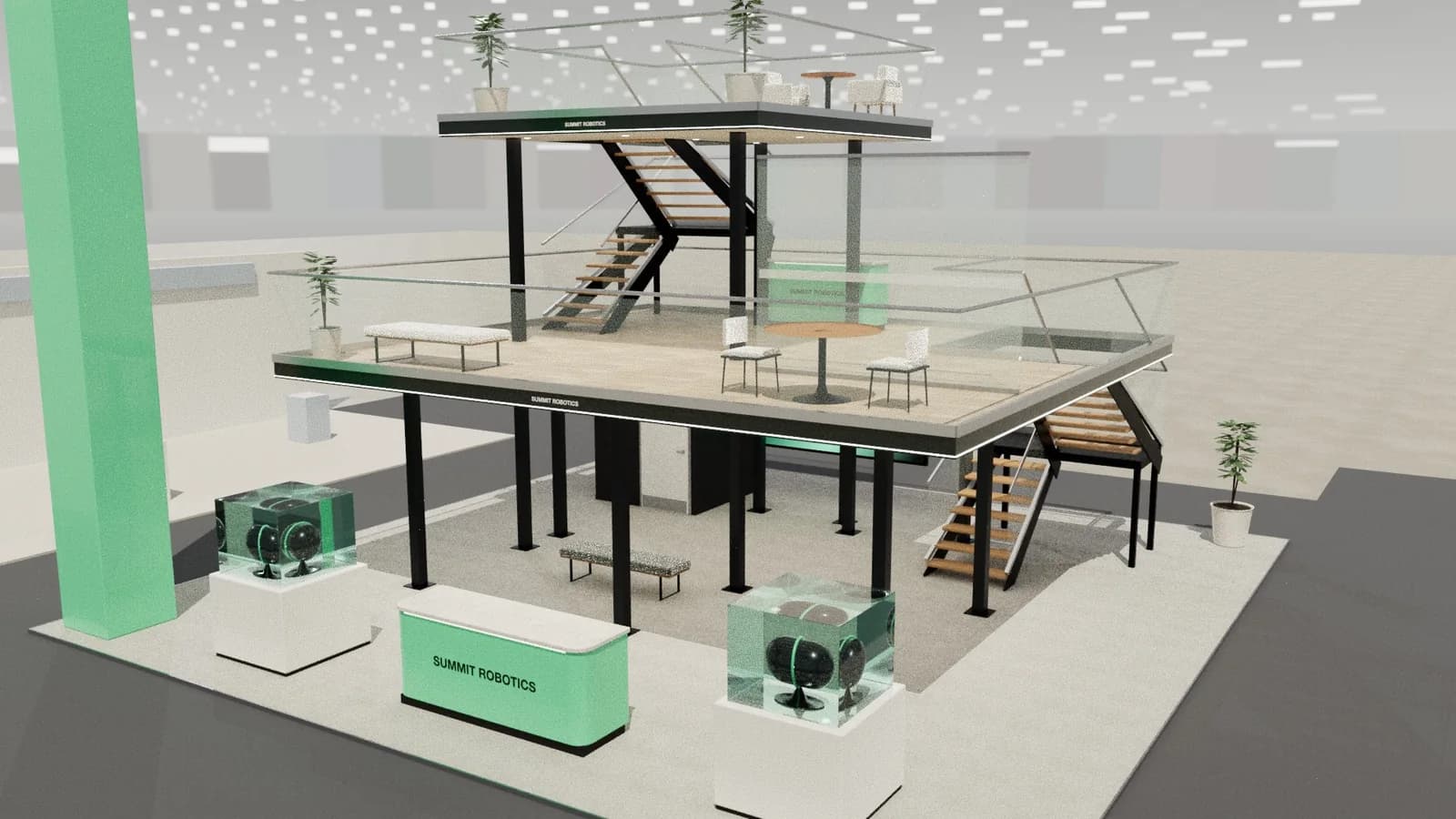
Photoreal exhibition booth renders made from a dimension-controlled 3D model, with the brand's colours and logo.
Guidance here reflects common practice. Venues, organisers and countries set their own rules: always check the exhibitor manual and work with a qualified stand builder and engineer for structures.