In short
Exhibition stand flooring defines the stand's edge, hides cables and sets the tone. Options range from exhibition carpet (cheap, often single-use) to vinyl, laminate or wood-effect boards and reusable tiles, laid directly or on a raised floor. A raised floor of about 40–100 mm hides power and data but needs a ramp or bevel on open sides for step-free access.
Key points
- Flooring marks the boundary visitors cross: make it inviting.
- Raised floors hide cables; add ramps or bevels for access.
- Light floors brighten a stand; dark floors hide dirt but absorb light.
- Reusable tiles and boards beat single-use carpet for sustainability.
Options compared
| Floor | Look | Cost | Reuse |
|---|---|---|---|
| Exhibition carpet | Basic, many colours | Low | Usually single-use |
| Carpet tiles | Clean, replaceable | Low–medium | Reusable |
| Vinyl / printed vinyl | Any colour or print | Medium | Sometimes |
| Laminate / wood-effect | Warm, premium | Medium–high | Reusable on a system |
| Interlocking tiles | Technical, durable | Medium | Reusable |
| Real timber / stone-effect | Luxury | High | Depends |
Raised floors
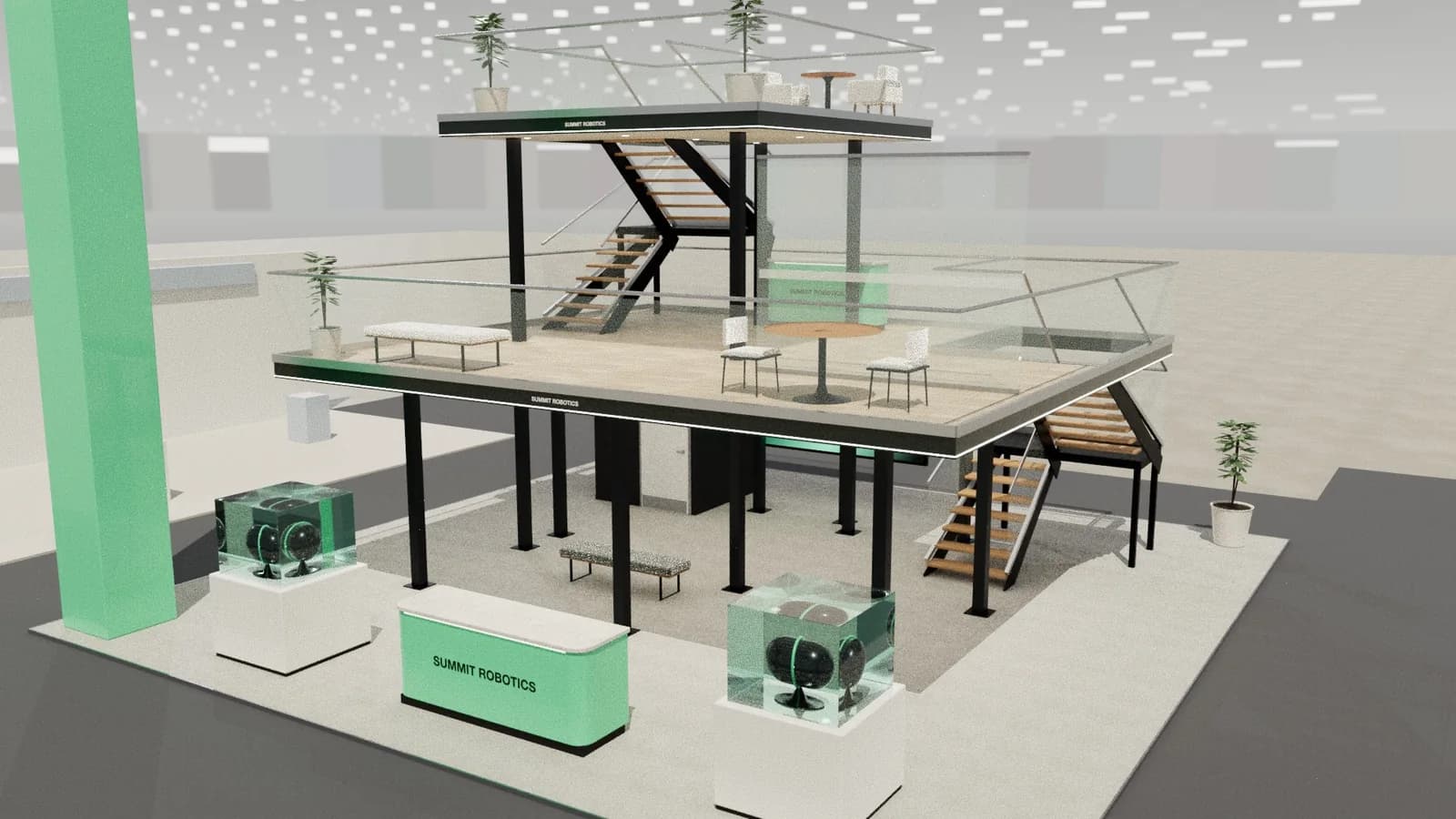
A raised floor hides power and data cables and gives a crisp edge. Keep it low (often 40–100 mm), and add a bevelled edge or a ramp on every open side. Tall platforms need more ramps and may need handrails. See accessible stands.
Choosing
- Comfort: staff stand all day; underlay or carpet tiles help.
- Light: light floors reflect light upwards and make small stands feel larger.
- Cleaning: food and drink stands need wipeable floors.
- Sustainability: prefer reusable systems, see sustainable stands.
Edges, ramps and transitions
Where the stand floor meets the hall floor, the edge should be clean and safe. Aluminium edge profiles or bevelled trims finish raised floors and remove trip hazards. Where floor finishes change on the stand (for example from vinyl to carpet in a lounge), use a flush transition strip so wheelchairs and trolleys roll over smoothly.
Planning cable routes
- Mark every socket, screen and counter on the plan before the floor is built.
- Run cables in channels under raised floors, or in cable covers if there is no raised floor.
- Bring power up inside counters and walls, never across open floor.
- Leave an access hatch near the distribution board.
Colour and pattern
Flooring colour changes how the whole stand feels. Light greys, oak tones and pale stone-effects open up small stands; dark floors feel premium but need more lighting. Patterns and printed vinyl can guide visitors along a route or mark zones, such as a different finish in a lounge. Keep it simple: the floor supports the brand, it should not compete with it.
Frequently asked questions
01Do I need a raised floor on my stand?
Not always. It is useful for hiding cables on larger stands; small stands often use carpet or vinyl laid directly.
02How high is a typical raised floor?
Often 40–100 mm, enough for cables, with bevels or ramps on open sides.
03Is exhibition carpet recyclable?
Some is, but much is landfilled after one show. Carpet tiles and reusable systems are better choices.
04What floor colour is best?
Light neutral floors make stands feel bright and open; dark floors look premium but absorb light, so plan more lighting.
Put it into practice
From a client brief to a 3D stand concept in minutes
An editable 3D exhibition stand concept from a written brief and the brand's website, at your exact size.
Guidance here reflects common practice. Venues, organisers and countries set their own rules: always check the exhibitor manual and work with a qualified stand builder and engineer for structures.