In short
Portable trade show displays trade size and finish for convenience: roller banners are cheapest and quickest, pop-up stands give a full back wall that one person can set up in minutes, and fabric frame systems look closest to a custom stand and scale from 3 × 3 m to larger spaces. Choose by how often you exhibit and the sizes you book.
Key points
- Roller banners: cheapest, for supporting messages, not the main wall.
- Pop-up stands: a full back wall in minutes, fits shell schemes.
- Fabric frame systems: closest to custom, reconfigurable.
- Portable counters with storage complete the kit.
- Buy for the sizes you book most often.
The options compared
| Display | Typical size | Set-up | Best for |
|---|---|---|---|
| Roller banner | About 0.85 × 2 m | Minutes | Supporting messages, small events |
| Pop-up stand | Back walls for 3 m wide spaces | 15–30 minutes, one person | Shell schemes and regular small shows |
| Fabric frame system | 3 × 3 m and up, reconfigurable | One to a few hours | Space-only and varying sizes |
| Portable counter | About 1 m | Minutes | Every stand |
How to choose
- A few small shows a year: pop-up back wall, portable counter and one banner.
- Many shows of different sizes: a fabric frame system that reconfigures.
- Events and conferences: roller banners and a table cover.
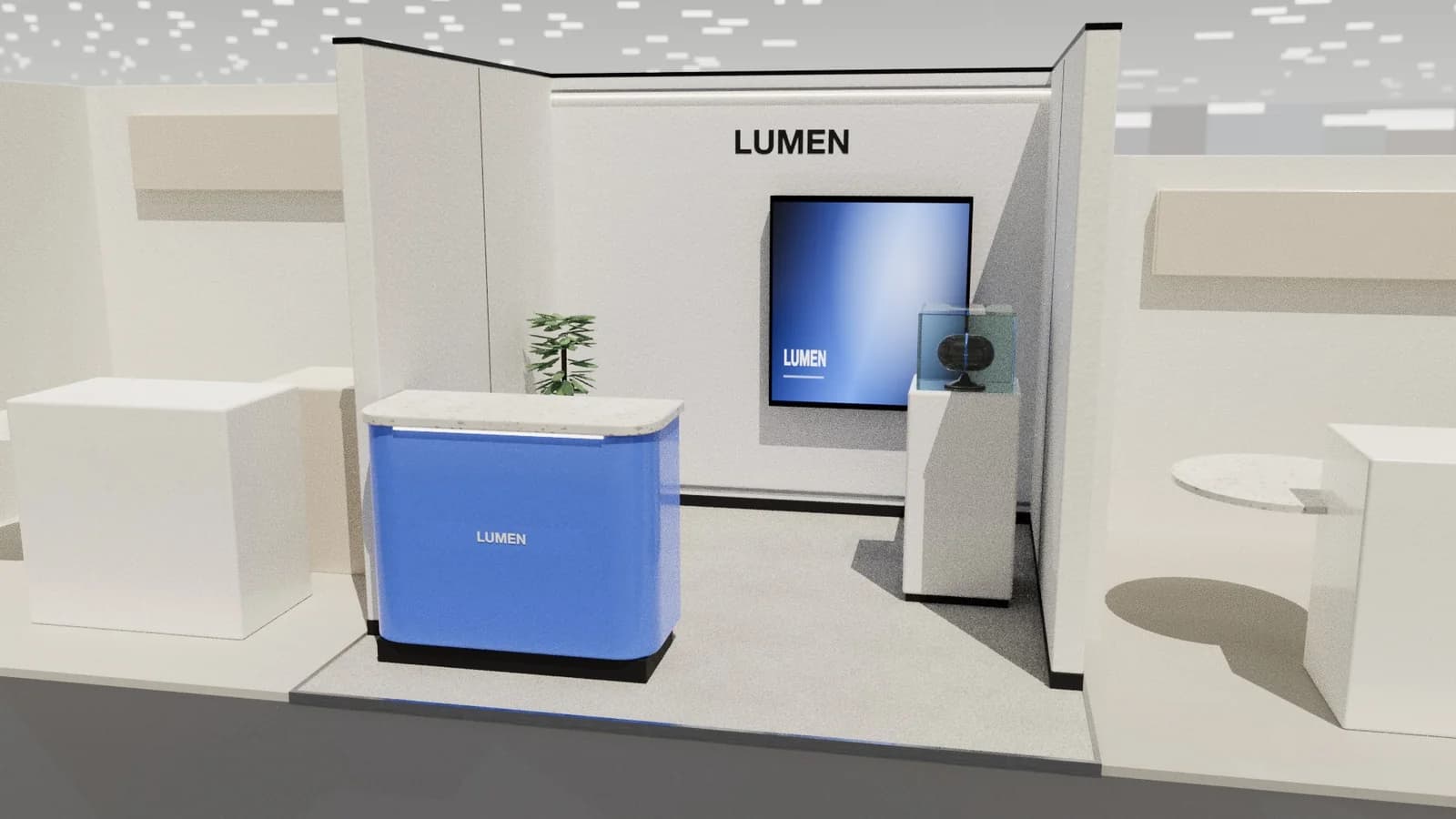
- Shell scheme only: fabric graphics that fit the shell panels may be enough.
Getting a portable display right
- Check the organiser's shell wall height; many pop-ups are taller.
- Avoid dates and stand numbers on graphics so they last.
- Pack lighting with the kit; portable displays look flat without it.
- Keep spare graphics and repair parts in the case.
Plan before you buy
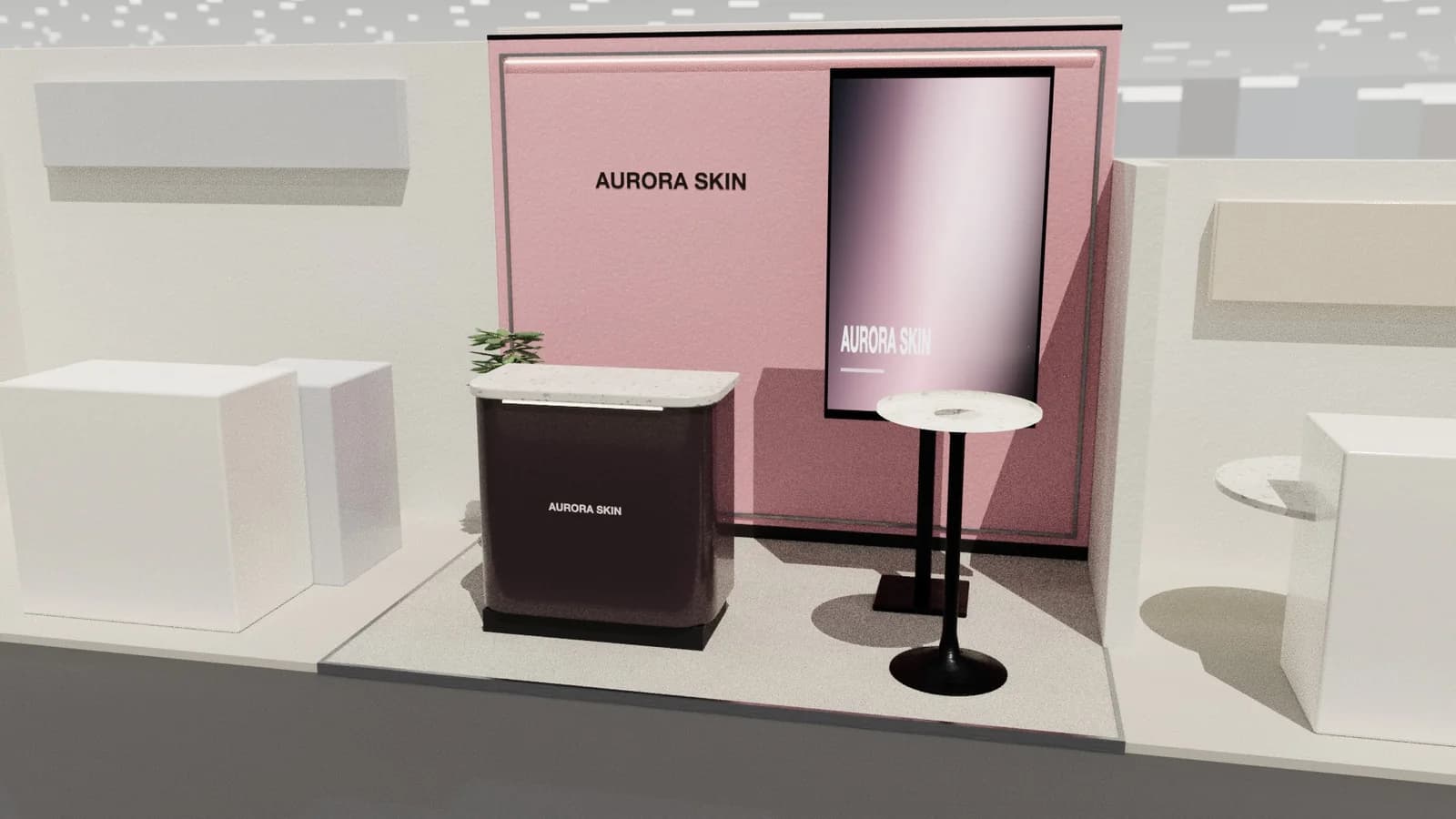
Lay out the kit at the sizes you book to check it fits, and render it before ordering graphics.
Transport and storage
- Hard cases that convert into counters save shipping and floor space.
- Check airline and courier size limits if staff carry the kit.
- Store graphics rolled or folded as the maker recommends, away from damp.
- Label cases with contents and a checklist so the kit comes back complete.
- Photograph the set-up once, so anyone on the team can rebuild it.
Frequently asked questions
01Can one person set up a pop-up stand?
Yes, most pop-up stands are designed for one person in about 15–30 minutes.
02Are pop-up stands allowed in shell schemes?
Usually, if they fit within the shell height and do not attach to the walls without permission.
03How long do portable displays last?
Frames last many shows with care; graphics wear sooner. Budget for reprints.
04Can a portable display look premium?
Yes, with good graphics, lighting and a tidy, uncluttered layout.
05Pop-up stand or fabric frame system?
A pop-up suits one size of space and quick set-up. A fabric frame system costs more but reconfigures for different plot sizes and looks closer to a custom stand.
Put it into practice
Design your trade show booth in 3D before you brief the builder
Design a trade show booth in 3D at your exact booth size, from a 10x10 inline to a 20x20 island, with renders and drawings for your builder.
Guidance here reflects common practice. Venues, organisers and countries set their own rules: always check the exhibitor manual and work with a qualified stand builder and engineer for structures.