In short
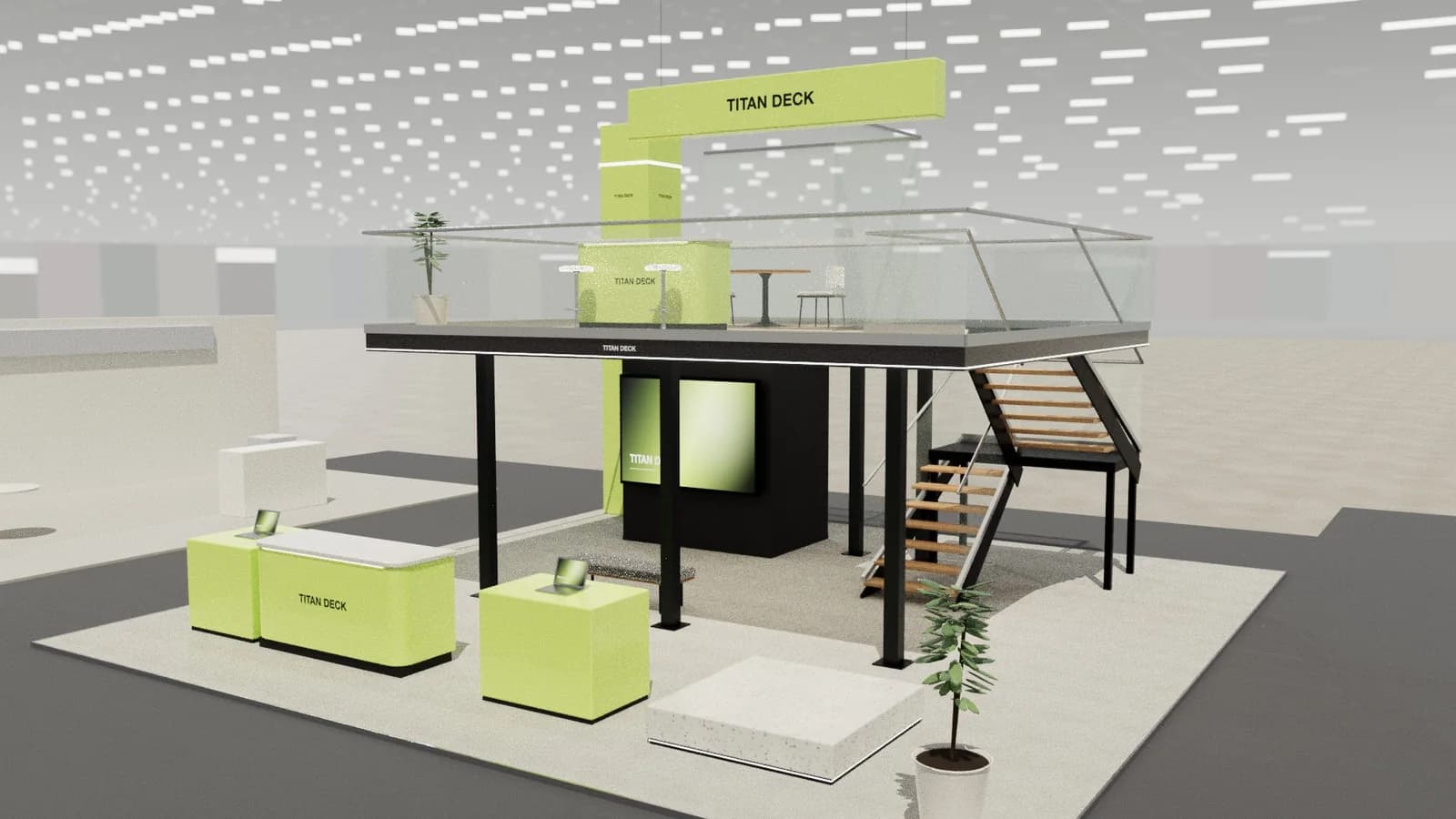
A hanging sign is a banner or structure suspended from the hall ceiling above a stand so visitors can find it from across the hall. It is installed by the venue's approved rigging contractor from rigging points, needs organiser approval with loads and heights declared, and is usually allowed on larger and island stands. Circles, squares and triangles in fabric over an aluminium frame are most common.
Key points
- The best long-distance landmark on a crowded show floor.
- Only venue-approved riggers can hang from the hall structure.
- Declare weight, size and height; deadlines are early.
- Keep the message short: logo and maybe one word.
Types of hanging sign
| Shape | Readable from | Notes |
|---|---|---|
| Circle (ring) | All directions | Very common; fabric over a round frame |
| Square / rectangle | Four sides | Good for large logos |
| Triangle | Three sides | Light, distinctive |
| Custom 3D | Varies | Brand shapes; heavier, needs more engineering |
Rules and approvals
- Usually allowed only above certain stand types and sizes.
- Maximum height to the top of the sign and minimum clearance below are set by the venue.
- Weight and rigging points are declared in advance, with drawings.
- Installed by the venue's rigging contractor, often before the stand is built.
Designing a sign that works
- Logo only, or logo plus one word; nothing else reads at 30 m.
- High contrast against the dark hall ceiling; backlit options glow.
- Centre it over the stand, or over the main entrance on large islands.
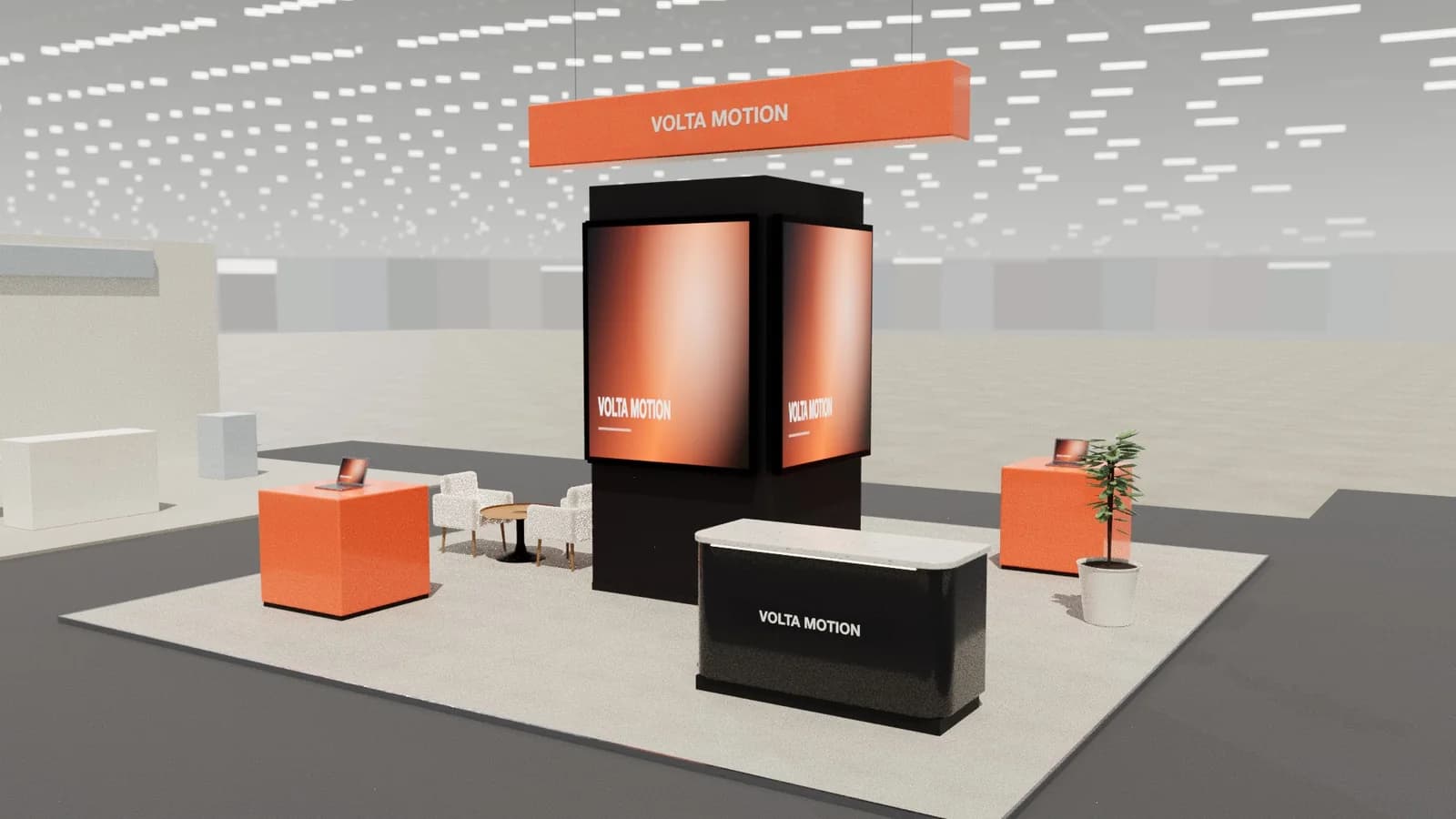
Lighting rigged elements
Truss above a stand can carry lighting as well as signs: spotlights aimed down onto products and counters give a cleaner look than poles and wall arms. Rigged lighting needs the same approval and loads declared as signs. Backlit fabric signs need power at height, which the rigging contractor usually arranges.
Timeline
- Booking the space: check if rigging is allowed above your stand and the hall's limits.
- Design: decide sign shape, size and weight; draw it on the stand's elevation and plan.
- Order deadline: submit rigging drawings, weights and point positions to the venue's contractor.
- Build-up: signs are usually rigged first, before the stand is built underneath.
What drives rigging costs
- Number of rigging points and the height of the hall roof.
- Weight and size of the sign or truss.
- Motors versus fixed points, and any lighting or power at height.
- The sign itself: fabric and frame, printed both sides, backlit or not.
Rigging is charged by the venue's contractor at their rates, so ask for a quote early and include it in the stand budget.
Frequently asked questions
01Can any stand have a hanging sign?
No. Most venues allow them only over larger or island stands, within height and weight limits.
02Who installs hanging signs?
The venue's approved rigging contractor, from the hall's rigging points.
03How big should a hanging sign be?
Often 3–6 m across depending on the stand size and hall height, with a logo large enough to read from 30 m or more.
04When must rigging be ordered?
Usually well before the show, often earlier than other services. Check the deadline in the exhibitor manual.
Put it into practice
From a client brief to a 3D stand concept in minutes
An editable 3D exhibition stand concept from a written brief and the brand's website, at your exact size.
Guidance here reflects common practice. Venues, organisers and countries set their own rules: always check the exhibitor manual and work with a qualified stand builder and engineer for structures.