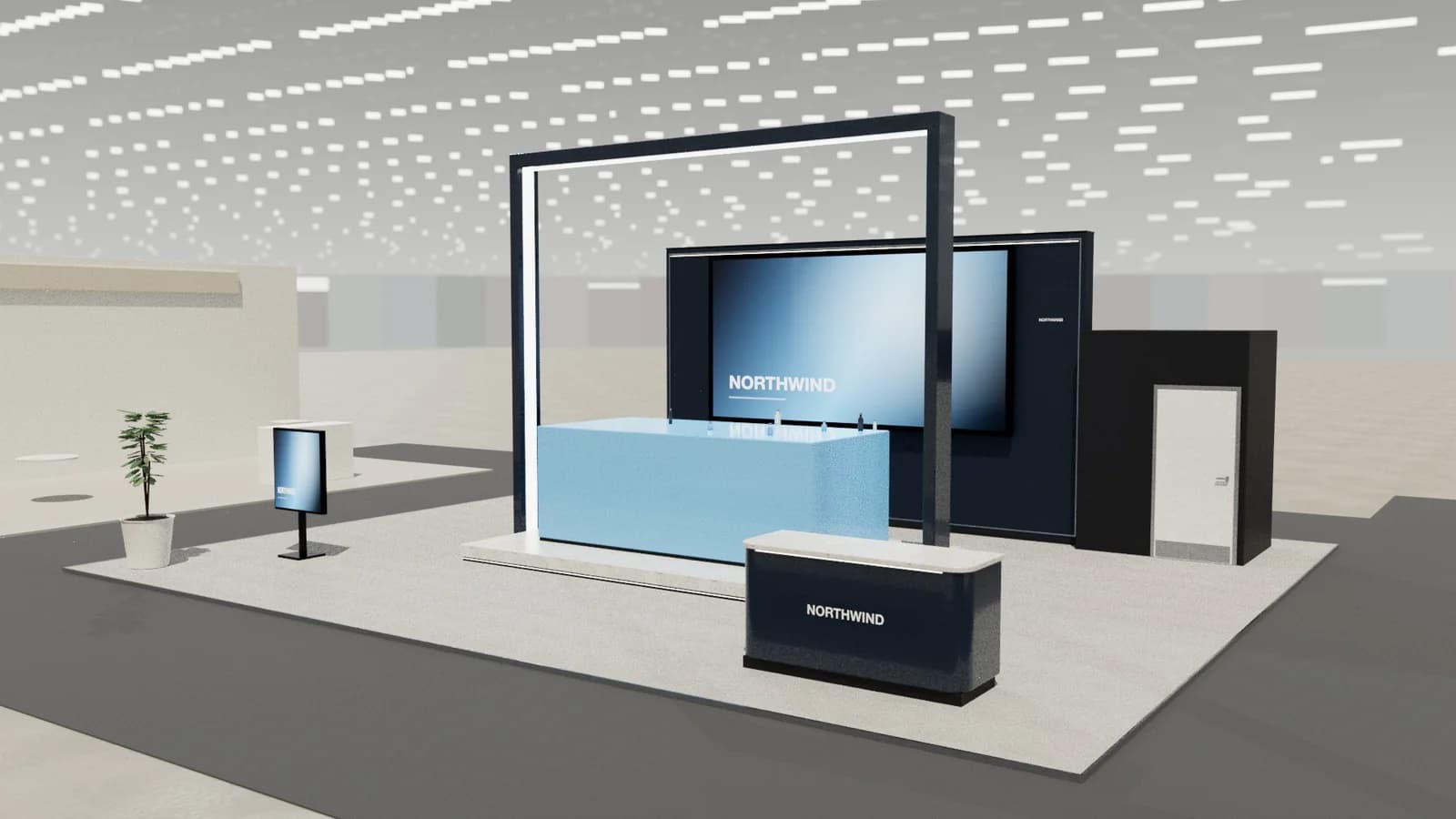
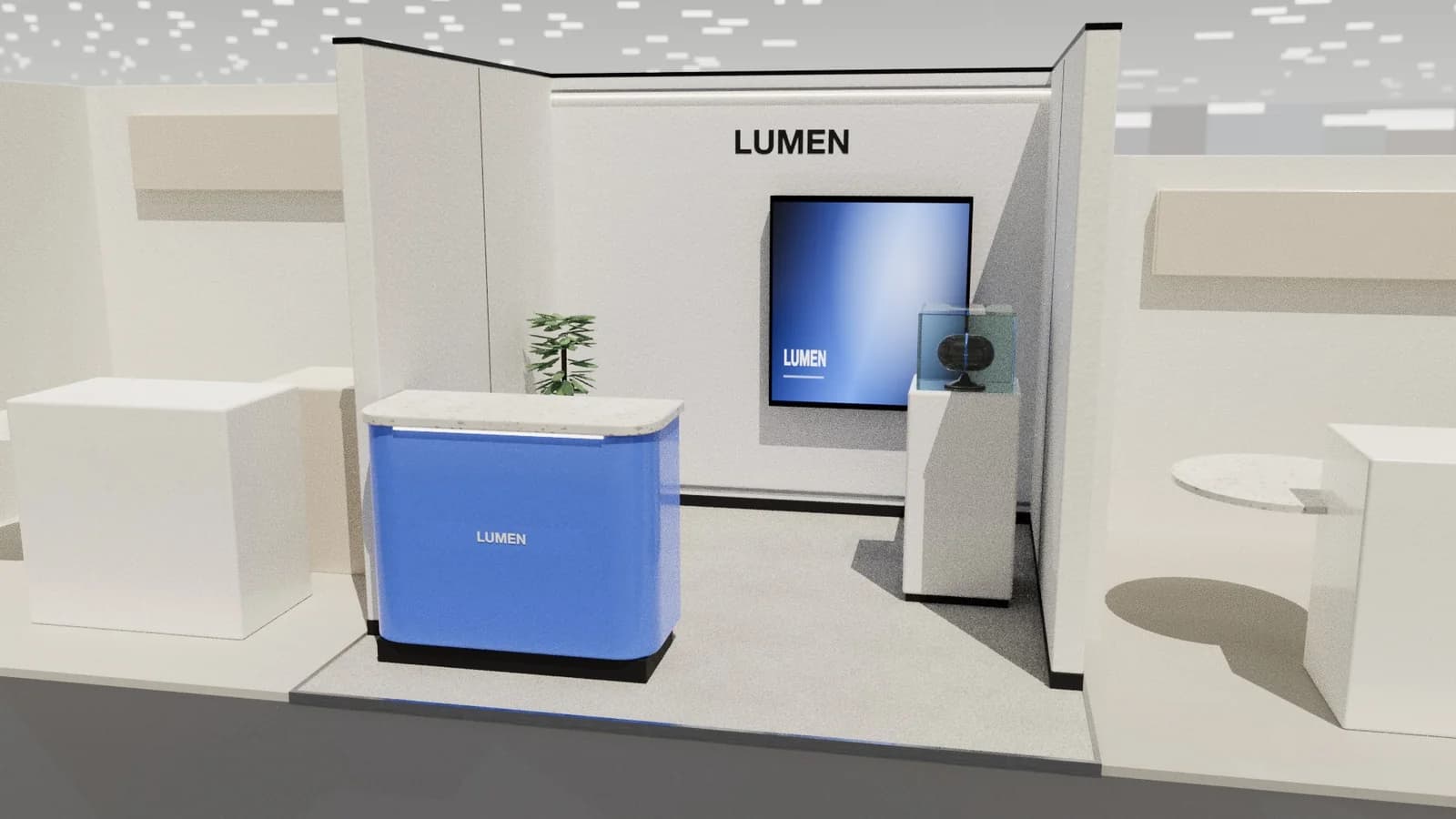
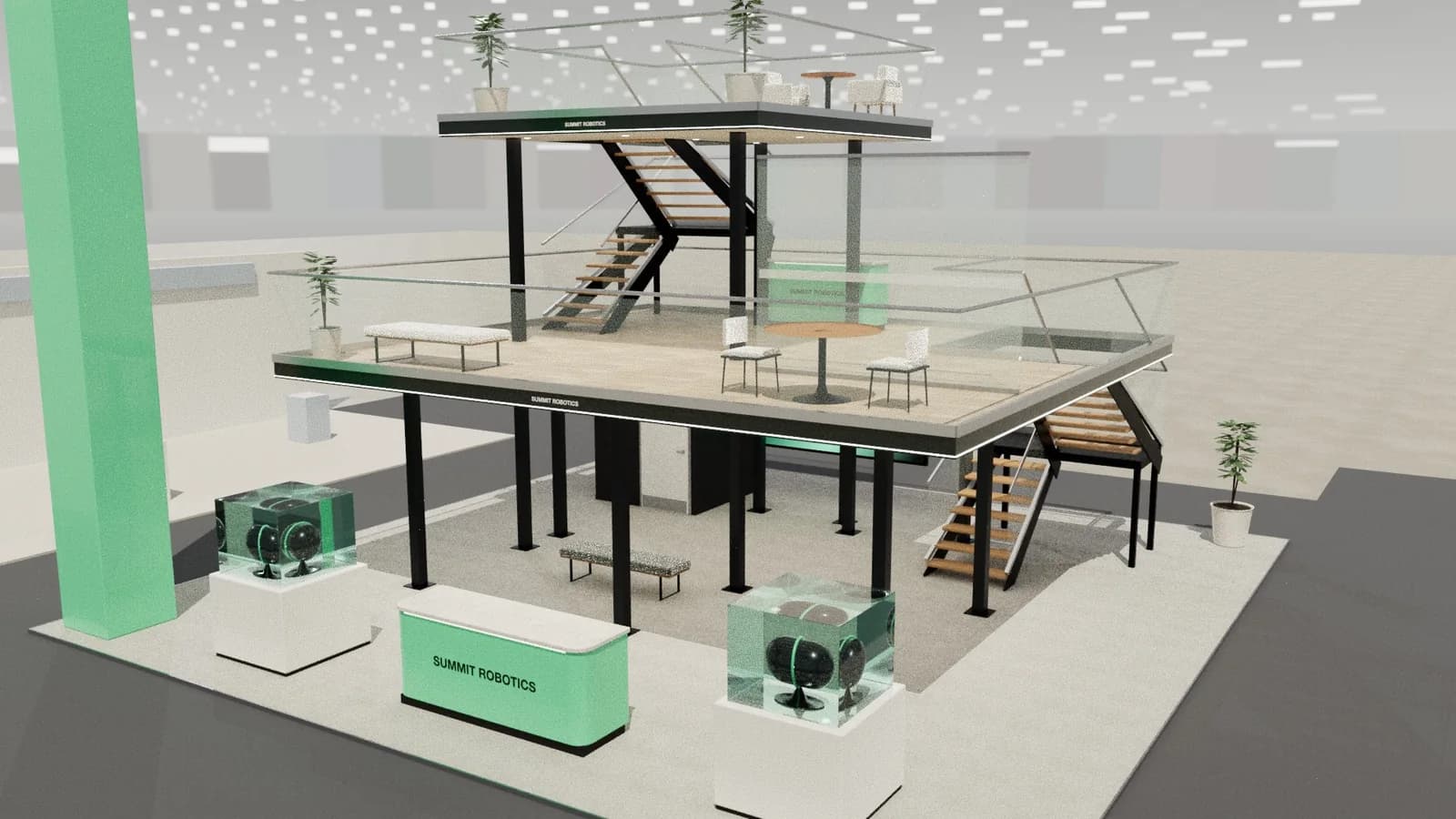
In short
Modular stands are built from reusable frame systems (usually aluminium with fabric graphics) that can be reconfigured for different shows; custom stands are built from scratch in timber and other materials for one design. Modular is cheaper over several shows, faster and more sustainable; custom gives total freedom of form and finish. Many brands use a hybrid: a modular core with custom elements.
Key points
- Modular: reusable, faster, cheaper over time, fabric-led look.
- Custom: any shape and finish, higher cost, often single-use.
- Hybrid: modular structure, custom counters and feature pieces.
- Decide by number of shows per year, variety of stand sizes and brand ambition.
Side by side
| Factor | Modular | Custom |
|---|---|---|
| Look | Clean, fabric-led, frames visible or hidden | Any form, material and finish |
| First-show cost | Medium (buy or rent the system) | High |
| Cost over several shows | Low: only graphics change | High: rebuild or store and refurbish |
| Lead time | Short | Long (design, workshop build) |
| Flexibility | Reconfigures for different sizes | Designed for one footprint |
| Sustainability | Reusable for years | Often discarded after one show |
| Build on site | Fast, few tools | Longer, more trades |
The hybrid approach
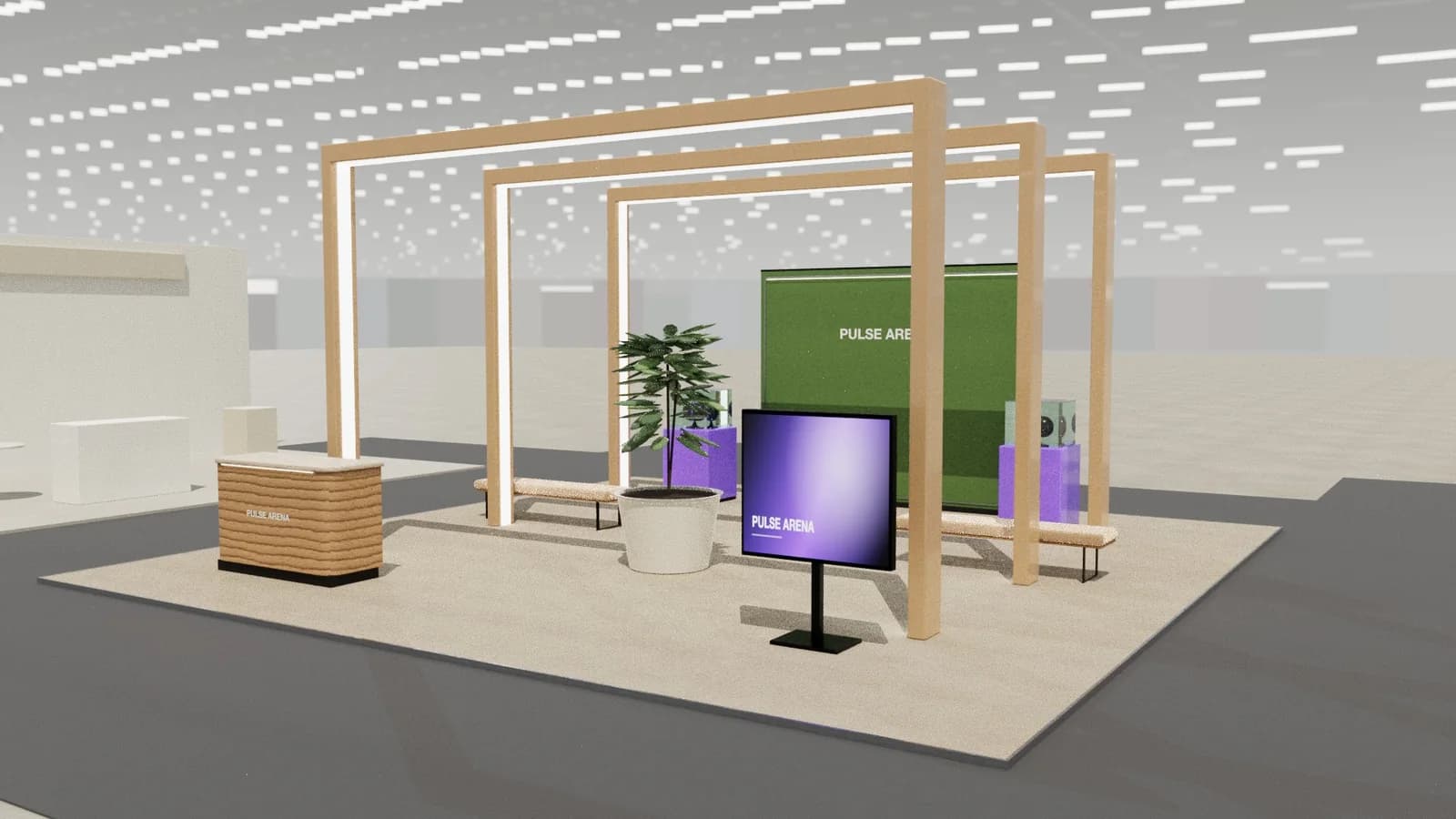
A common choice is a modular wall and frame system with custom pieces: a joinery reception counter, a feature wall, bespoke plinths or a timber ceiling. The custom parts carry the brand personality; the modular parts carry the cost savings.
How to choose
- Many shows per year, similar sizes: modular.
- One flagship show, landmark presence: custom or hybrid.
- Varied sizes from 9 to 100 m²: modular kit that scales, plus custom hero pieces.
- Sustainability targets: modular or rental, see sustainable stands.
Cost over three years
| Modular (owned) | Custom (rebuilt each time) | |
|---|---|---|
| Year 1 | System + graphics + build | Design + workshop build + install |
| Year 2 | New graphics + build + storage | Rebuild or refurbish + install |
| Year 3 | New graphics + build + storage | Rebuild or refurbish + install |
| After | Kit keeps working | Often discarded |
Questions to ask a builder
- What modular system do you use, and can it reach the heights and spans in my design?
- Which parts are reusable, and where are they stored between shows?
- What does storage and refurbishment cost per year?
- How quickly can the kit be reconfigured for a different size or stand type?
- What happens to custom parts after the show?
Making modular look custom
- Hide frame profiles behind fabric that wraps the edges.
- Add a timber or lacquered counter and plinths as hero pieces.
- Use backlit fabric walls rather than front-lit panels.
- Invest in flooring, lighting and planting: they carry much of the premium feel.
Frequently asked questions
01Are modular stands cheaper?
Usually over several shows: the frames are reused and only graphics change. For a single show the difference is smaller.
02Can modular stands look premium?
Yes, with good lighting, backlit fabric, quality flooring and a few custom pieces like a joinery counter.
03How long does a custom stand take to build?
Often 6–10 weeks from approved design to delivery, depending on size and complexity; large or double-deck stands take longer.
04Can I rent a modular stand?
Many builders rent modular systems, which avoids storage and suits occasional exhibitors.
Put it into practice
From a client brief to three 3D stand concepts in minutes
Three editable 3D exhibition stand concepts from a written brief and the brand's website, at your exact size.
Guidance here reflects common practice. Venues, organisers and countries set their own rules: always check the exhibitor manual and work with a qualified stand builder and engineer for structures.