In short
Renewable energy booths win on credibility: products at full size with specifications, cutaways or live monitoring that show how systems work, distributor and installer meeting tables, and a stand that practises what it preaches with reusable structure and low waste.
Key points
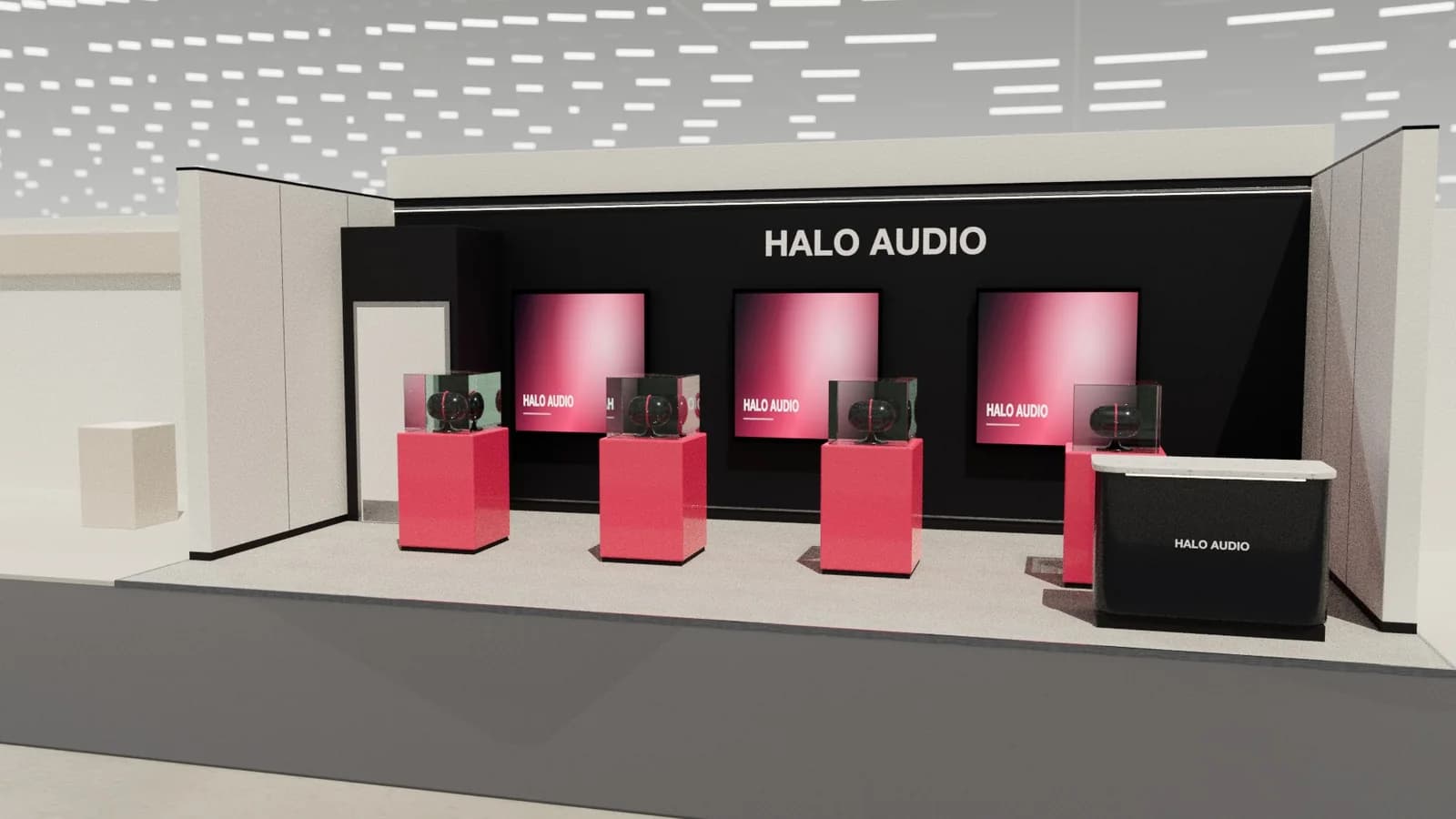
- Product wall, System demo, Data screen, Partner tables are the core zones.
- Avoid: walls of identical-looking products with no clear difference.
- Avoid: sustainability claims on a single-use stand.
- Avoid: specifications too small to read.
- See the template and trade show guides linked below for solar, wind, storage and EV-charging companies.
Who visits and what they want
Installers, EPC contractors, distributors, project developers, utilities and fleet or facility managers.
What to show
Modules, inverters, batteries, chargers and turbines' components; system cutaways; live data from installed projects; project case studies with output figures.
Zones for a renewable energy stand
| Zone | Purpose | Where it goes |
|---|---|---|
| Product wall | Full-size products with specifications | Back or side walls |
| System demo | Cutaway or working installation | Centre or front corner |
| Data screen | Live monitoring and case studies | Visible from the aisle |
| Partner tables | Distributor and installer talks | Rear or side |
On a 3 × 3 m stand, keep the first two zones and book meetings elsewhere. From about 36 m² every zone fits; see stand sizes for what fits at each size.
Materials, lighting and graphics
Natural materials, daylight-like lighting and greenery fit the sector, but avoid greenwashing clichés. Show real numbers: output, efficiency, warranty.
For detail on light levels and colour rendering, see stand lighting; for wall graphics, see graphics and branding.
Starting conversations and capturing leads
Installers respond to margin, availability and warranty, so put those facts where staff can point to them. Ask what projects the visitor has in the next six months and capture that with the lead.
Rules and practicalities
Live electrical systems on a stand need approval and safe isolation. Heavy batteries need floor-load checks and handling.
Venue rules on height, open sides, fire safety and services still apply; see venue approval.
Common mistakes
- Walls of identical-looking products with no clear difference.
- Sustainability claims on a single-use stand.
- Specifications too small to read.
Trade shows for solar, wind, storage and EV-charging companies
Show-specific guides: Intersolar Europe, ADIPEC, Big 5 Global. For more, see stand design by trade show.
Frequently asked questions
01How do I make solar products look different from competitors'?
Lead with the specification or service that is genuinely different and show it in use: cutaways, monitoring data and case studies.
02Can a renewable energy stand be sustainable?
Yes: reusable modular frames, fabric graphics, LED lighting and hire furniture. See [sustainable stands](/guides/sustainable-exhibition-stands).
03What size stand does a renewable energy exhibitor need?
Size to the activities: about 9 m² for one conversation point, 18–36 m² to add demos and a meeting table, and 50 m² or more for meeting rooms and hospitality. See [stand sizes](/guides/topics/exhibition-stand-sizes).
04Can AI design a renewable energy booth?
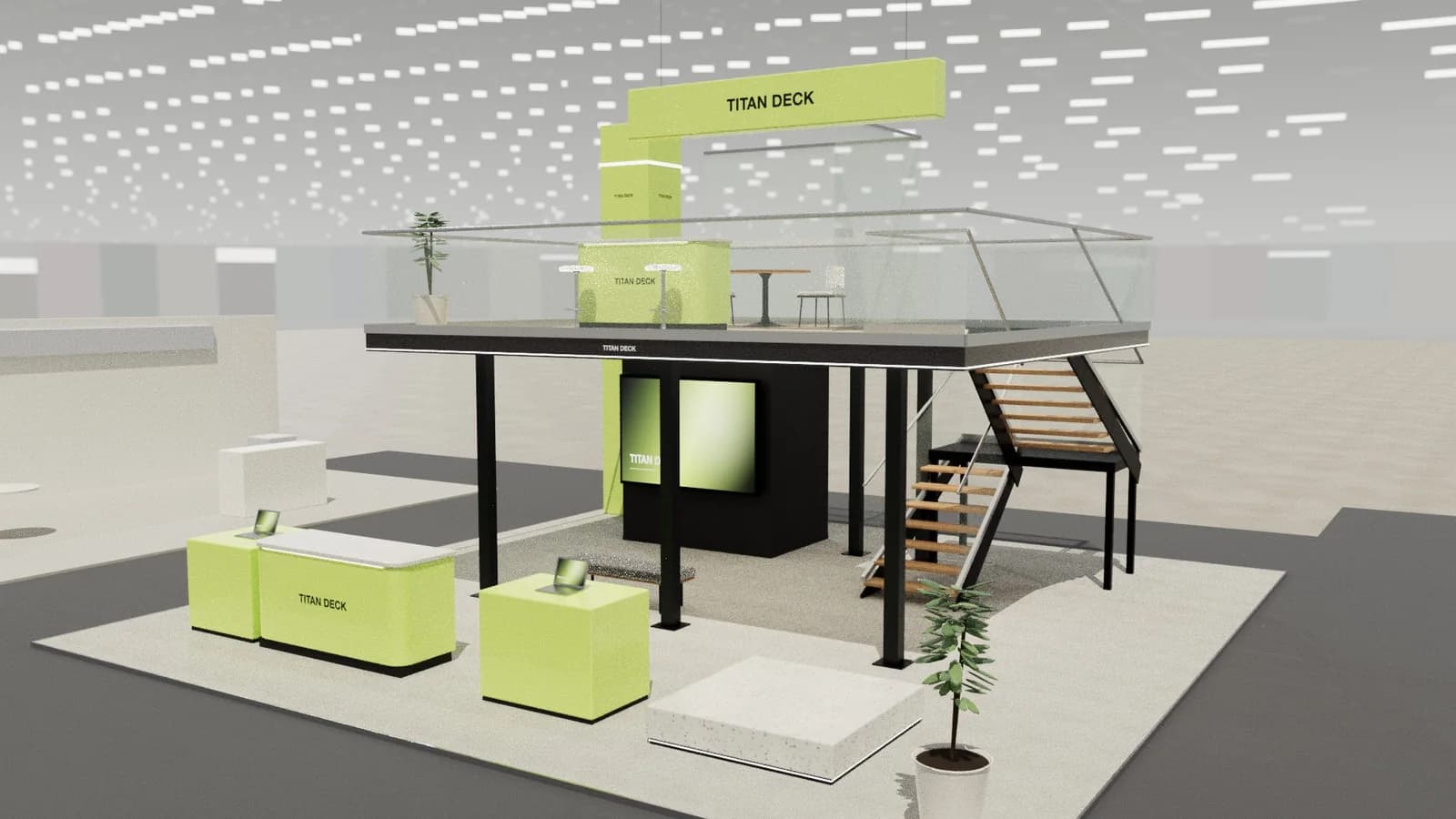
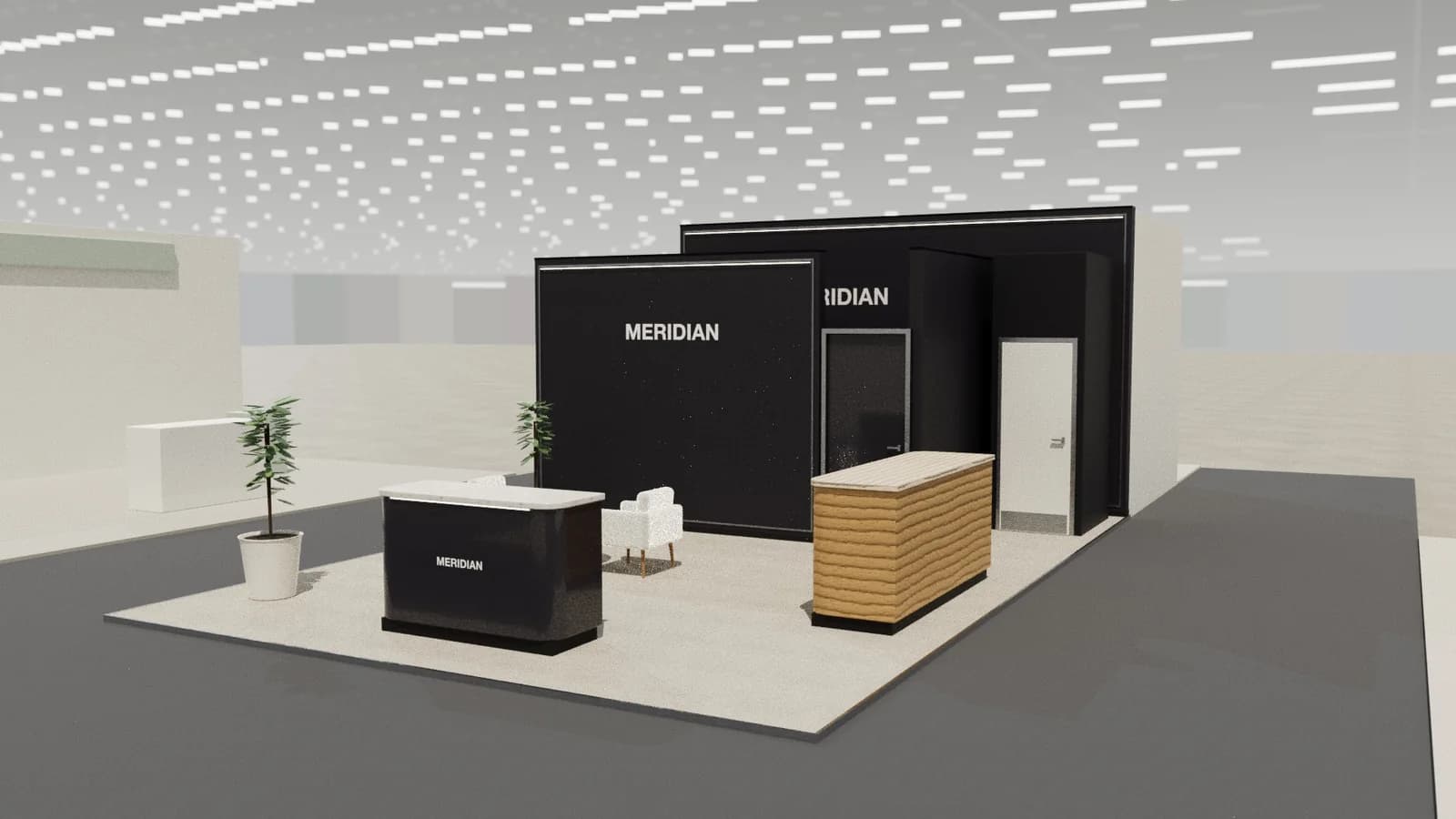
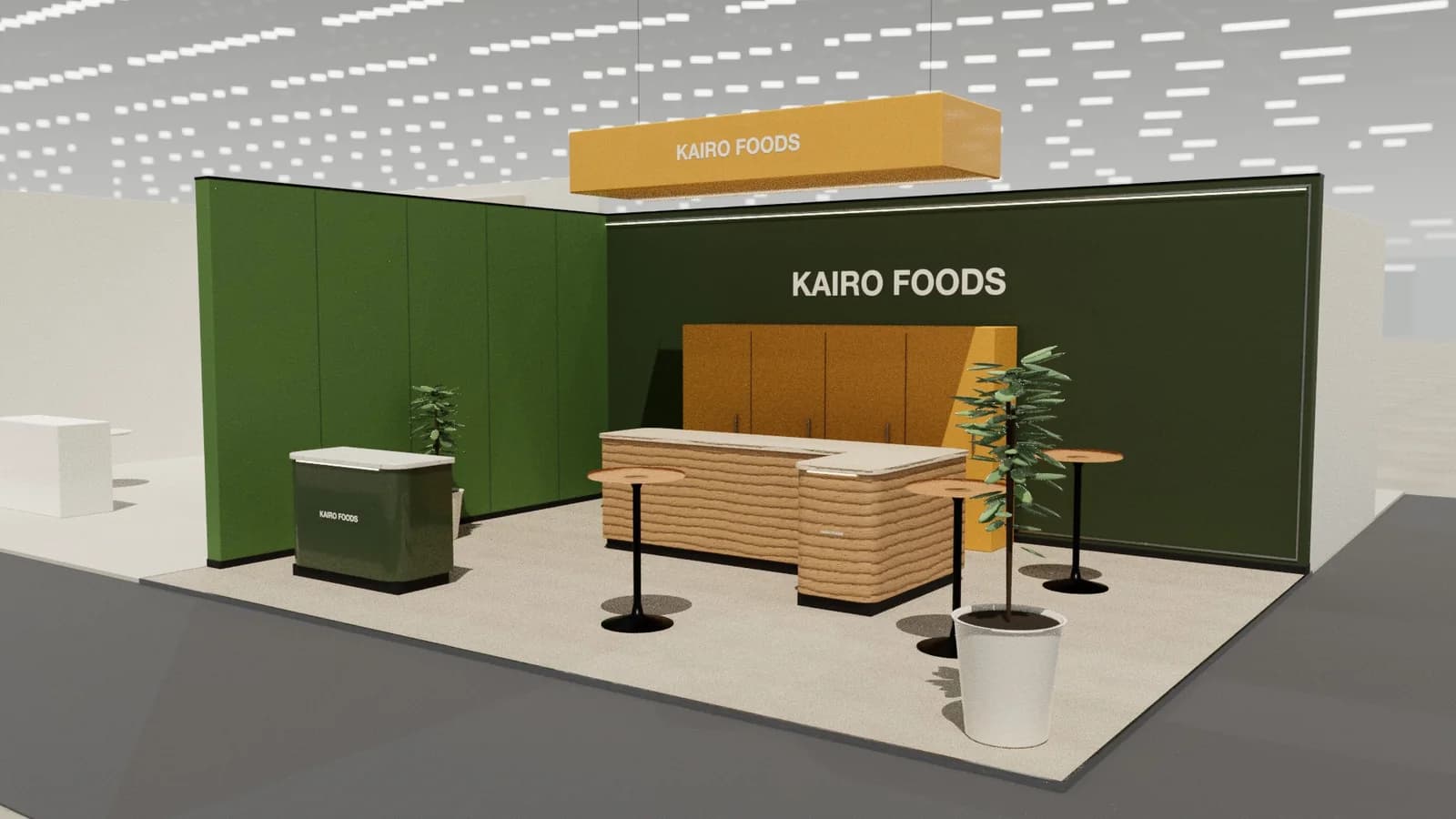
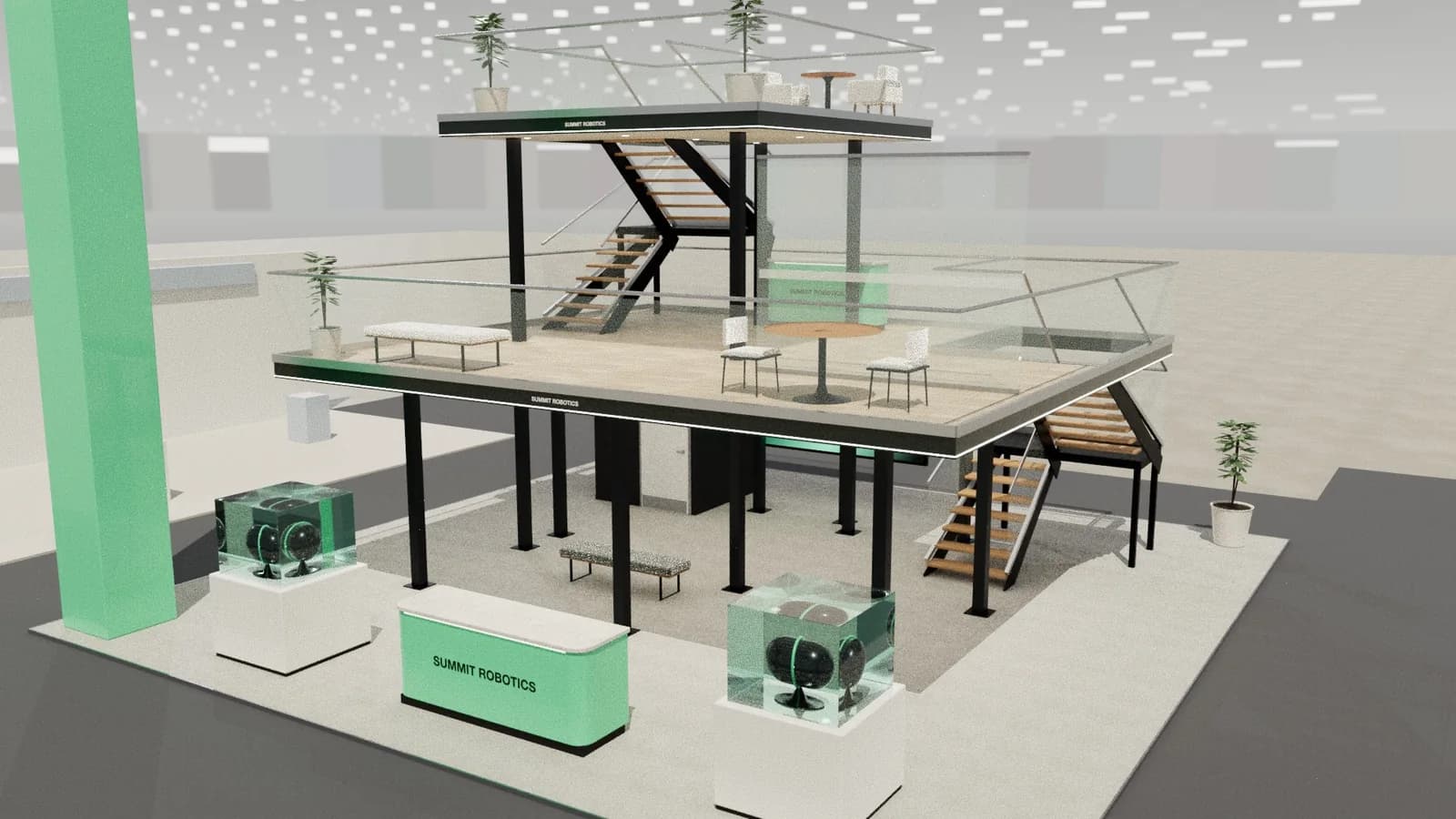
AI can produce a complete concept quickly: [Studio](/ai-booth-designer) lays out the zones above at real scale and renders the result. A stand builder still checks structure, services and compliance before building.
Put it into practice
From a client brief to a 3D stand concept in minutes
An editable 3D exhibition stand concept from a written brief and the brand's website, at your exact size.
Guidance here reflects common practice. Venues, organisers and countries set their own rules: always check the exhibitor manual and work with a qualified stand builder and engineer for structures.