In short
Woodworking stands should smell like a workshop. Run the machine on real timber, show the finished piece, and put applications specialists next to the equipment. Extraction, noise and safety guarding set the layout, so plan them first. A buyer comparing machines wants to see quality of cut, not a slogan.
Key points
- Working machine, Finished work, Tooling wall, Sales table are the core zones.
- Avoid: no extraction.
- Avoid: silent machines.
- Avoid: nothing to touch.
- See the template and trade show guides linked below for woodworking machinery companies.
Who visits and what they want
Joiners, furniture makers, sawmills, panel processors and tool buyers.
What to show
Saws, edge banders, CNC machines, tools and finished work. A panel cut on the stand, handed to a visitor, tells them more than any specification, and blades and tooling deserve a clear display of their own, with sample cuts in different timbers.
Zones for a woodworking stand
| Zone | Purpose | Where it goes |
|---|---|---|
| Working machine | Live demo | Front |
| Finished work | Cut quality | Beside the machine |
| Tooling wall | Blades and tools | Side |
| Sales table | Quotes | Rear |
On a 3 × 3 m stand, keep the first two zones and book meetings elsewhere. From about 36 m² every zone fits; see stand sizes for what fits at each size.
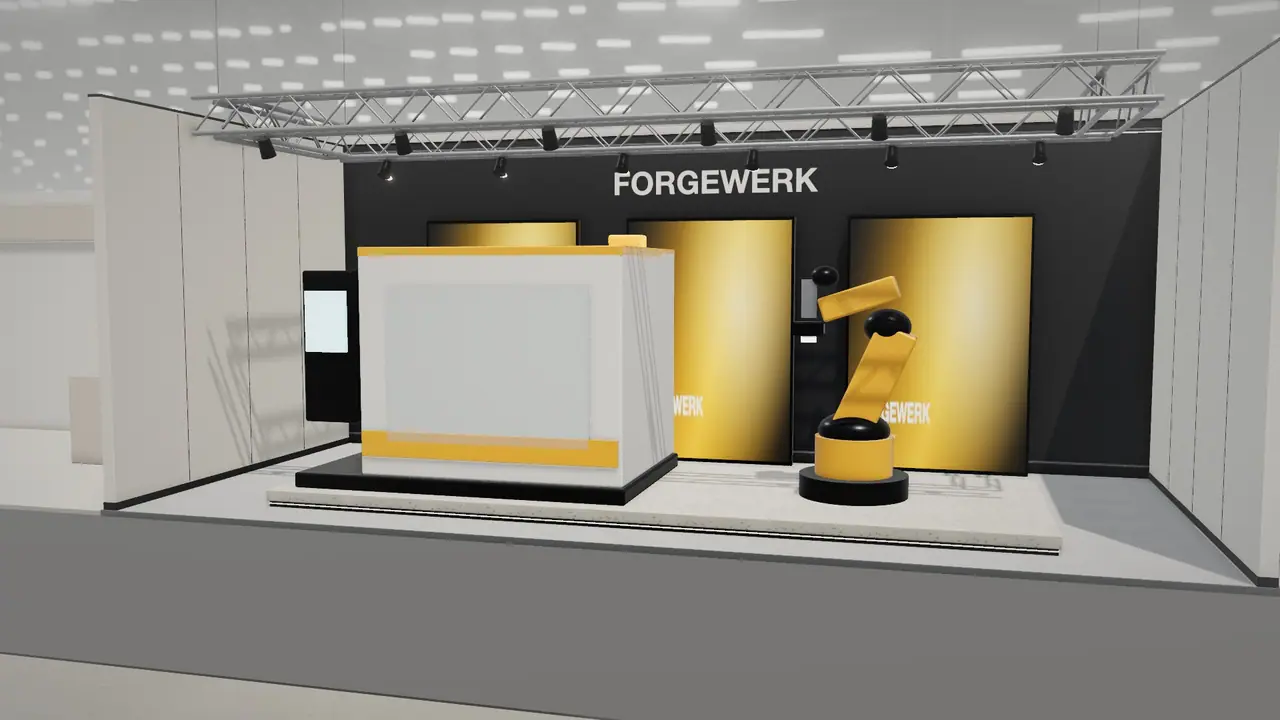
Materials, lighting and graphics
Honest and solid, with timber and steel. Real sawdust is fine in the demo zone, if it's controlled.
For detail on light levels and colour rendering, see stand lighting; for wall graphics, see graphics and branding.
Starting conversations and capturing leads
Ask what the visitor is cutting and run a sample if you can. Let them inspect the edge.
Rules and practicalities
Running machines need guards, extraction and supervision. Check noise limits.
Venue rules on height, open sides, fire safety and services still apply; see venue approval.
Common mistakes
- No extraction.
- Silent machines.
- Nothing to touch.
Trade shows for woodworking machinery companies
Show-specific guides: LIGNA, interzum. For more, see stand design by trade show.
Frequently asked questions
01Can I cut wood on the stand?
Often, with extraction and guarding approved by the show.
02What should I show next to a machine?
The finished piece, so that people can check quality.
03What size stand does a woodworking exhibitor need?
Size to the activities: about 9 m² for one conversation point, 18–36 m² to add demos and a meeting table, and 50 m² or more for meeting rooms and hospitality. See [stand sizes](/guides/topics/exhibition-stand-sizes).
04Can AI design a woodworking booth?
AI can produce a complete concept quickly: [Studio](/ai-booth-designer) lays out the zones above at real scale and renders the result. A stand builder still checks structure, services and compliance before building.
Put it into practice
From a client brief to a 3D stand concept in minutes
An editable 3D exhibition stand concept from a written brief and the brand's website, at your exact size.
Guidance here reflects common practice. Venues, organisers and countries set their own rules: always check the exhibitor manual and work with a qualified stand builder and engineer for structures.