In short
LIGNA is the woodworking machinery industry's main fair. Visitors want to see real timber being cut, edged and finished. A stand should run machines safely, show the finished product and offer time with applications specialists, since buyers are comparing large investments. Start a custom stand about 12–15 months ahead and confirm dates, height limits and rules in the exhibitor manual.
Key points
- Where and when: Hannover, every two years in Hannover, in odd years. The organiser has announced new dates from 2027.
- The audience is mostly furniture makers.
- Running machines.
- Finished work to touch.
- Plan a custom stand about 12–15 months before the show.
LIGNA for exhibitors
Forestry, sawmills, panel processing, tools and furniture production all attend. From 2029 the fair is due to run in parallel with interzum, which may change how visitors plan their trip.
| LIGNA | |
|---|---|
| City | Hannover |
| Venue | Deutsche Messe |
| Sector | Woodworking and timber processing |
| Cycle | Every two years in Hannover, in odd years. The organiser has announced new dates from 2027 |
| Main stand activity | Working machinery |
| Custom stand lead time | 12–15 months |
Who you are designing for
Furniture makers, joiners, sawmill owners, panel producers and tool buyers.
What matters most on a LIGNA stand:
- Running machines.
- Finished work to touch.
- Extraction and noise control.
- Applications specialists.
Layouts for working machinery, by stand type
Most LIGNA exhibitors build around working machinery. How that works depends on how many sides of your plot are open. If you are unsure which type you have, see exhibition stand types.
| Stand type | Open sides | What works |
|---|---|---|
| Row (inline) | 1 | One machine side-on to the aisle so its working side is visible, with a screen showing it in use. |
| Island | 4 | A hero machine centred with at least 1.5 m of walk-around space, demo times on a screen and meetings to one side or upstairs. |
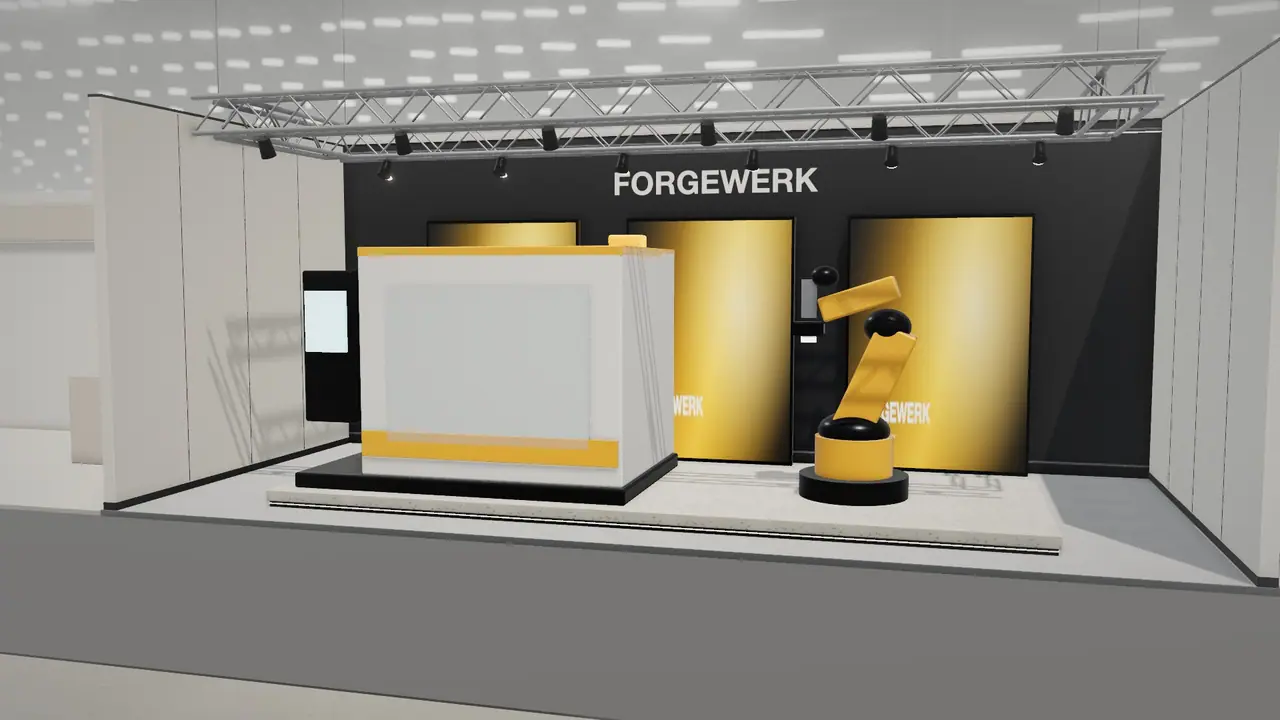
Stand ideas for LIGNA
- A small production cell that makes a take-away item.
- A wall of edge samples.
- A digital workshop planning table.
Planning, approvals and logistics
Dust extraction, compressed air and heavy foundations need early planning. Check the rules on running machines.
Allow about 12–15 months for a custom stand. The exhibitor manual sets height limits, open-side rules and service deadlines; see venue approval and technical drawings.
Where the budget goes at LIGNA
Machines, extraction and technicians lead the budget. Show finished work next to the machine, so that visitors see the result.
Mistakes we see at LIGNA
- No extraction plan.
- Machines without any finished product beside them.
An example LIGNA brief
A 12 × 10 m stand with a running panel saw, an edge-bander demo, a finished-furniture display and a customer table, with extraction planned.
Replace the size and the zones with your own. The plot and height limit come from your contract and the exhibitor manual.
Try your LIGNA layout in 3D
ExhibitionBase Studio turns your plot size, open sides and a brief about working machinery into an editable 3D stand for 5 credits, renders it and exports a plan for your builder. New workspaces get 5 free credits.
Frequently asked questions
01When is LIGNA?
The organiser announced new dates from 2027. Check its site for the current edition.
02Can machines run on the stand?
Commonly, yes, with guarding, extraction and noise limits.
03How early should I start designing a LIGNA stand?
For a custom stand, about 12–15 months ahead: long enough for design, organiser approval, production and shipping. Shell scheme stands can be planned in weeks.
04Can I reuse my LIGNA stand at other shows?
Often, if it is modular. Design the core (walls, counters, working machinery area) to work on several plot sizes, and swap graphics per show. See [modular vs custom stands](/guides/modular-vs-custom-exhibition-stands).
Put it into practice
From a client brief to a 3D stand concept in minutes
An editable 3D exhibition stand concept from a written brief and the brand's website, at your exact size.
Guidance here reflects common practice. Venues, organisers and countries set their own rules: always check the exhibitor manual and work with a qualified stand builder and engineer for structures.