In short
Exhibition stands are classed by how many sides open onto an aisle. A row (inline) stand has one open side, a corner stand two, a peninsula three and an island four. More open sides mean more visibility and traffic but fewer walls for storage, screens and branding, so the layout and the build change with the stand type.
Key points
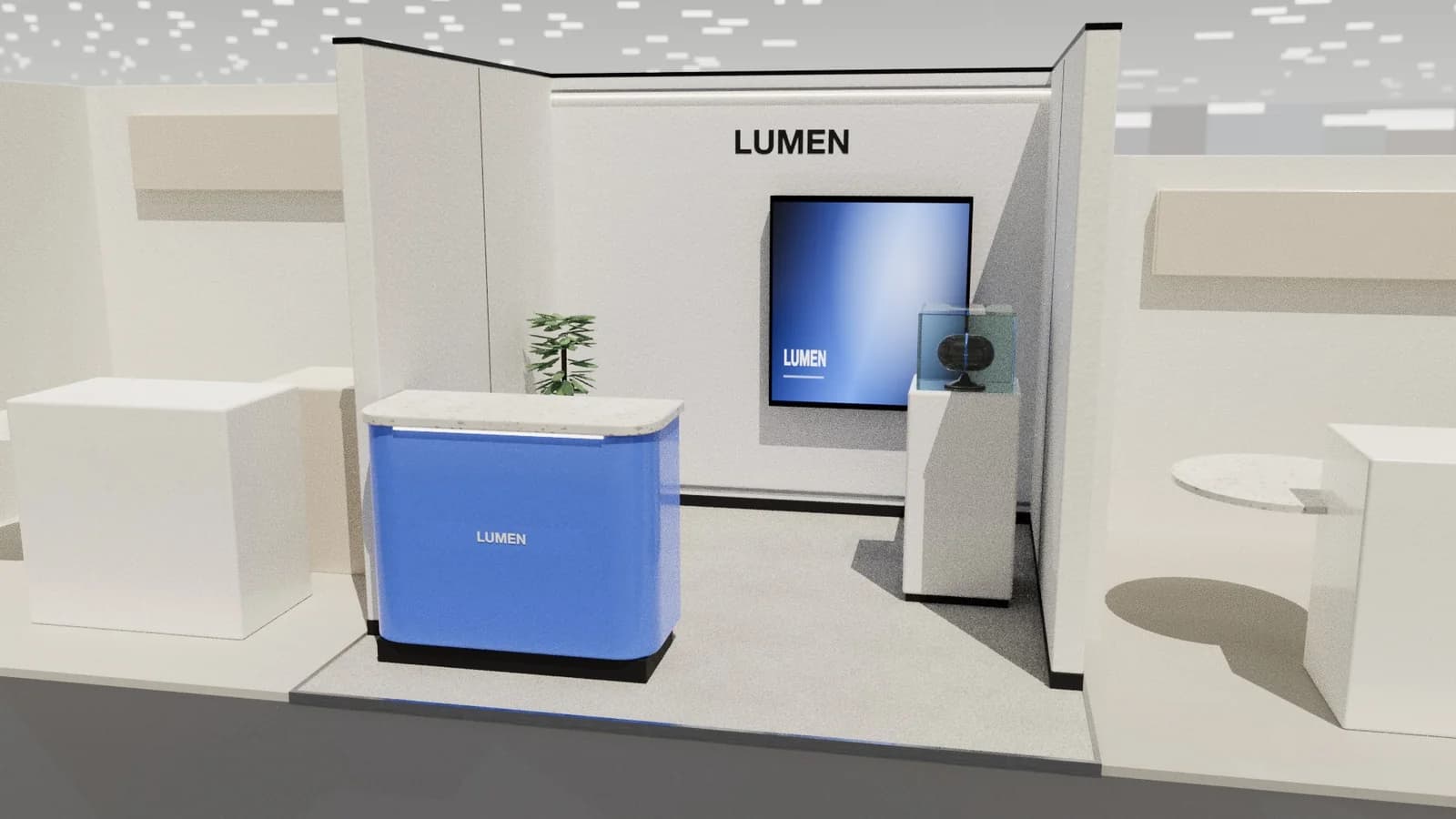
- Row: one open side, three walls; brand on the back wall, keep the front open.
- Corner: two open sides; put the welcome on the corner where two aisles meet.
- Peninsula: three open sides, one back wall; a strong brand wall with open approaches.
- Island: four open sides; branding must work from every direction, often with a central core or hanging sign.
- Storage and screens need walls, so plan them early on open stands.
The four stand types
| Type | Open sides | Walls you can build | Strengths | Watch out for |
|---|---|---|---|---|
| Row (inline) | 1 (front) | Back, left, right | Lots of wall for graphics and storage; cheapest per m² | Only one way in; easy to crowd |
| Corner | 2 (front + one side) | Back and one side | Traffic from two aisles; good visibility | The corner must stay open and welcoming |
| Peninsula | 3 | Back | Highly visible; one strong backdrop | Less wall for storage and screens |
| Island | 4 | None at the boundary | Maximum visibility, landmark potential | Branding must work from all sides; usually costs more |
Row (inline) stands
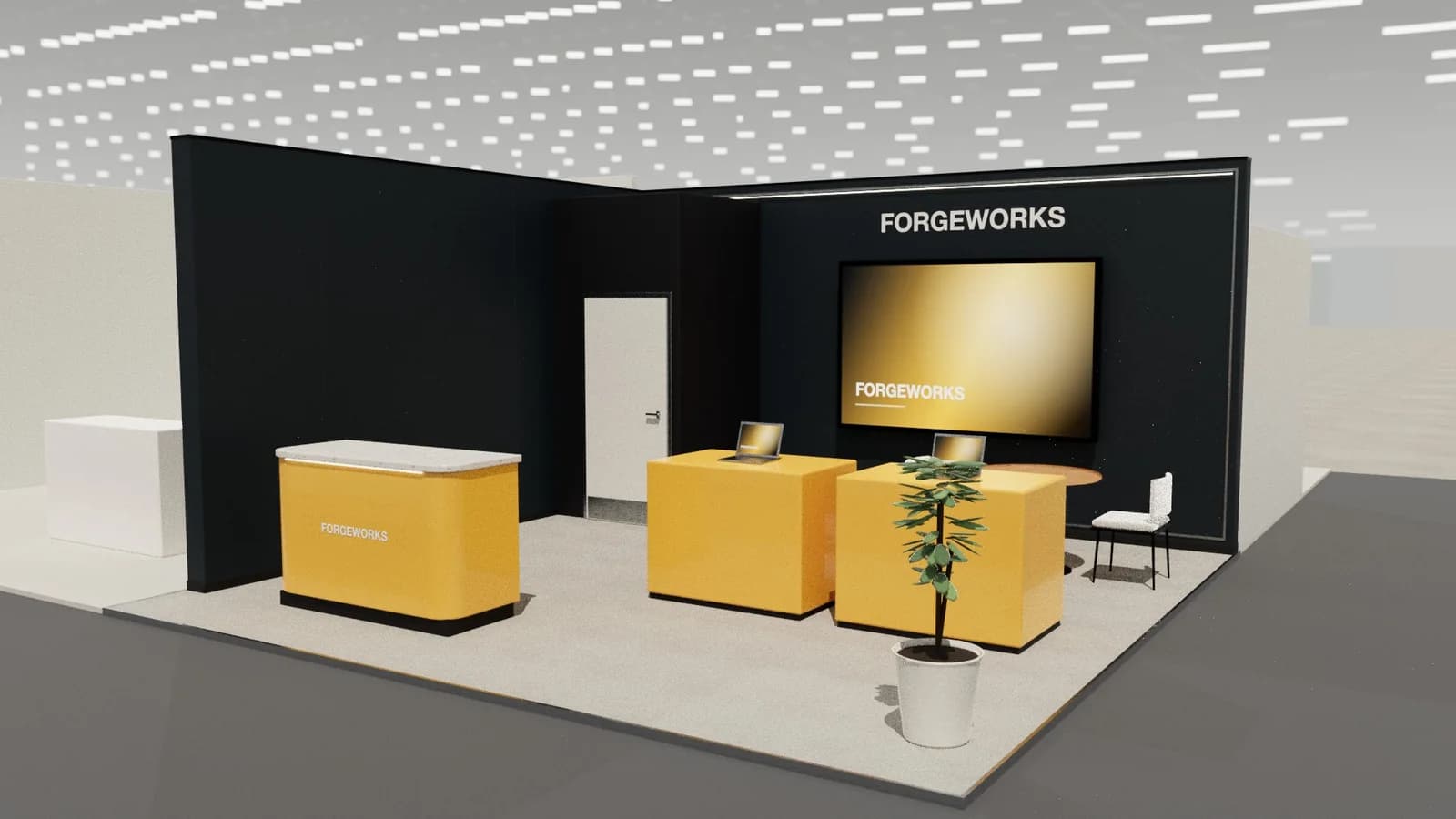
A row stand sits between two neighbours with one open side to the aisle. The back wall is the billboard: brand, proposition and a screen at eye level or above. Keep furniture back from the front edge so visitors can step in; a counter right on the aisle line acts as a barrier.

See 3 × 3 m booth design and 6 × 3 m booth design for layouts.
Corner stands
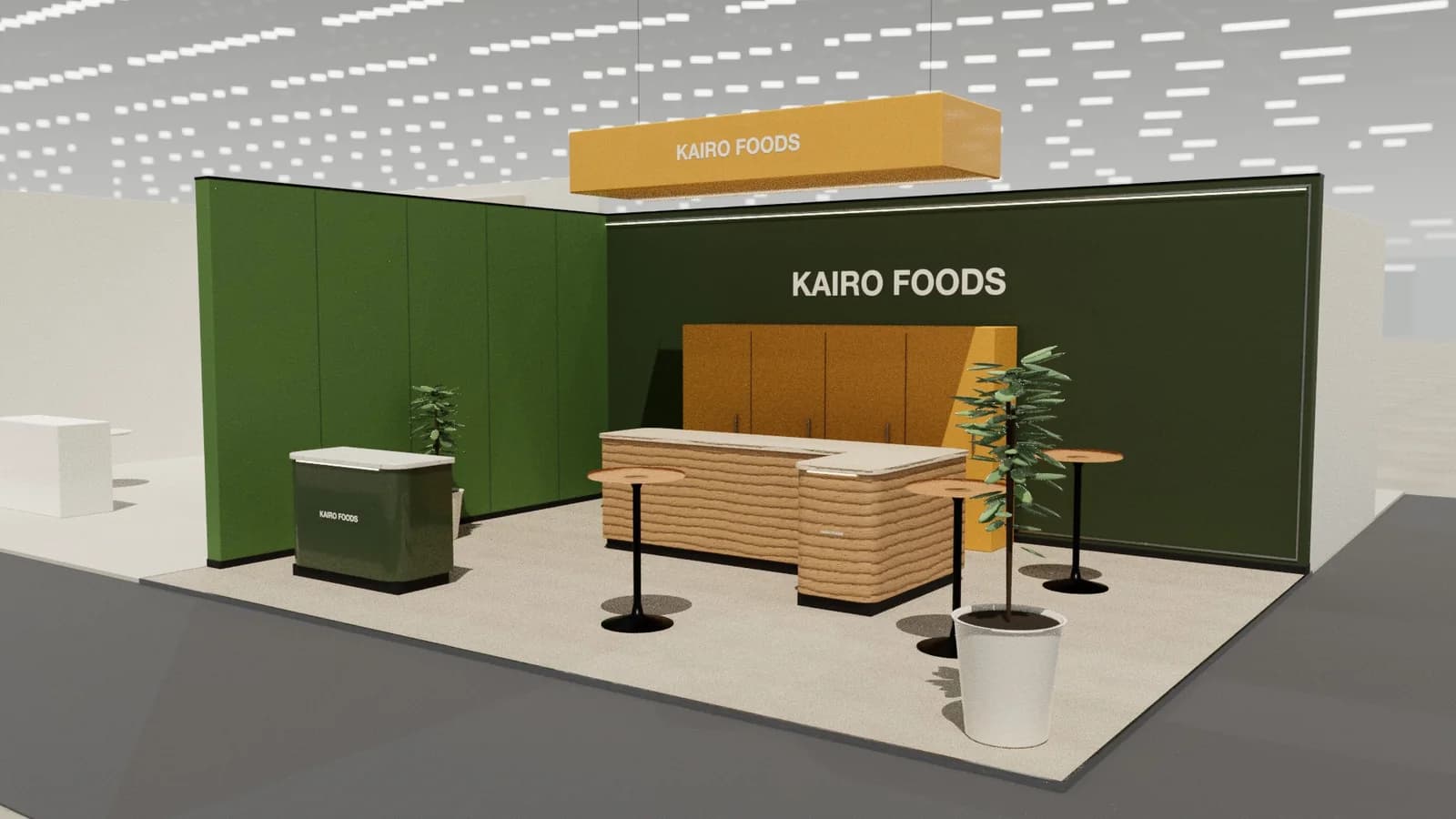
Two open sides mean two streams of visitors. Put the welcome point near the corner where the aisles meet, turned so it does not block either approach. The two closed walls carry the brand, a screen and the store. Demos and products face the busier aisle.
Peninsula stands
With three open sides and one back wall, a peninsula reads almost like an island but keeps a backdrop. Use the back wall for the brand, a large screen and a closed meeting room or store. Keep the three open sides inviting: low counters, plinths and seating, nothing tall along the edges.
Island stands
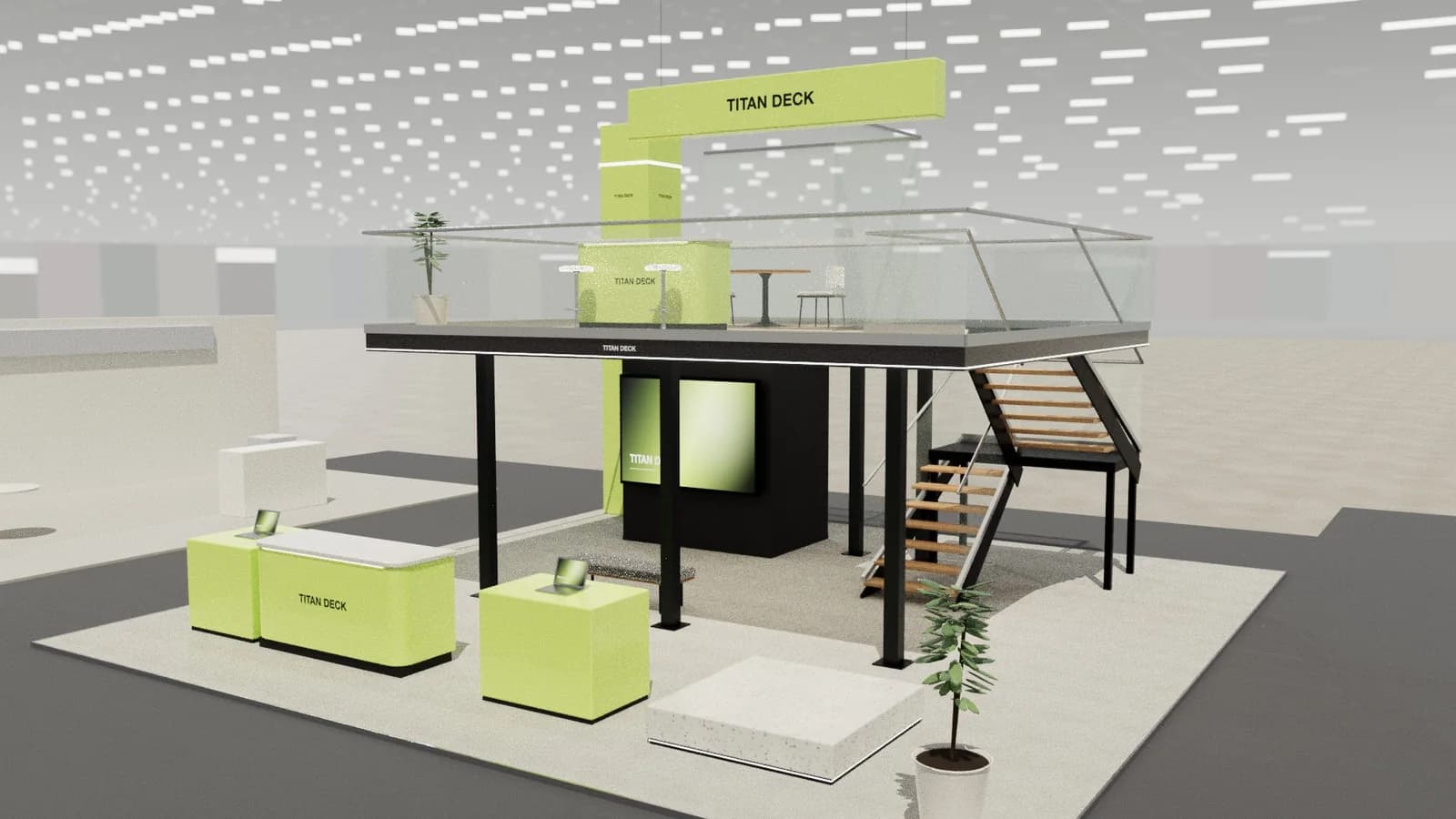
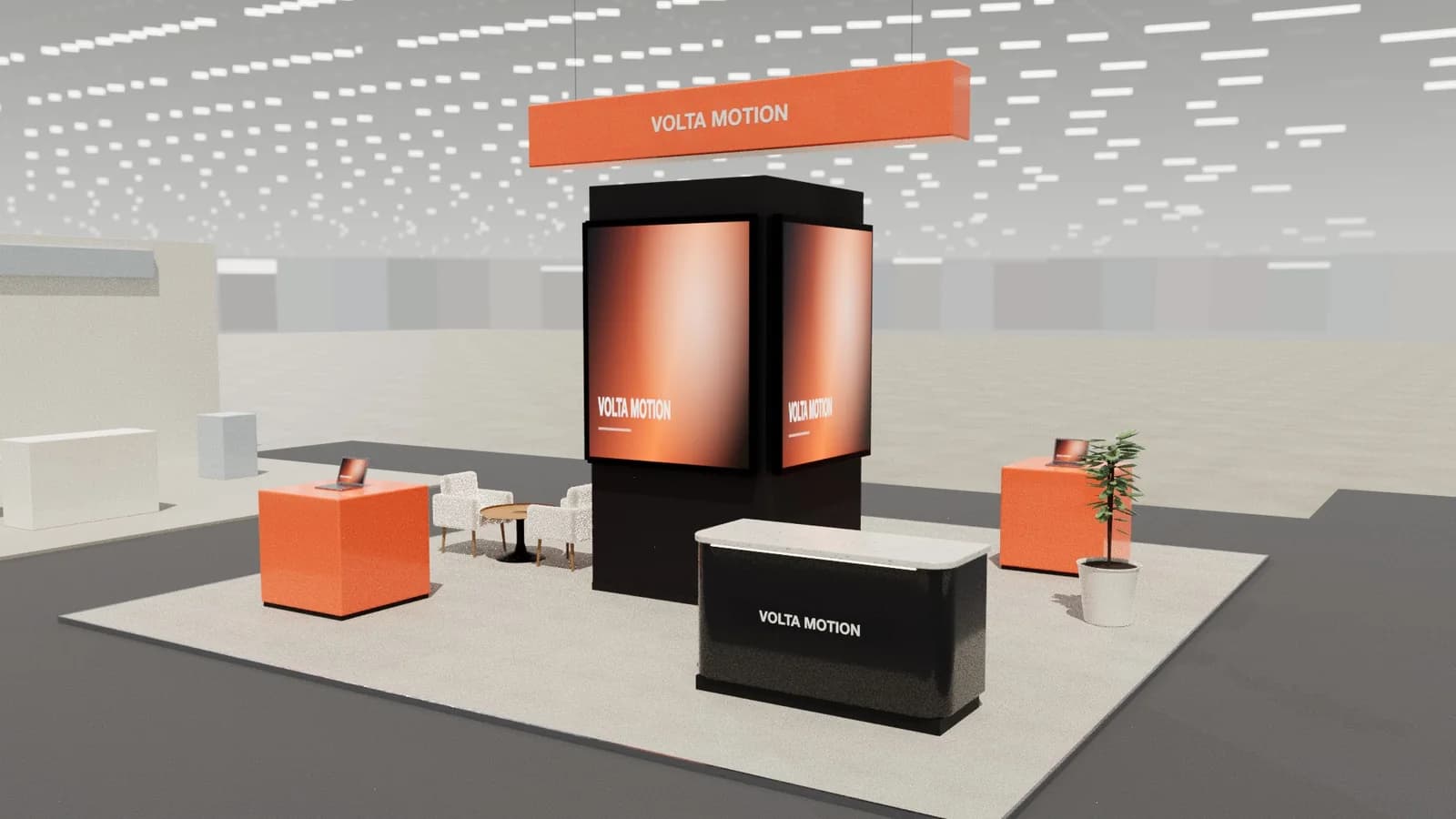
An island is open on all four sides. There is no boundary wall, so you create your own: a central core (often with storage inside and screens on its faces), a hanging sign visible across the hall, or a tower. Every side needs a reason to enter, so avoid a single "front".
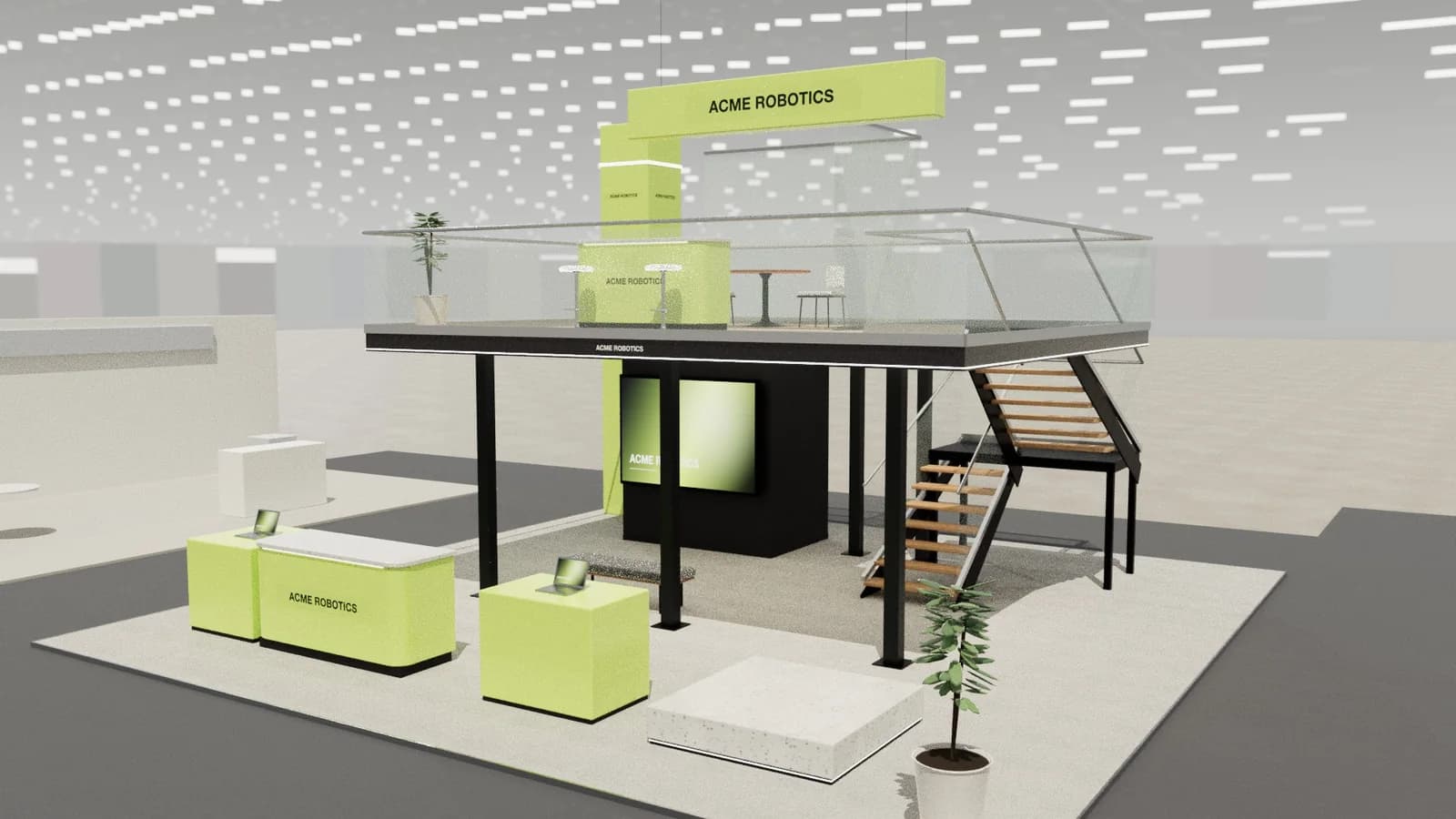
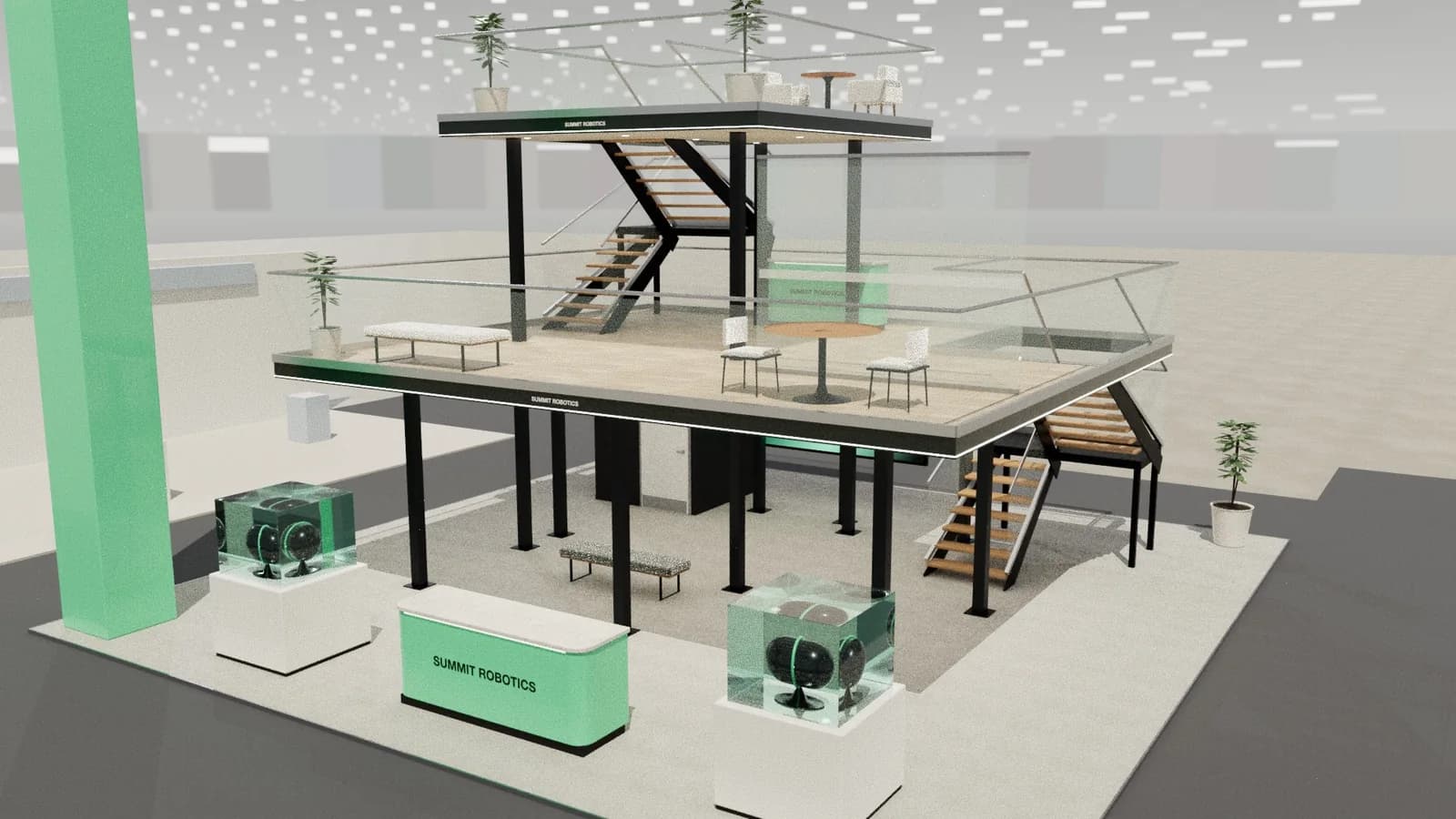
Large islands are also where double-deck stands make sense. See island booth design.
How to choose
- Objective first: awareness and launches favour islands and peninsulas; meetings and selling work well on corners and rows.
- Walls you need: count the walls for screens, storage and graphics; a peninsula or island must create them inside.
- Traffic: corners and islands at the end of busy aisles get more footfall than mid-aisle rows.
- Budget: open stand types need finished surfaces on every side, so build cost per m² rises.
Position in the hall
Stand type and position work together. A corner near a hall entrance, a catering area or a main aisle junction can outperform a larger stand in a quiet back row. When booking, look at the floor plan for how visitors will arrive and which aisles connect the busiest points. Ask the organiser about past footfall if they share it.
Frequently asked questions
01What is the difference between a peninsula and an island stand?
A peninsula has three open sides and a back wall shared with a neighbour; an island is open on all four sides with no neighbours touching it.
02Which stand type gets the most traffic?
Islands and corners usually see the most passing traffic because they face more aisles, but location in the hall matters as much as the type.
03Can I build walls on the open sides?
Most organisers restrict tall walls along open sides so the hall stays visible; many require a percentage of each open side to stay open. Check the exhibitor manual.
04What is an inline booth?
Inline is the North American term for a row stand: a booth in a row of booths with one side open to the aisle.
Put it into practice
From a client brief to three 3D stand concepts in minutes
Three editable 3D exhibition stand concepts from a written brief and the brand's website, at your exact size.
Guidance here reflects common practice. Venues, organisers and countries set their own rules: always check the exhibitor manual and work with a qualified stand builder and engineer for structures.