In short
An outdoor stand has to cope with things a hall never throws at you: wind, rain, sun and uneven ground. Start with structure and weather, then design the brand. Marquees, containers and modular cabins are common, and machinery shows often combine a hospitality building with exhibits in the open. Check the organiser's wind and ground rules, since structures may need ballast, engineering or fixing limits.
Key points
- Weather comes before aesthetics.
- Wind loading can decide the structure.
- Check the ground: paving, soil or asphalt.
- Give people shade, shelter and water.
Common outdoor structures
| Structure | Good for | Watch for |
|---|---|---|
| Marquee | Covered hospitality and meetings | Wind, ballast, flooring |
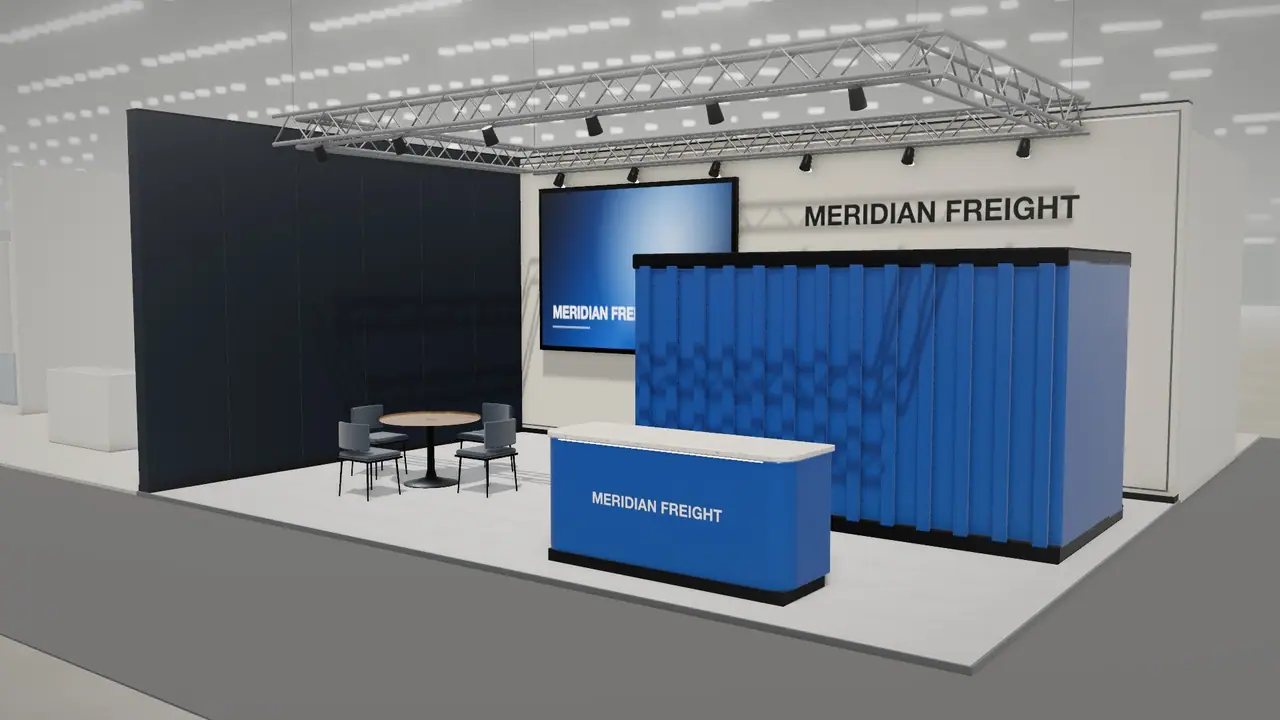
| Shipping container | Bold, robust, secure at night | Crane access and floor loads |
| Modular cabin | Offices and meeting rooms | Delivery and services |
| Open demo area | Machinery and vehicles | Barriers and safety |
| Canopy | Shade and branding | Wind limits |
Wind, rain and sun
- Ask for the wind rules, and who signs off temporary structures.
- Use ballast where you can't fix into the ground.
- Avoid big flat signs that act like sails.
- Plan drainage, and raise floors where water collects.
- Offer shade in hot climates, and heating in cold ones.
- Use outdoor-rated electrics and graphics.
Scale helps outdoors too: a tall flag or tower can be found across an open site, but it must be engineered.
Ground and services
Check what's under your plot. Soft ground needs trackway, paving may not allow fixings, and heavy machines may need load spreading. Power, water and data may need to come from a long way off, so order them early, and keep cables protected from vehicles.
Visitors outdoors
- Allow for mud or dust on floors and shoes.
- Keep machinery areas fenced and supervised.
- Plan a covered place for meetings.
- Keep paper and graphics from blowing around.
- Secure everything overnight.
Machinery shows such as bauma and CONEXPO-CON/AGG use large outdoor areas.
Power, data and water outdoors
Outdoor plots may be far from a supply point, so ask where the connection will come from and who pays for the run. Use outdoor-rated equipment, protect cables from vehicles, and keep sensitive electronics in a covered place. Screens need to be bright enough for daylight, and they must be protected from rain and heat.
If the weather turns
Agree a plan for high winds or storms. Know who decides to take down flags or close a structure, and how you'll protect electronics. Keep a spare set of graphics if yours could be damaged.
Frequently asked questions
01What is different about outdoor stands?
Weather, wind, ground conditions and services all come first.
02Do outdoor structures need engineering?
Often. Organisers set the requirements, particularly for tents and tall signs.
03Can I use a shipping container as a stand?
Yes, outdoors and at some indoor shows, subject to access and load rules.
04What flooring works outdoors?
Something raised and well drained, such as a modular platform, on suitable ground.
Put it into practice
An AI booth designer that designs in 3D, not in pixels
An AI booth designer that plans an exhibition stand in 3D at your size, checks it can be built, and changes it when you ask in plain English.
Guidance here reflects common practice. Venues, organisers and countries set their own rules: always check the exhibitor manual and work with a qualified stand builder and engineer for structures.