In short
Most stands combine a few materials. An aluminium system or timber frame carries the structure, painted or laminated board or tension fabric makes the visible surface, and glass, acrylic, metal and stone-effect finishes add detail where visitors touch. Choose by what a surface must do, how many times it will be used, and what the venue's fire rules allow. Spend on the surfaces people touch and photograph.
Key points
- Choose the structure first, then the surface that covers it.
- Fire classification matters as much as appearance.
- Spend on surfaces at touching and photographing distance.
- Durability only pays if the stand will be reused.
The common materials
| Material | Best for | Watch for |
|---|---|---|
| Aluminium system | Repeat use, fast install, fabric graphics | Visible joints unless designed out |
| Timber frame and MDF | One-off shapes, solid walls, paint finishes | Weight, waste, fire treatment |
| Tension fabric (SEG) | Large seamless graphics, backlighting | Graphic seams on very wide walls |
| Laminate | Counters and hard-wearing surfaces | Edge finishing on tight curves |
| Paint | Solid brand colour on custom walls | Scuffs in transit and during build-up |
| Glass | Meeting rooms, display cases | Weight, breakage, safety marking |
| Acrylic | Light boxes, lettering, display | Scratches, static and fire rules |
| Natural timber | Warmth, battens, soft acoustics | Treatment, moisture, cost of finishing |
Choosing by job
- A wall seen from 10 m: fabric or paint. Nobody sees the difference between a good one and a great one from there.
- A counter people lean on: laminate, solid surface or a durable veneer.
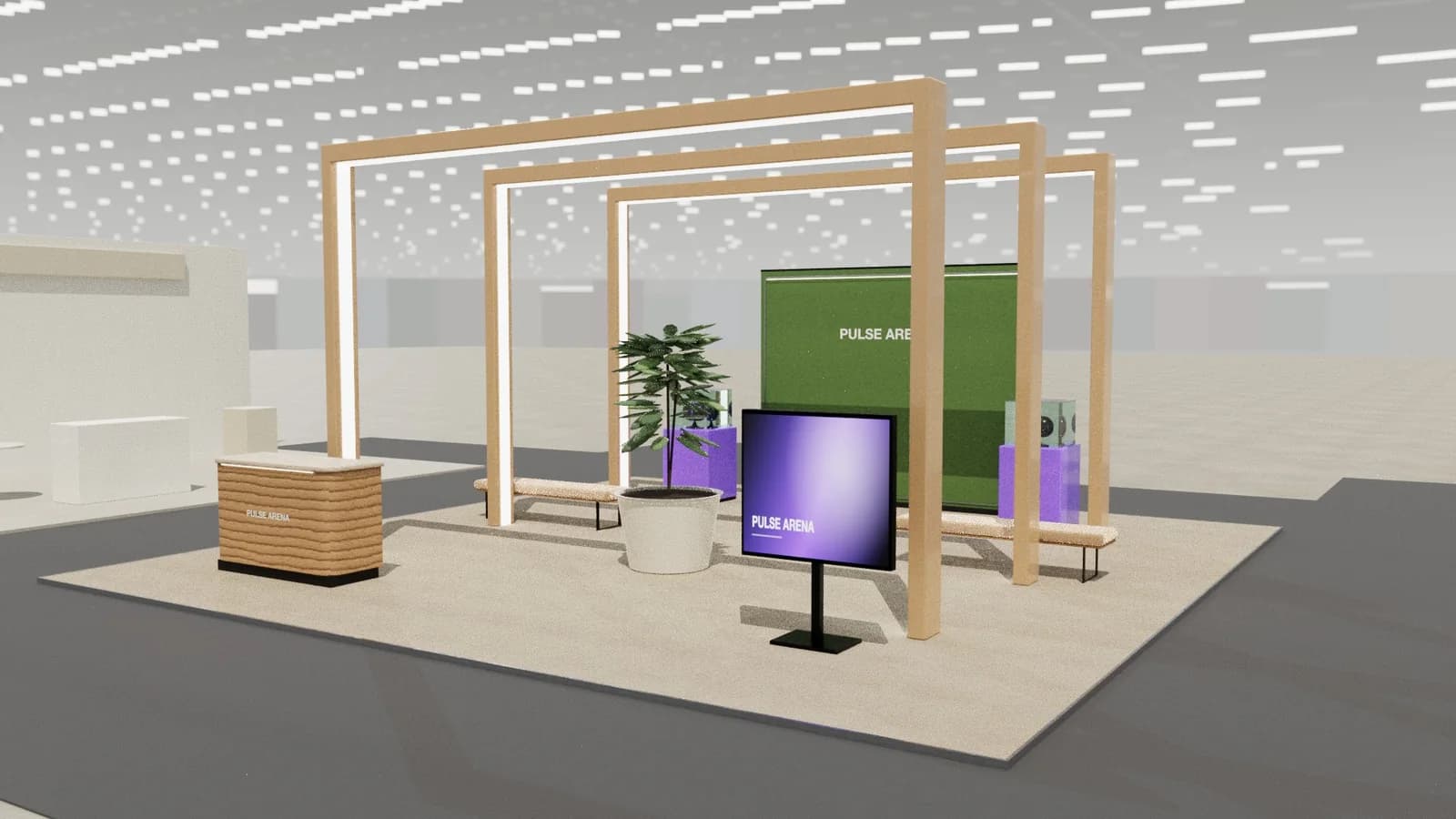
- A wall at the entrance: this is where texture earns its cost. Try timber battens.
- A room that must feel private: glass with a printed film, or a slatted screen.
- A stand that travels: aluminium and fabric, because weight and repair time matter.
Rules that limit your choices
Most venues require stand materials to be flame-retardant or to carry a recognised fire classification, and some ban particular materials or limit plastics. Ask for certificates early, because the safety officer can ask for them on site. Our fire safety guide explains what to request.
Heavy materials bring their own limits: floor loads, stacking rules and the crew needed to lift them. A stone-effect laminate or a thin porcelain panel gives the look with far less weight than real stone.
Thinking about the end of the show
The greenest material is the one you use again. Ask what happens to each panel after dismantling, and prefer rented or reusable items. See sustainable stands and reusable stands.
Frequently asked questions
01What are exhibition stands made of?
Usually an aluminium system or timber frame covered in painted board, laminate or tension fabric, with glass, acrylic and metal for details.
02What is the most durable stand material?
For repeat use, aluminium with fabric graphics is hard to beat: the frame survives, and damaged fabric can be replaced. Laminate is the toughest common surface.
03Are exhibition stand materials required to be fire-rated?
In most venues, yes. Each organiser sets the rule and may ask for certificates at the show.
04What material looks most premium?
Restraint looks premium more than any single material: a few real textures, good lighting and clean joints. See [premium stand design](/guides/premium-exhibition-stand-design).
Put it into practice
From a client brief to a 3D stand concept in minutes
An editable 3D exhibition stand concept from a written brief and the brand's website, at your exact size.
Guidance here reflects common practice. Venues, organisers and countries set their own rules: always check the exhibitor manual and work with a qualified stand builder and engineer for structures.