In short
Glass makes rooms feel open and products feel valuable, but it is heavy, needs careful handling and must be safety glass. Acrylic is lighter and easier to shape, which suits light boxes, lettering and display risers, though it scratches and may be restricted by fire rules. Use glass where it must feel solid, such as meeting rooms and upper-floor guarding, and acrylic where light and weight matter most.
Key points
- Use glass for rooms and showcases, acrylic for light and lettering.
- Glass needs manifestation so people do not walk into it.
- Balustrades on decks are engineered items.
- Plan delivery and handling of large panes early.
Where each one works
| Use | Glass | Acrylic |
|---|---|---|
| Meeting room walls | Best choice; solid and quiet | Rarely, it flexes and scratches |
| Showcases | Best for premium goods | Fine for light items and short shows |
| Deck guarding | Common when engineered and certified | Not normally suitable |
| Light boxes | Rare | Common |
| Lettering and logos | Rare | Common |
| Risers and plinths | Possible, but heavy | Light and good value |
Safety rules
Stand glass must normally be toughened or laminated, and venues often ask for proof. Large clear panes need marking at eye level so people see them: in many countries this is called manifestation. Treat it as a design feature, such as a printed line of your brand pattern, and include it in the artwork list.
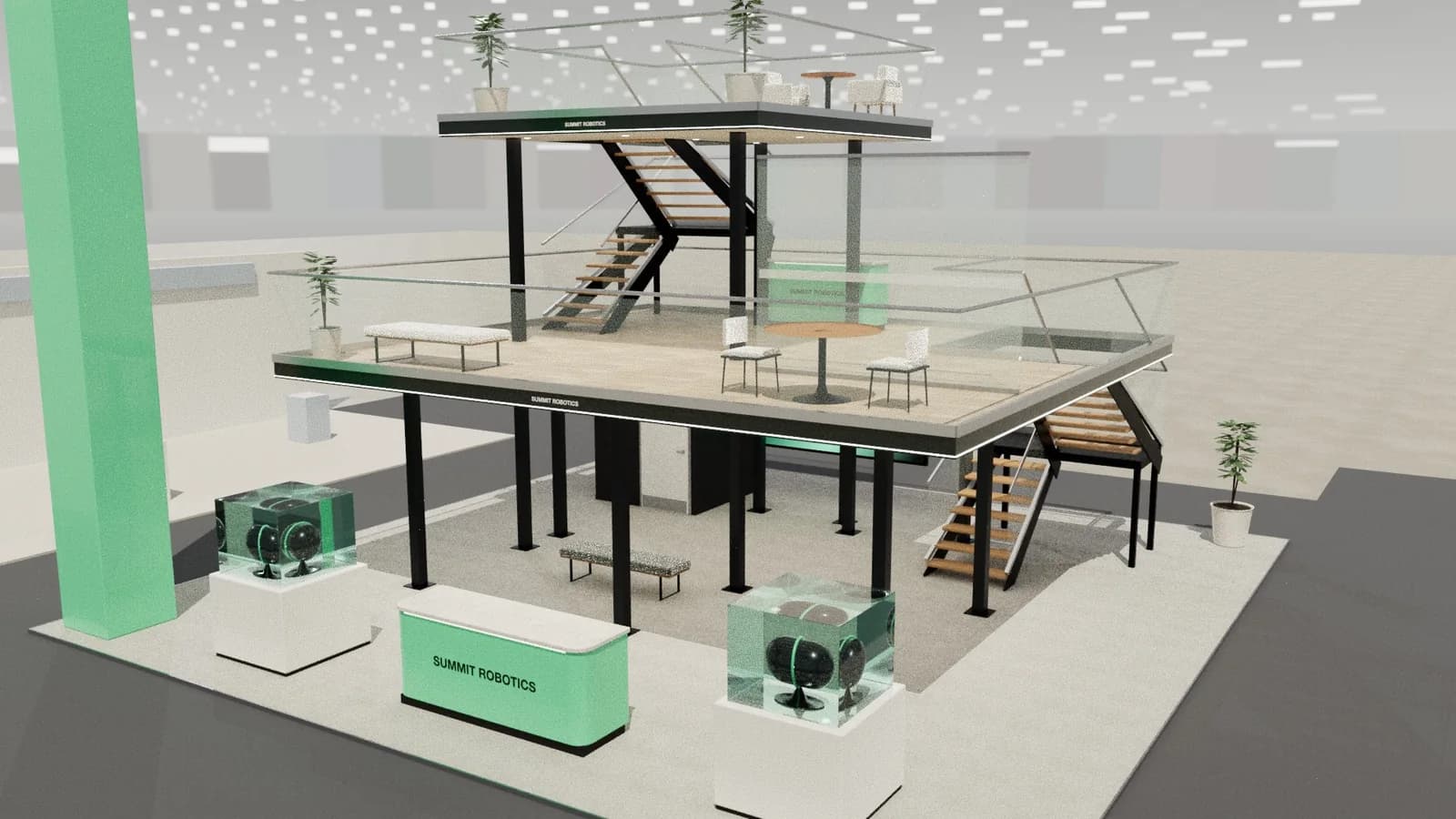
Glass on upper floors and stairs is a structural item, so it falls within the double-deck engineering pack.
Privacy without walls
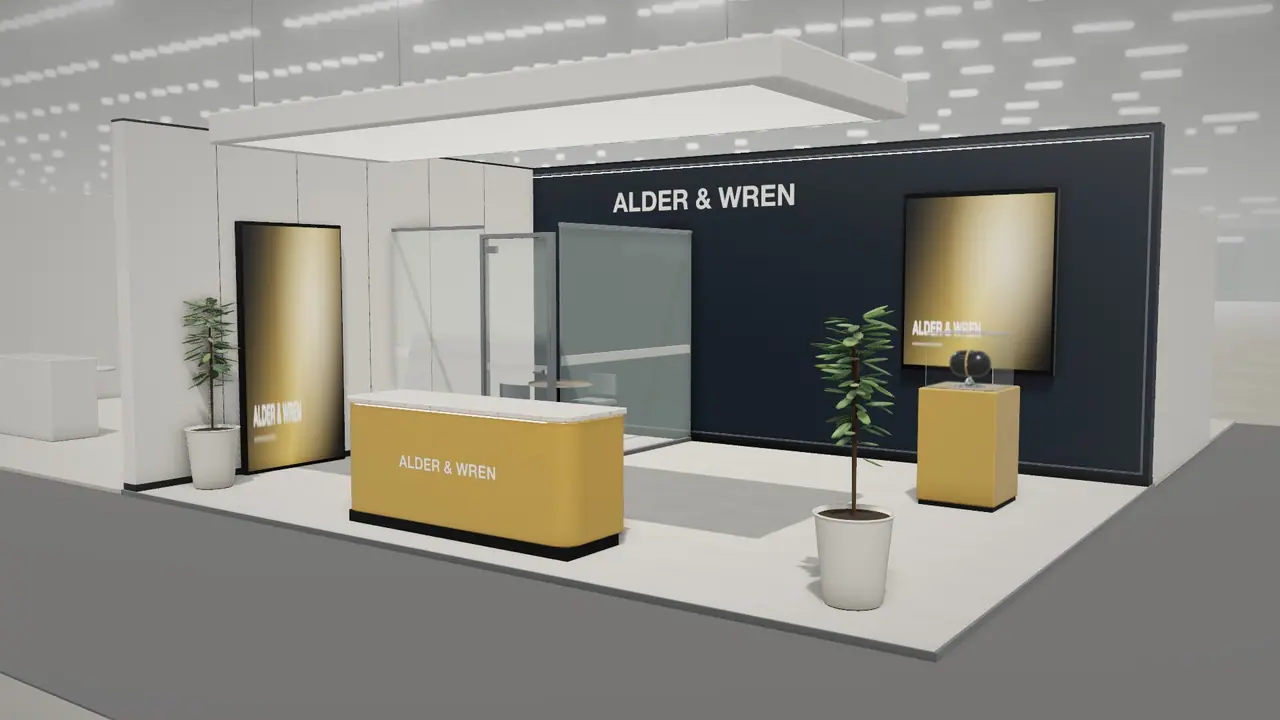
Glass rooms suit shows where a meeting should look busy from the outside. Where you need privacy, a printed film or frosted band at seated eye height keeps a room light yet stops people reading a screen or document. It also gives you another surface for branding. Acoustic privacy is another matter: glass reflects sound, and a thin wall will not keep a conversation private. See meeting rooms.
Showcases and reflections
- Light products inside the case with small, cool-running fittings.
- Use low-iron glass where product colour matters, since standard glass has a slight green tint.
- Angle cases away from strong spots to reduce reflections.
- Check security: valuable items may need locks, insurance and a plan for overnight.
Frequently asked questions
01Does exhibition glass have to be safety glass?
In most venues, yes. Use toughened or laminated glass and keep evidence for the safety check.
02What is glass manifestation?
Marks at eye level on clear glass that stop people walking into it. Many countries' accessibility and safety rules ask for it.
03Is acrylic allowed on stands?
Often, but check the fire rules: some plastics are restricted, and classification certificates may be requested.
04How do I stop acrylic scratching?
Keep protective film on until the last moment, clean with a soft cloth and a suitable cleaner, and pack it with interleaving.
Put it into practice
Booth renders that start from the brief, not a blank prompt
Photoreal exhibition booth renders made from a dimension-controlled 3D model, with the brand's colours and logo.
Guidance here reflects common practice. Venues, organisers and countries set their own rules: always check the exhibitor manual and work with a qualified stand builder and engineer for structures.