In short
A tabletop display suits conferences and small events where you get a trestle table in a corridor or foyer. Bring a light backdrop, a fitted table cover, one message and something to talk about. Everything should fit in a car boot or carry-on bag. Stand in front of or beside the table, rather than behind it, since it's a place for conversations, not a barrier between you and the delegates.
Key points
- Check the table size and whether a backdrop fits.
- Use a fitted cover and one clear graphic.
- Carry it yourself.
- Don't hide behind the table.
A tabletop kit
| Item | Note |
|---|---|
| Table cover | Fitted, branded, with hidden storage underneath |
| Backdrop | A pop-up or fabric frame, if the space allows |
| Tablet or small screen | For a short demo |
| Lead capture | An app or a simple form |
| Extension lead | Sockets can be far away |
| Tape and cable ties | For everything else |
Check your space
- How big is the table?
- How much room is behind it?
- Is a backdrop allowed?
- Is there power nearby?
- Where do delegates walk during breaks?
Traffic at conferences comes in waves around sessions. Plan to be on your feet for each break, and use the quiet time for follow-up.
One message
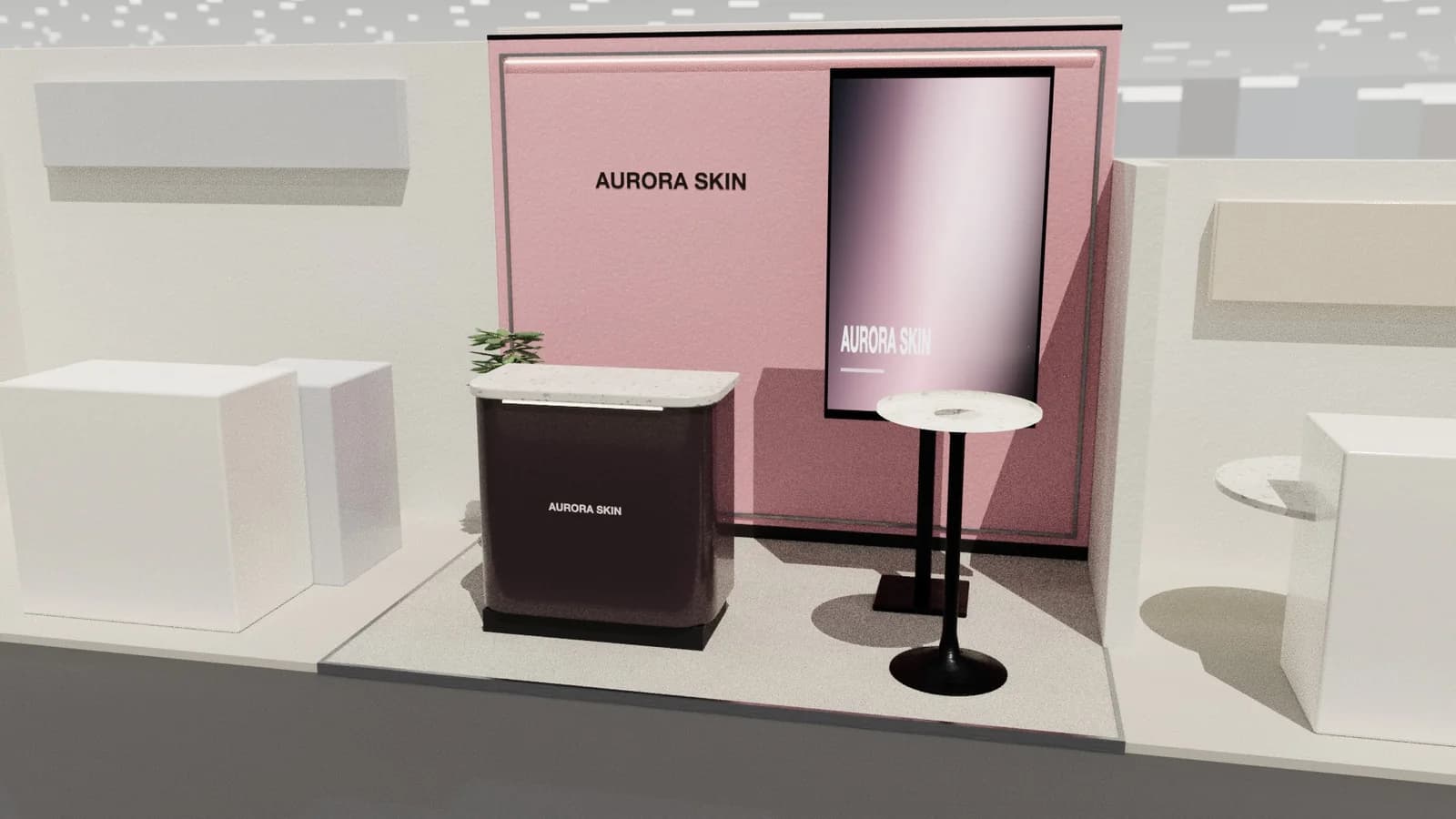
Delegates pass in a hurry with a coffee in hand. One line about the problem you solve is enough. Keep leaflets to a minimum, as they rarely get read. A short conversation starter, such as a question or an interesting object, works better. Read portable displays for backdrop choices.
Travelling light
- Choose a graphic that rolls or folds.
- Pack spare graphics in a tube.
- Check airline limits.
- Have a printed backup of your slide or demo.
Working the breaks
Conference exhibitors get a few short rushes rather than a steady flow. Before each break, get ready, put your phone away and stand where people will pass. Offer a question rather than a leaflet. Ask the organiser for the programme, so that you know which session your likely buyers will leave. Afterwards, note down who you met before the next rush arrives.
If the organiser offers a sponsored talk or a lunch slot, ask what it includes. A short talk can bring more people to a table than the table can on its own.
What it costs
A tabletop is usually the cheapest way to exhibit, and the kit can be reused. Most of the cost is the delegate fee and travel. A branded cover and a roll-up graphic go a long way, so don't over-spend on hardware that you'll carry through an airport.
Frequently asked questions
01What should I put on a conference table?
A cover, one graphic, a tablet or product and a way to capture contacts.
02Do I need a backdrop?
It helps if there's room. Check first.
03Should I stand behind the table?
Beside it or in front is better. It feels less like a barrier.
04How big is a typical conference table?
They vary. Ask the organiser for the size.
Put it into practice
Design your trade show booth in 3D before you brief the builder
Design a trade show booth in 3D at your exact booth size, from a 10x10 inline to a 20x20 island, with renders and drawings for your builder.
Guidance here reflects common practice. Venues, organisers and countries set their own rules: always check the exhibitor manual and work with a qualified stand builder and engineer for structures.