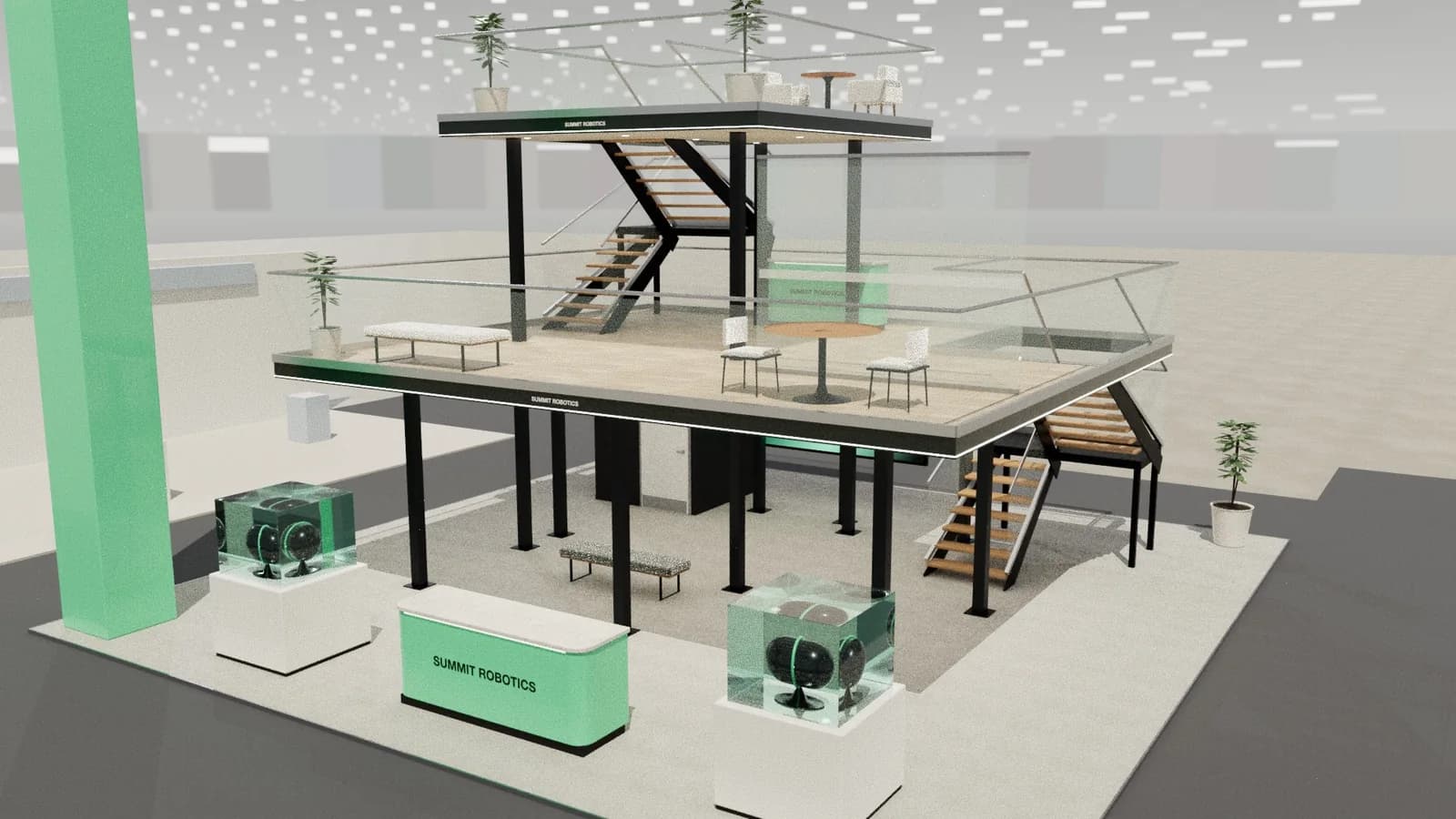
In short
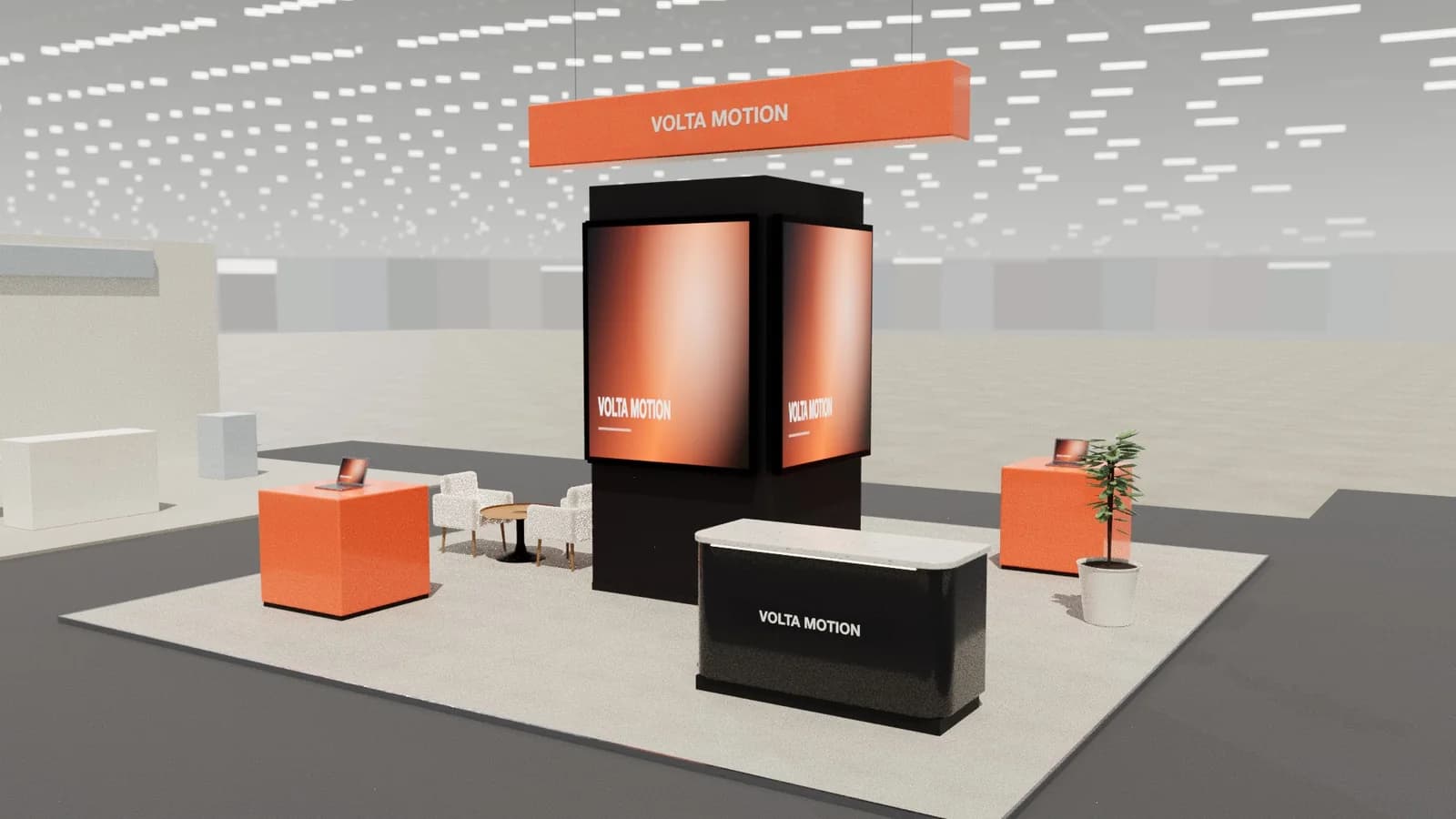
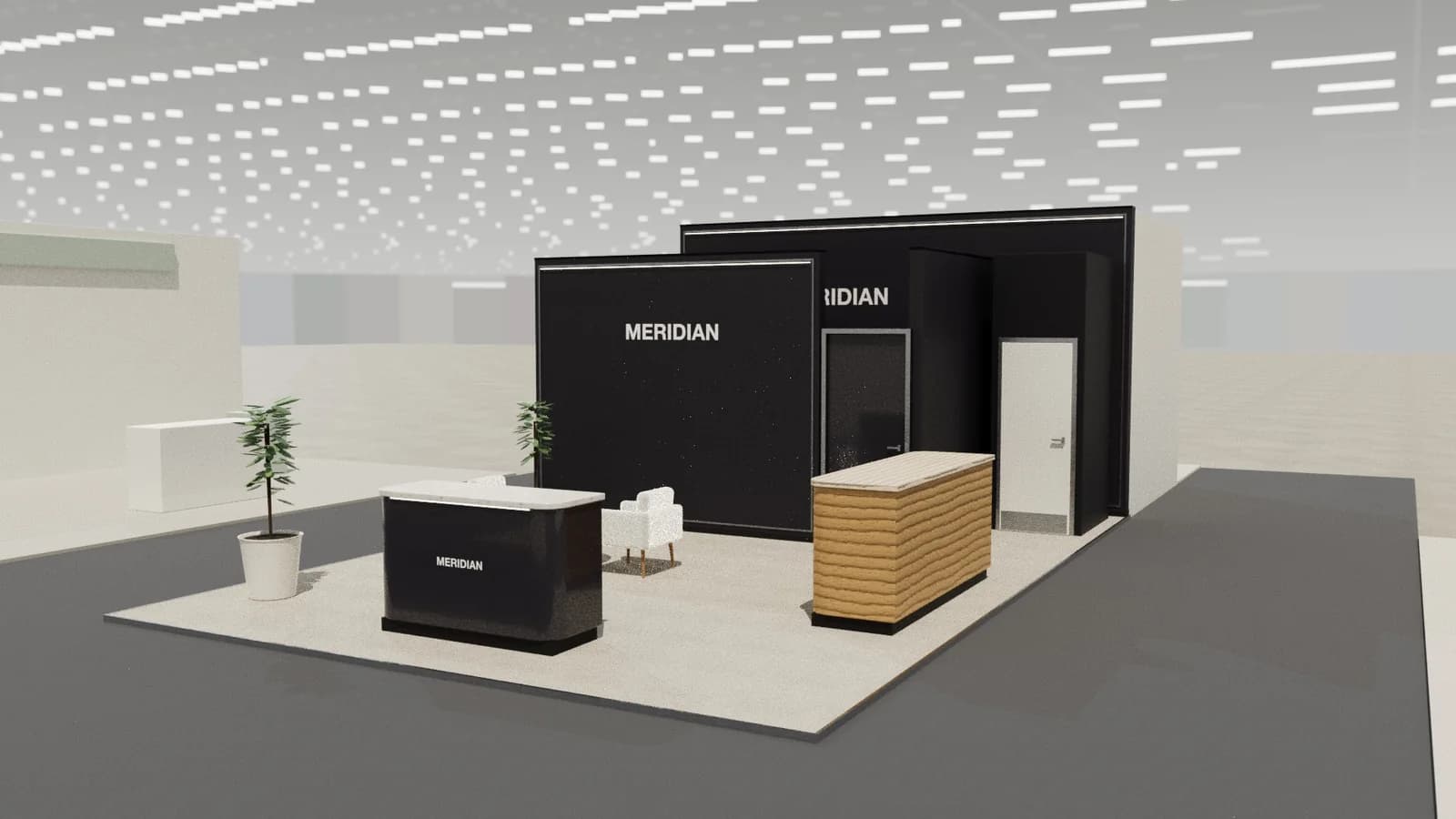
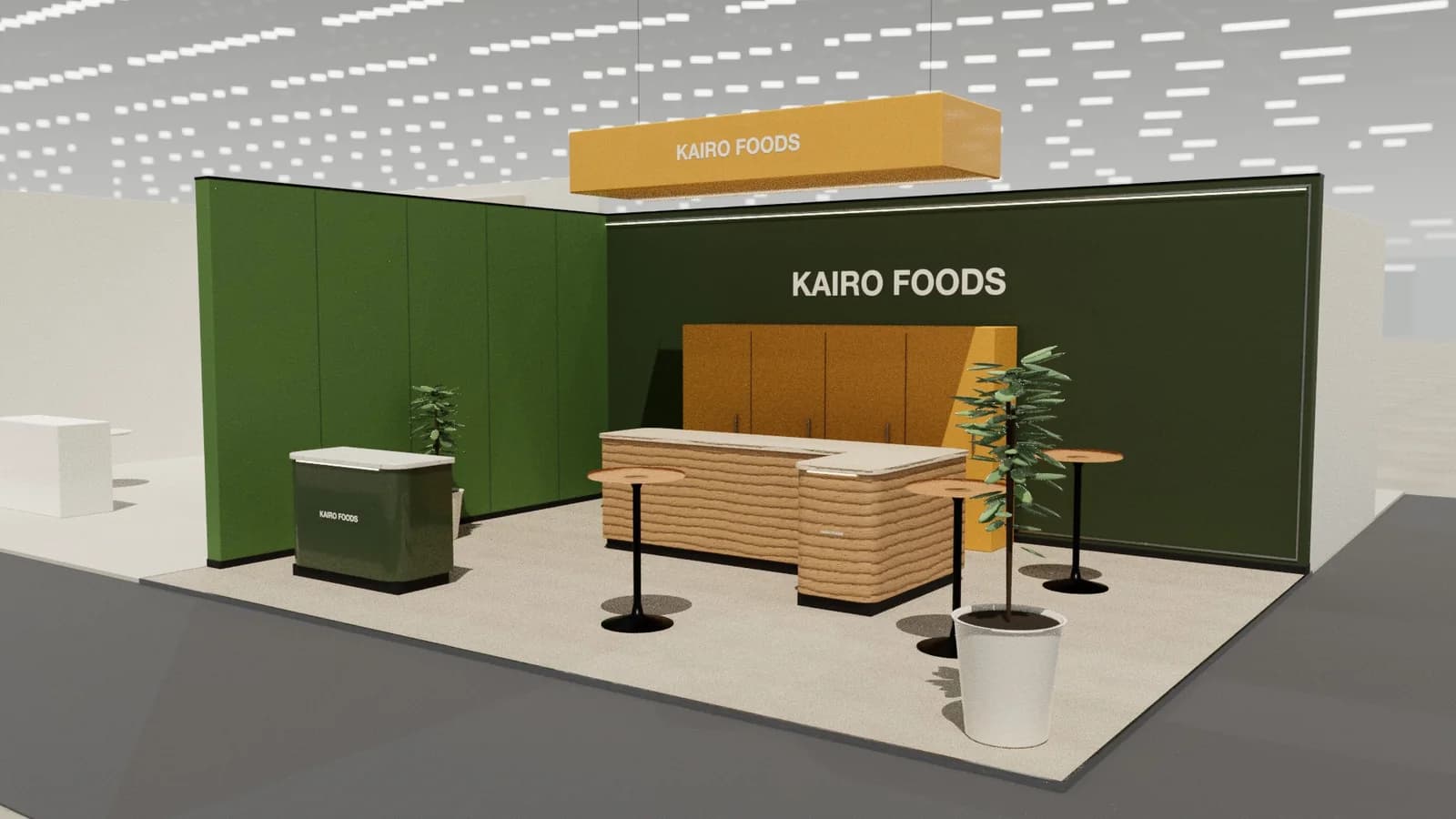
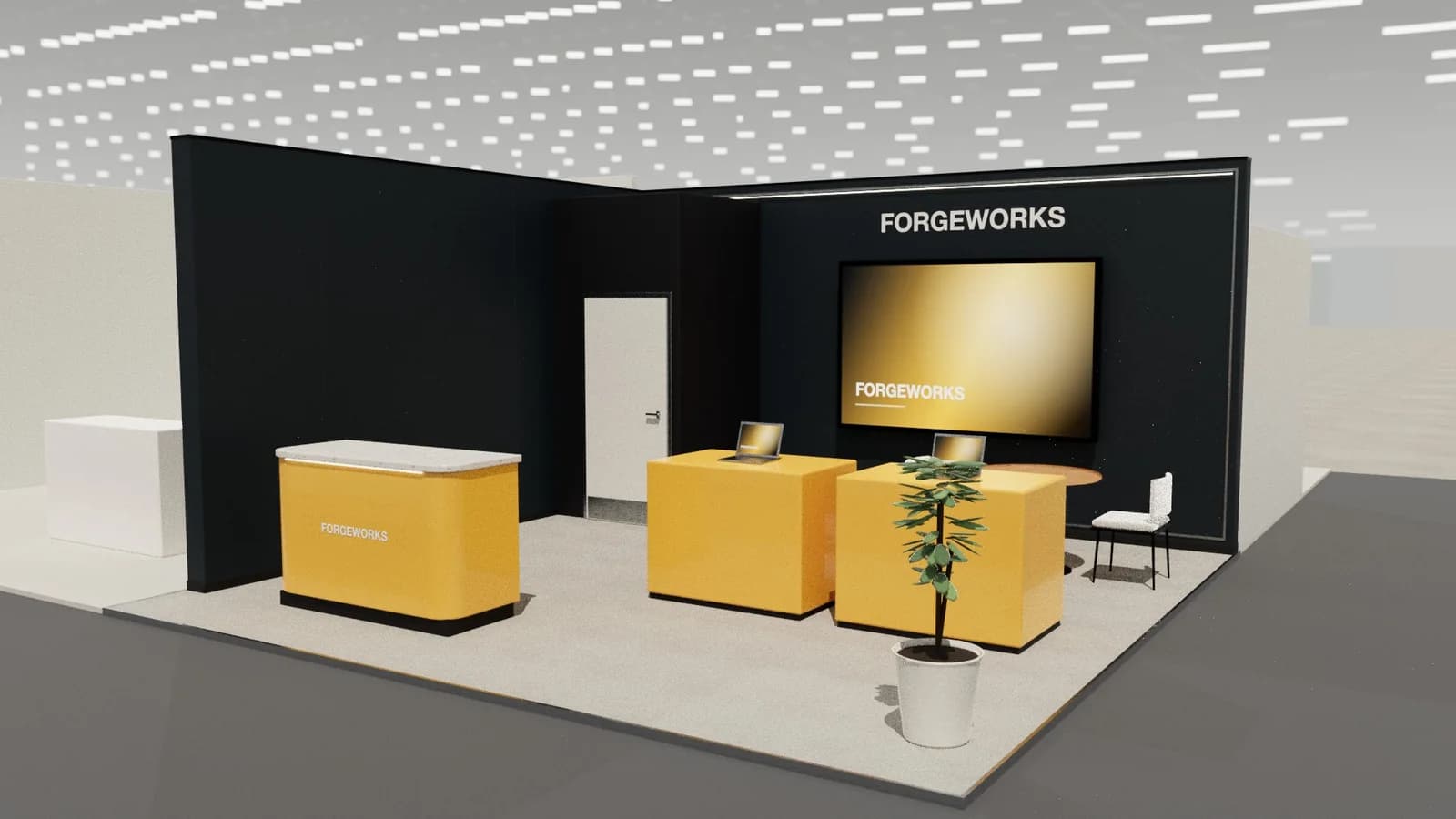
A corner stand has two open sides and two closed walls. Keep both aisle edges open, put the tallest branding where the closed walls meet, and aim a product or demo at each approach. Storage and any meeting table belong in the closed corner. A corner gives visitors a way through and more frontage, so don't waste it by putting a counter across the point where the aisles meet.
Key points
- Two open sides mean two approaches.
- Put the tallest element in the closed corner.
- Keep the open corner free.
- Face something towards each aisle.
Five rules
- 1Find the busier aisle and put your main message on it.
- 2Keep the corner where the aisles meet open.
- 3Use the closed corner for height, storage and a table.
- 4Put a demo or product on each open side.
- 5Let people walk through, without a dead end.
Layouts by size
| Size | Layout |
|---|---|
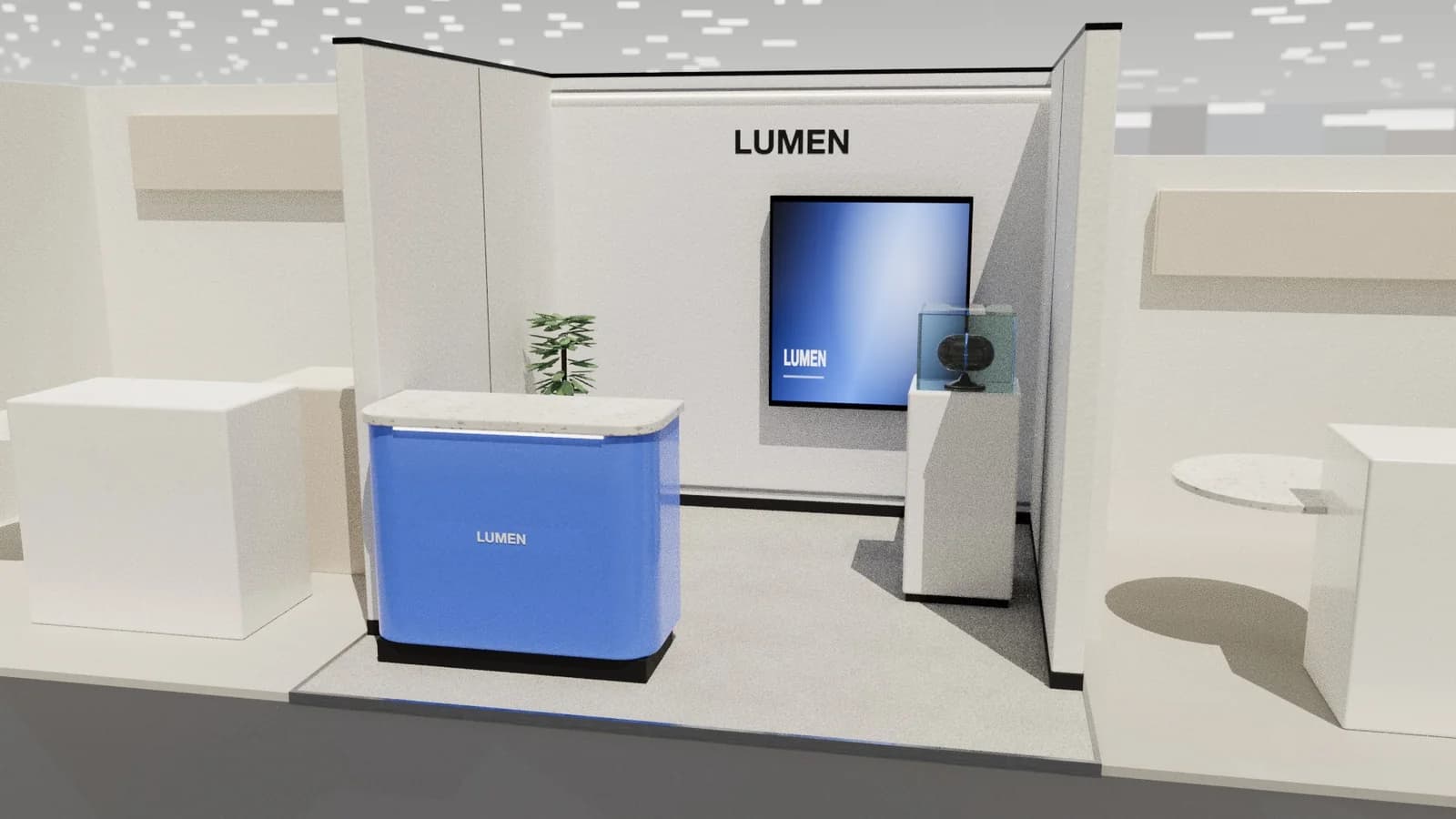
| 3 × 3 m | One L-shaped wall, one counter, a clear front |
| 6 × 4 m | Brand wall and demo, with a small table in the corner |
| 6 × 6 m | Store in the closed corner, a demo on each aisle |
| 9 × 6 m | Meeting room on the closed side, lounge and two demos |
Rules to check
Corner stands usually cost more per square metre, and some shows limit how much of a side can be closed. Walls next to neighbours may need finishing on the back, or staying below a set height. Read exhibition stand dimensions and your manual.
Common mistakes
- A counter across the open corner, which turns it into a barrier.
- A back wall on one aisle, wasting the second open side.
- Staff grouped at the corner.
- Forgetting that the second aisle sees the side of everything.
Which corner are you on?
Corners aren't equal. Look at which aisle carries more visitors, and from which direction they arrive. A stand at the junction of a main aisle and a cross aisle should aim its message at the main route, and use the side aisle as a quieter way in. Check whether a column, a neighbouring tall wall or a hanging sign will block a view.
Your two neighbours
The closed walls face your neighbours' stands. Check what height is allowed, and how the backs of your walls will look, because they may be visible above a lower stand. Ask to see the neighbouring plans if the organiser can share them, and tell your builder who is next to you, so that build-up can be coordinated.
Frequently asked questions
01What is a corner stand?
A stand at the junction of two aisles, with two open sides.
02Are corner stands worth the premium?
Often, because they offer more frontage and two approaches.
03Where should the logo go?
High on the closed walls, so it can be read from both aisles.
04How is it different from a peninsula?
A peninsula has three open sides. See [peninsula stand design](/guides/peninsula-stand-design).
Put it into practice
Booth renders that start from the brief, not a blank prompt
Photoreal exhibition booth renders made from a dimension-controlled 3D model, with the brand's colours and logo.
Guidance here reflects common practice. Venues, organisers and countries set their own rules: always check the exhibitor manual and work with a qualified stand builder and engineer for structures.