In short
Jewellery and watch stands work like small private salons. Protect the product, control the light and make the visitor feel like a guest. Use locked cases, directional high-CRI light and low surfaces for trying pieces. Security, insurance and overnight storage have to be part of the design, not an afterthought.
Key points
- Window display, Salon table, Secure store, Reception are the core zones.
- Avoid: over-lighting, which flattens gems.
- Avoid: cases that cannot be opened quickly.
- Avoid: no secure store.
- See the template and trade show guides linked below for jewellery and watch brands.
Who visits and what they want
Retail buyers, distributors, press and private clients.
What to show
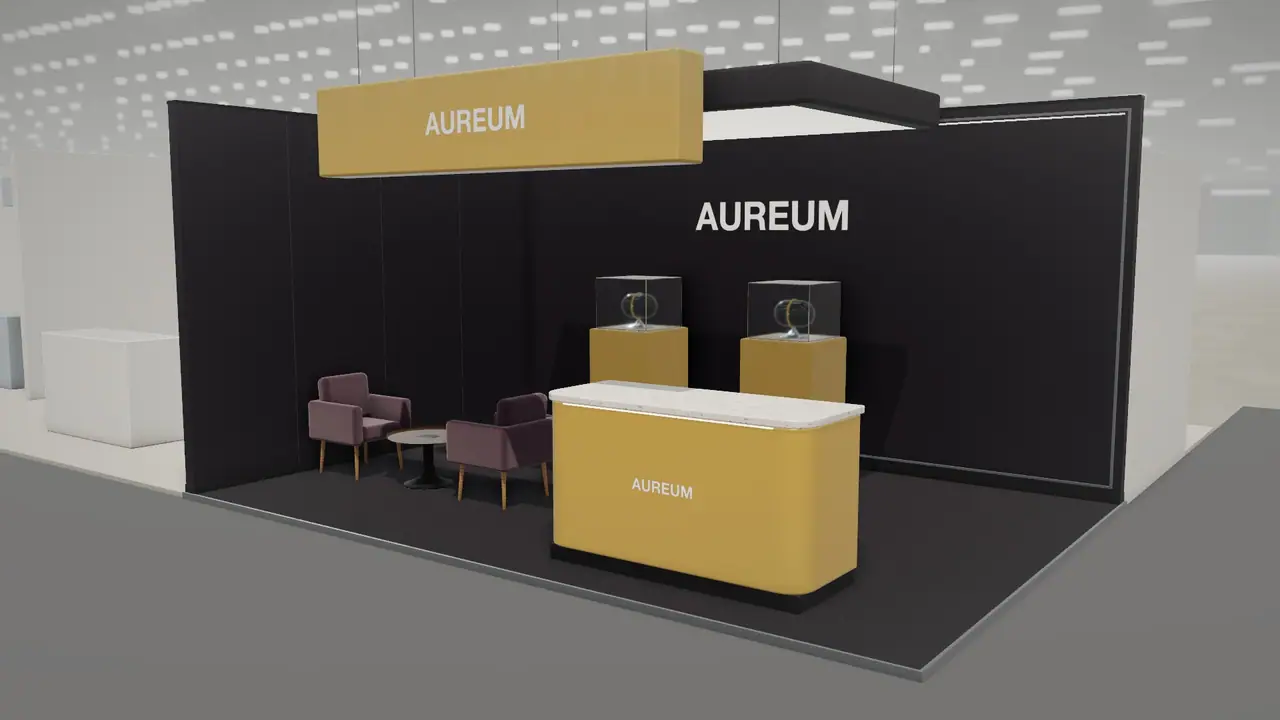
Fine jewellery, watches and gemstones in secure vitrines, with a seated area for trying pieces.
Zones for a jewellery and watch stand
| Zone | Purpose | Where it goes |
|---|---|---|
| Window display | Hero pieces in cases | Aisle edge |
| Salon table | Seated appointments | Interior |
| Secure store | Stock and safes | Rear |
| Reception | Greeting and security | Entrance |
On a 3 × 3 m stand, keep the first two zones and book meetings elsewhere. From about 36 m² every zone fits; see stand sizes for what fits at each size.
Materials, lighting and graphics
Dark or ivory walls, fine materials, and tight beams on each piece. High CRI and accurate colour are essential.
For detail on light levels and colour rendering, see stand lighting; for wall graphics, see graphics and branding.
Starting conversations and capturing leads
Greet each visitor personally, and offer a seat. Show one piece at a time. Keep track of who is holding what.
Rules and practicalities
Insurers often set conditions for display, safes and staffing. Check the venue's overnight security policy.
Venue rules on height, open sides, fire safety and services still apply; see venue approval.
Common mistakes
- Over-lighting, which flattens gems.
- Cases that cannot be opened quickly.
- No secure store.
Trade shows for jewellery and watch brands
Show-specific guides: Ambiente, Arabian Travel Market. For more, see stand design by trade show.
Frequently asked questions
01How do I light jewellery on a stand?
Use small, high-CRI directional fittings inside the case, and keep ambient light low.
02What about security overnight?
Follow your insurer's conditions. Usually valuables go into a safe or leave the hall.
03What size stand does a jewellery and watch exhibitor need?
Size to the activities: about 9 m² for one conversation point, 18–36 m² to add demos and a meeting table, and 50 m² or more for meeting rooms and hospitality. See [stand sizes](/guides/topics/exhibition-stand-sizes).
04Can AI design a jewellery and watch booth?
AI can produce a complete concept quickly: [Studio](/ai-booth-designer) lays out the zones above at real scale and renders the result. A stand builder still checks structure, services and compliance before building.
Put it into practice
An AI booth designer that designs in 3D, not in pixels
An AI booth designer that plans an exhibition stand in 3D at your size, checks it can be built, and changes it when you ask in plain English.
Guidance here reflects common practice. Venues, organisers and countries set their own rules: always check the exhibitor manual and work with a qualified stand builder and engineer for structures.