In short
You cannot soundproof a stand, but you can make a conversation easier. Hard floors, glass and open ceilings let noise bounce around, so add carpet, fabric walls, felt panels and overhead baffles where people talk. Put meeting tables away from your own screens and neighbours' stages. Treat closed rooms as privacy from view rather than sound, and for sensitive talks, book a room elsewhere in the venue.
Key points
- Absorb sound near conversations, not everywhere.
- Carpet and fabric do the most for their cost.
- Stand walls rarely stop sound; they reduce it.
- Your own screens may be your biggest noise source.
Why stands are loud
Exhibition halls are huge hard boxes filled with people, music and machinery. Most stands have no roof, so a stand wall only blocks direct sound. A meeting can be interrupted by a neighbour's demo twenty metres away. Good stand acoustics aim for one thing: a comfortable talking distance at the places where talks happen.
What actually helps
| Measure | Effect | Notes |
|---|---|---|
| Carpet or soft flooring | Reduces footfall and reflections | A cheap win, at least in talk zones |
| Fabric walls and felt panels | Absorb reflections near people | Must meet fire rules |
| Baffles overhead | Reduce reverberation | Check ceiling rules |
| Upholstered seating | Absorbs sound at head height | Good in lounges |
| Distance | Moves a talk away from sources | The cheapest measure of all |
| Headsets for talks | Removes loudspeakers | Useful for stands with a stage |
Meeting rooms
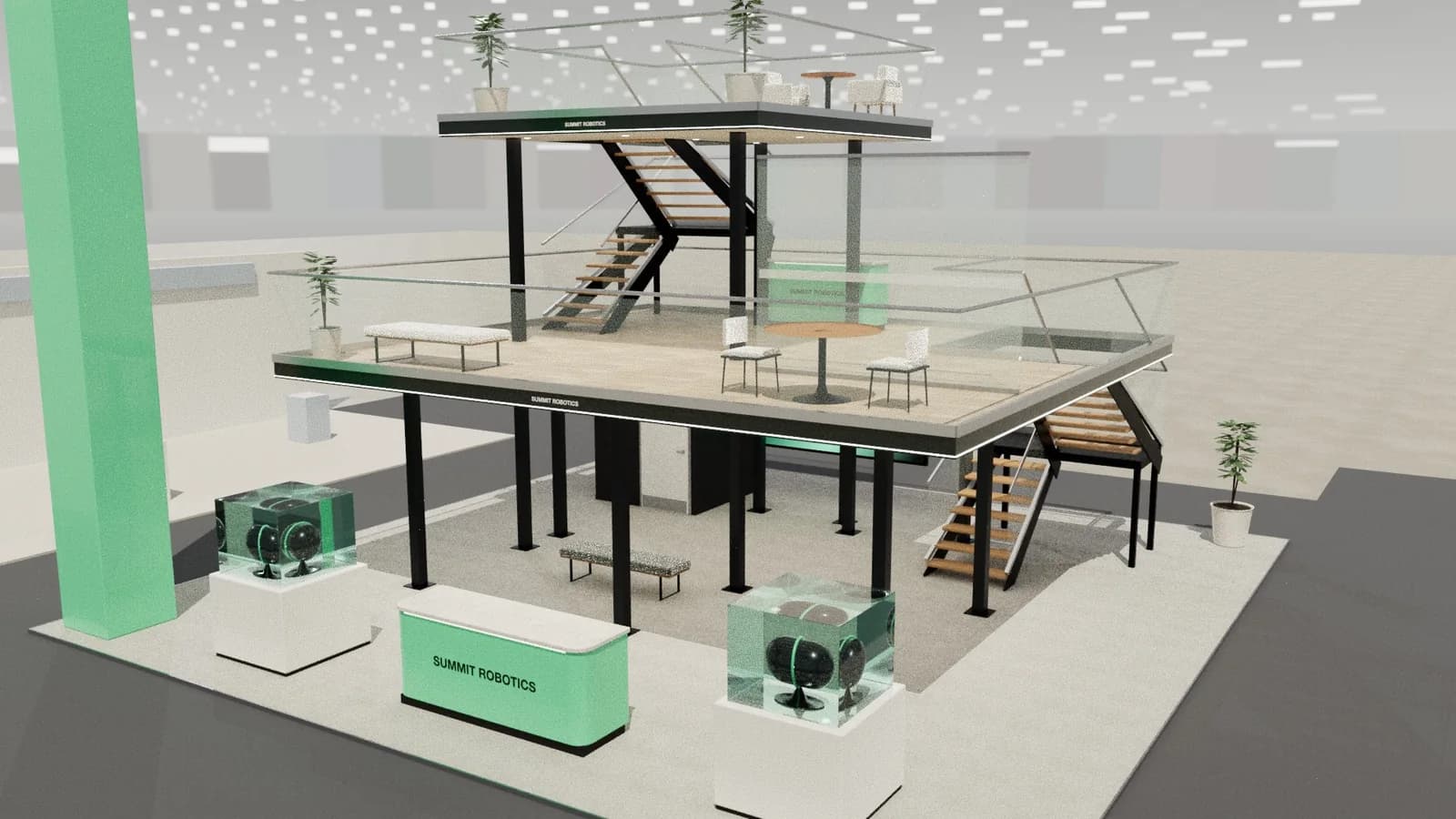
A closed room reduces noise, but gaps at the ceiling and thin walls let plenty through. Solid walls, a door that seals, and soft surfaces inside make a real difference. If discussions are confidential, assume people nearby may overhear. Larger stands put rooms on an upper deck for the sake of both noise and privacy, which brings its own costs.
Noise rules
- Most shows set a volume limit, which may be enforced.
- Point speakers into the stand and down, not across the aisle.
- Silent video with subtitles works better than a soundtrack.
- Tell neighbours if you have a loud demo at set times.
Testing it on site
Noise levels in a hall change once the visitors arrive, so test what you can during build-up, then adjust on day one. Stand at your meeting table and have two people hold a normal conversation. If the neighbouring stand's sound carries over, a polite word usually works. If not, organisers have rules, and they are the right people to enforce them.
Frequently asked questions
01Can you soundproof an exhibition stand?
Not really. Without a sealed roof, sound gets in. You can reduce it enough for a comfortable conversation.
02Do acoustic panels work on a stand?
They help with reflections close to where people talk. They will not stop sound from a nearby stage.
03Is carpet better than a hard floor for noise?
Yes. It reduces footfall and reflected noise. See [flooring options](/guides/booth-flooring-options).
04How do I keep a meeting room quiet?
Use solid walls, a door that seals and soft furnishings, and place it away from your stage and speakers.
Put it into practice
From a client brief to a 3D stand concept in minutes
An editable 3D exhibition stand concept from a written brief and the brand's website, at your exact size.
Guidance here reflects common practice. Venues, organisers and countries set their own rules: always check the exhibitor manual and work with a qualified stand builder and engineer for structures.