In short
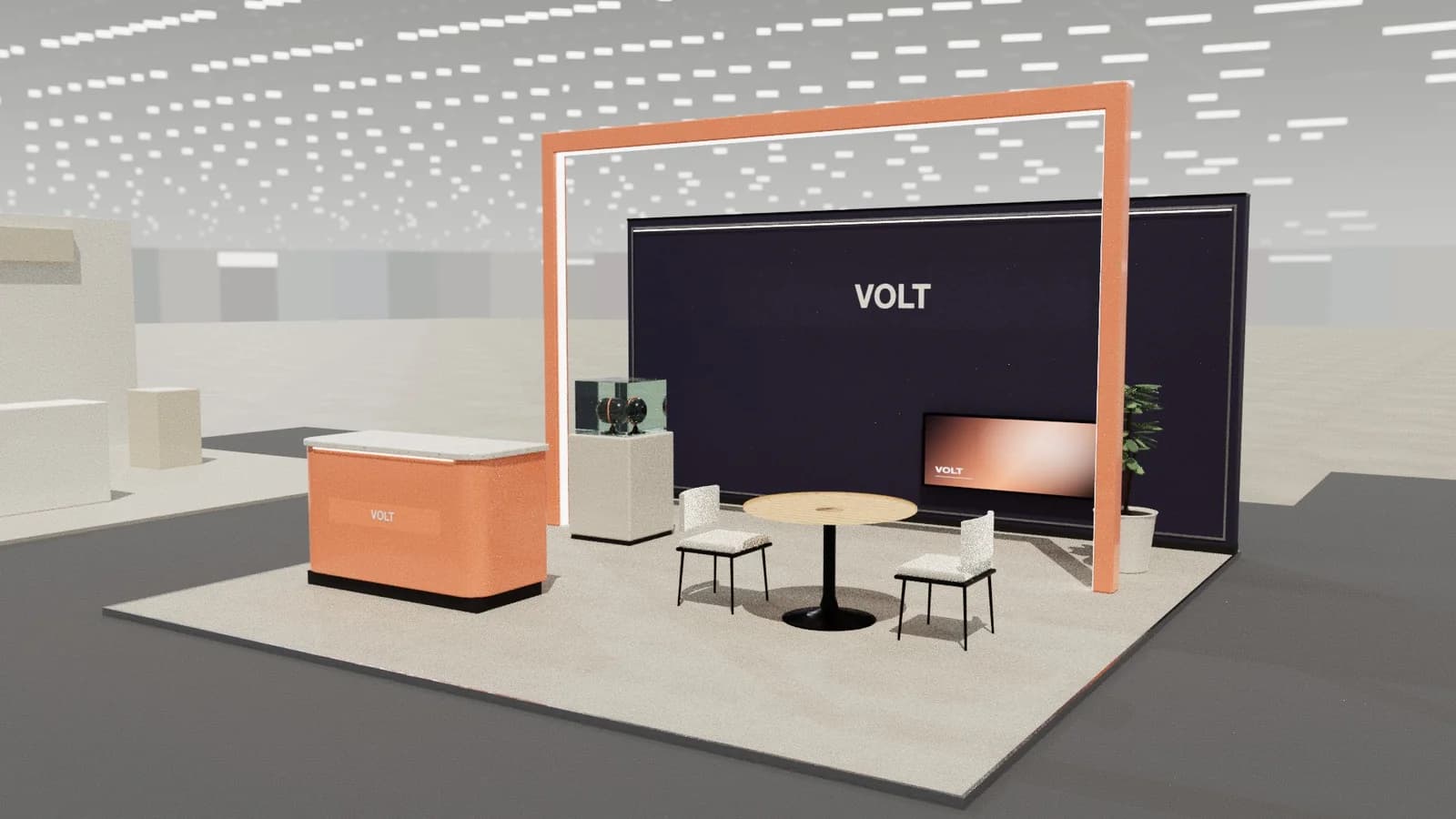
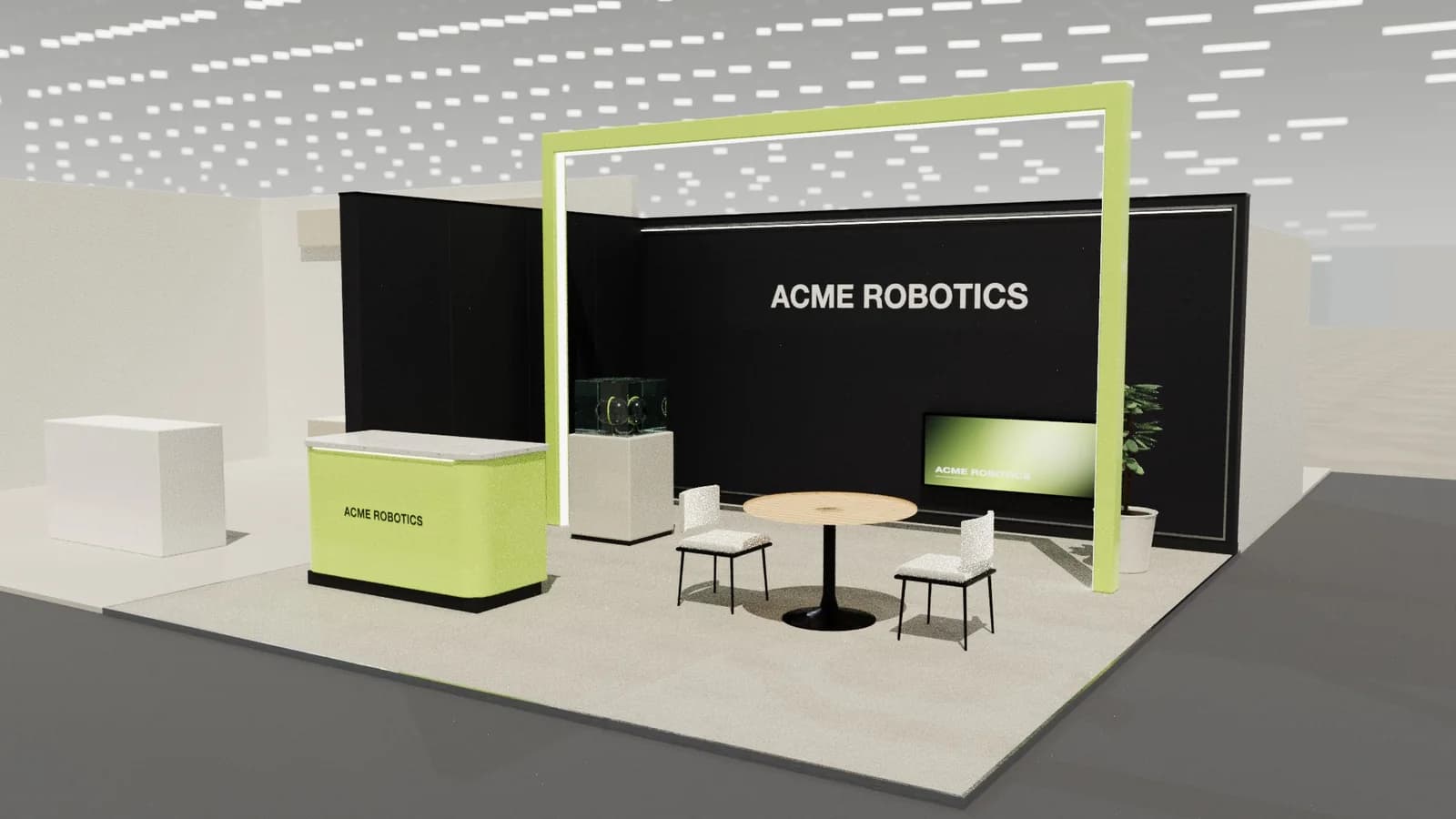
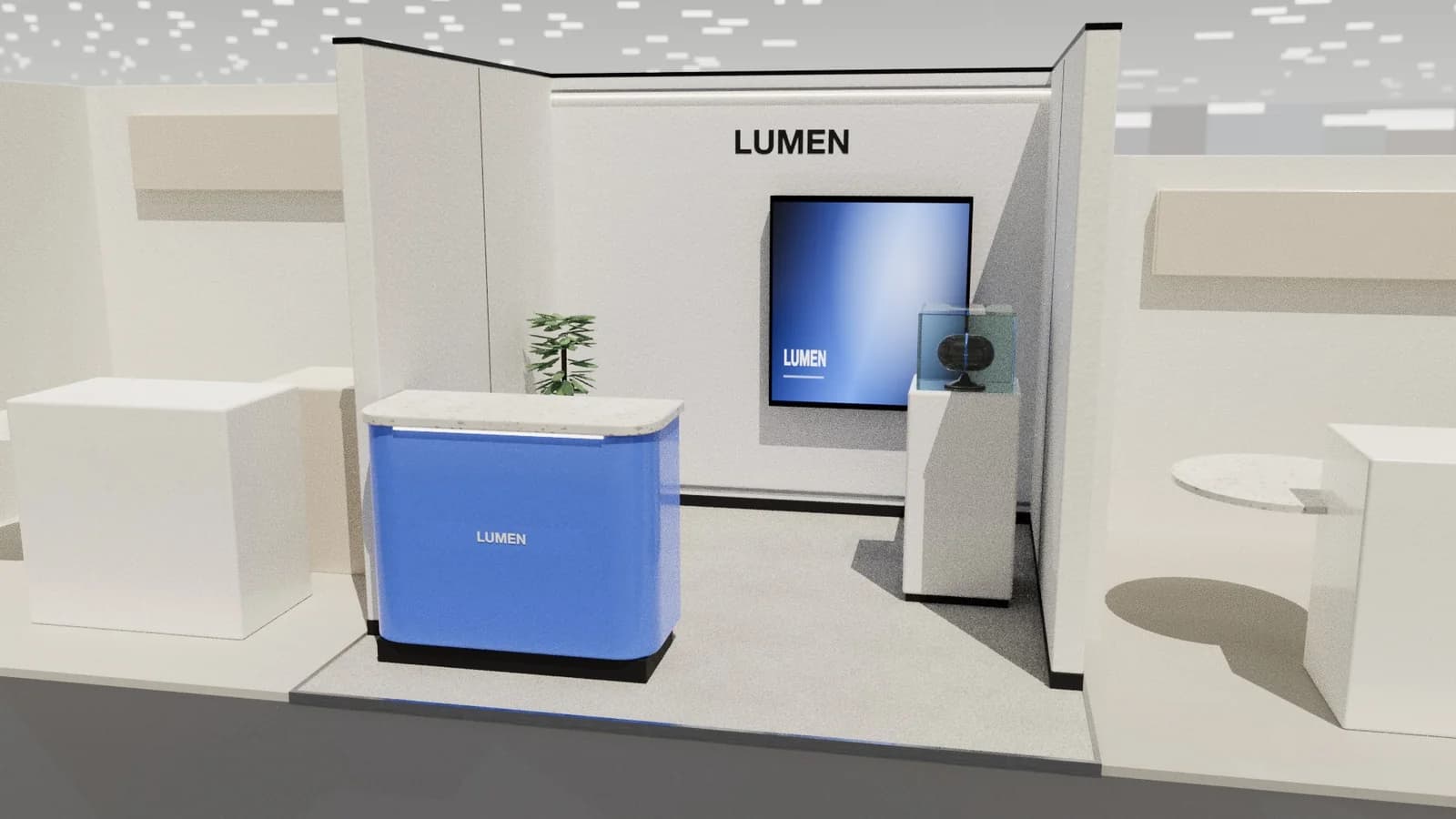
A booth back wall works in three bands: the top band (above about 2 m) carries the logo and one short message visible over people's heads, the middle band (about 0.9–2 m) holds the main image, screen or products, and the lower band is usually hidden by people and furniture, so keep it plain. One message, large, beats a wall of text.
Key points
- Top band: logo and a short message above about 2 m.
- Middle band: hero image, screen or product shelves.
- Lower band: plain; it will be hidden.
- Backlit fabric makes a wall readable across the hall.
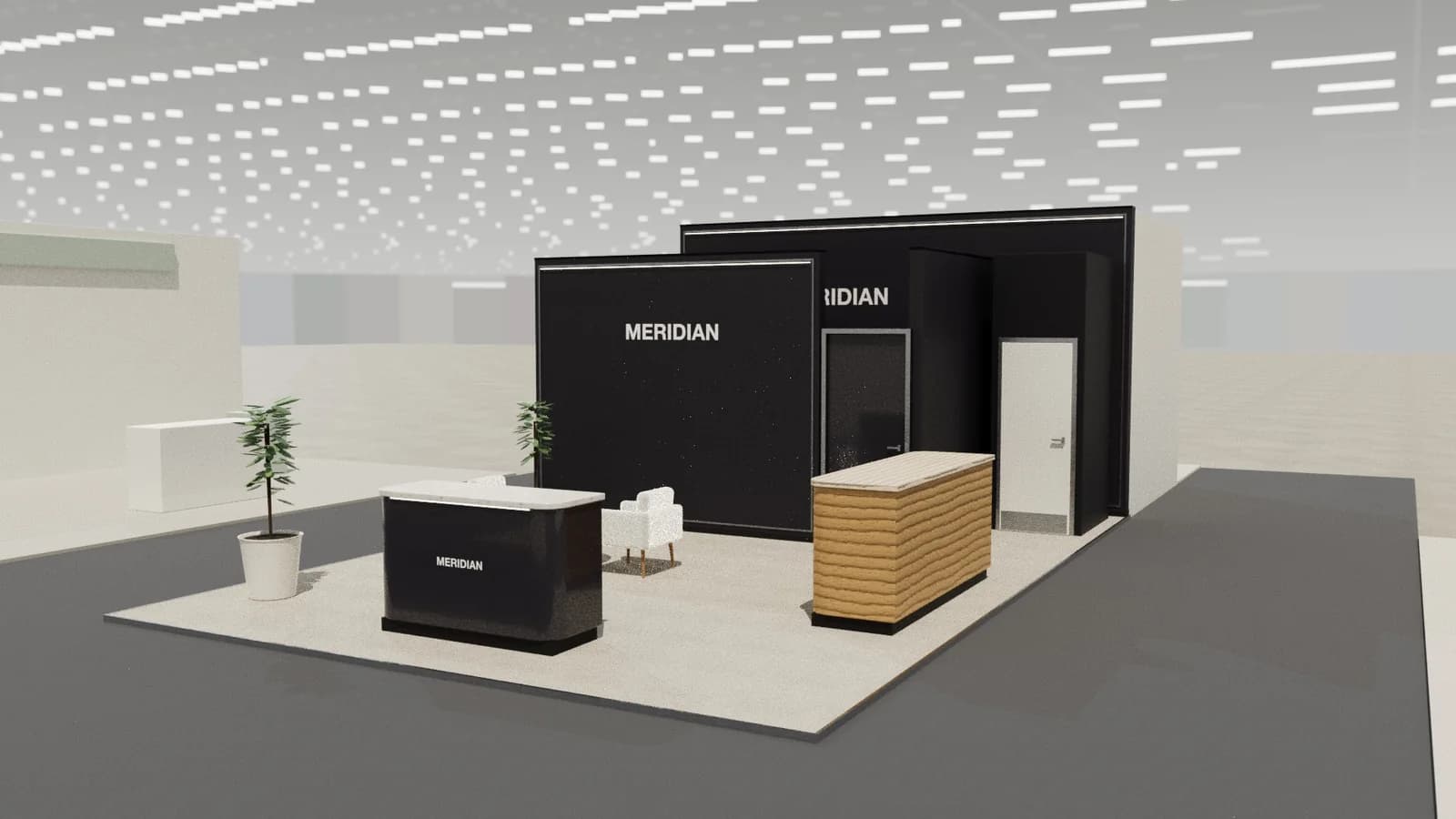
- Storage can hide behind a false back wall with a door.
The three bands
| Band | Height | Content |
|---|---|---|
| Top | Above about 2 m | Logo and a short message, readable from far away |
| Middle | About 0.9–2 m | Main image, screen, products, QR codes |
| Lower | Below about 0.9 m | Plain colour or texture; hidden by people |
What to put on it
- One proposition of five to eight words.
- A large image that shows the product or outcome.
- A screen with silent video in the middle band.
- Lit shelves or niches for products.
- No contact details or long lists; people photograph QR codes instead.
Materials
- Tension fabric (SEG): seamless, light, reusable.
- Backlit fabric lightbox: glows, reads across the hall.
- Printed panels: rigid, good for fixings.
- LED wall: dynamic, but needs content and power.
See graphics and branding for file preparation and print.
A back wall with storage
On space-only stands, a false back wall 0.8–1.2 m in front of the plot edge creates a store with a door at one end. You lose some floor but gain a tidy stand. See 6 × 3 m booth design.
Back walls on different stand types
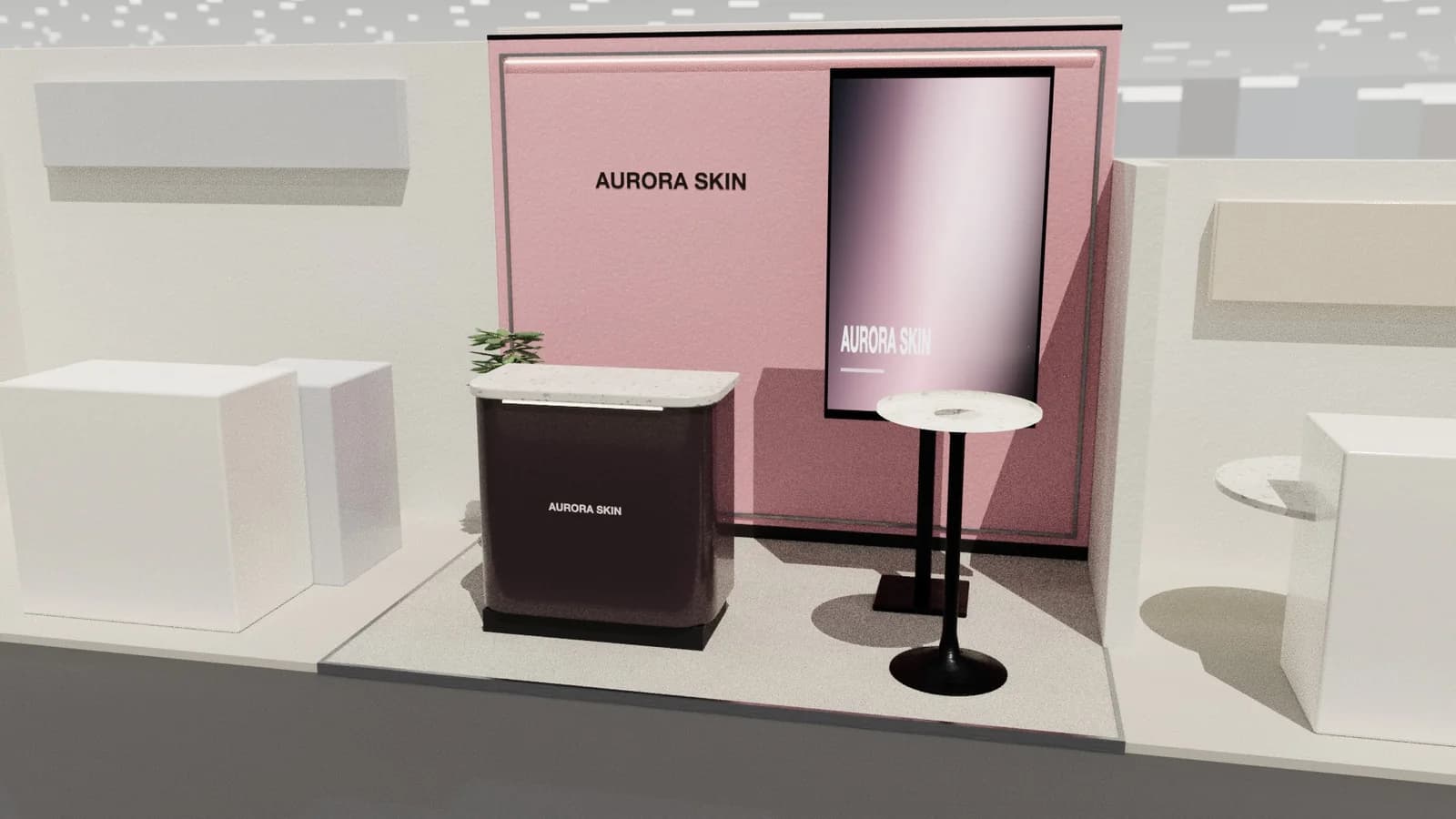
- Row stands: the back wall is the main billboard; use its full width.
- Corner stands: put the tallest element where the two closed walls meet, and repeat the logo on the side wall facing the second aisle.
- Peninsula stands: the back wall is shared with a neighbour, so it is seen from three directions; brand both faces of any return walls.
- Island stands: there is no back wall. A central tower, core or hanging sign takes over the job, branded on every face.
See exhibition stand types for the definitions organisers use.
Frequently asked questions
01What size should the logo be?
Large enough to read from 10–20 m away: on a 3 m wide wall, often 1 m or more wide, placed above 2 m.
02Should the back wall have text?
One short message. Visitors give a stand a few seconds from the aisle.
03Is a backlit wall worth it?
Often yes: it is one of the most visible upgrades for its cost.
04Can I hide storage behind the back wall?
Yes on space-only stands, with a door at one end; check the organiser allows closed areas.
Put it into practice
Booth renders that start from the brief, not a blank prompt
Photoreal exhibition booth renders made from a dimension-controlled 3D model, with the brand's colours and logo.
Guidance here reflects common practice. Venues, organisers and countries set their own rules: always check the exhibitor manual and work with a qualified stand builder and engineer for structures.