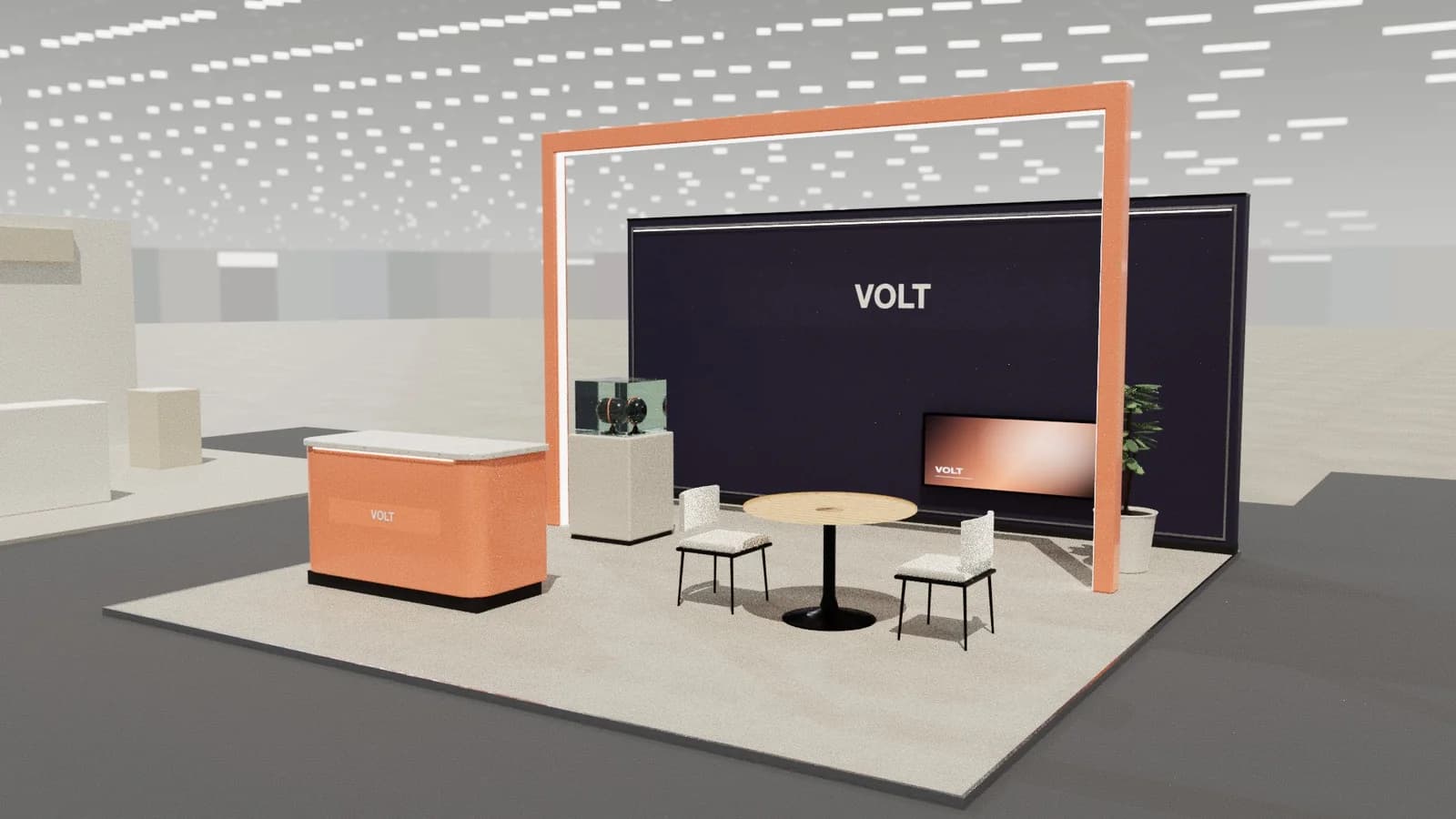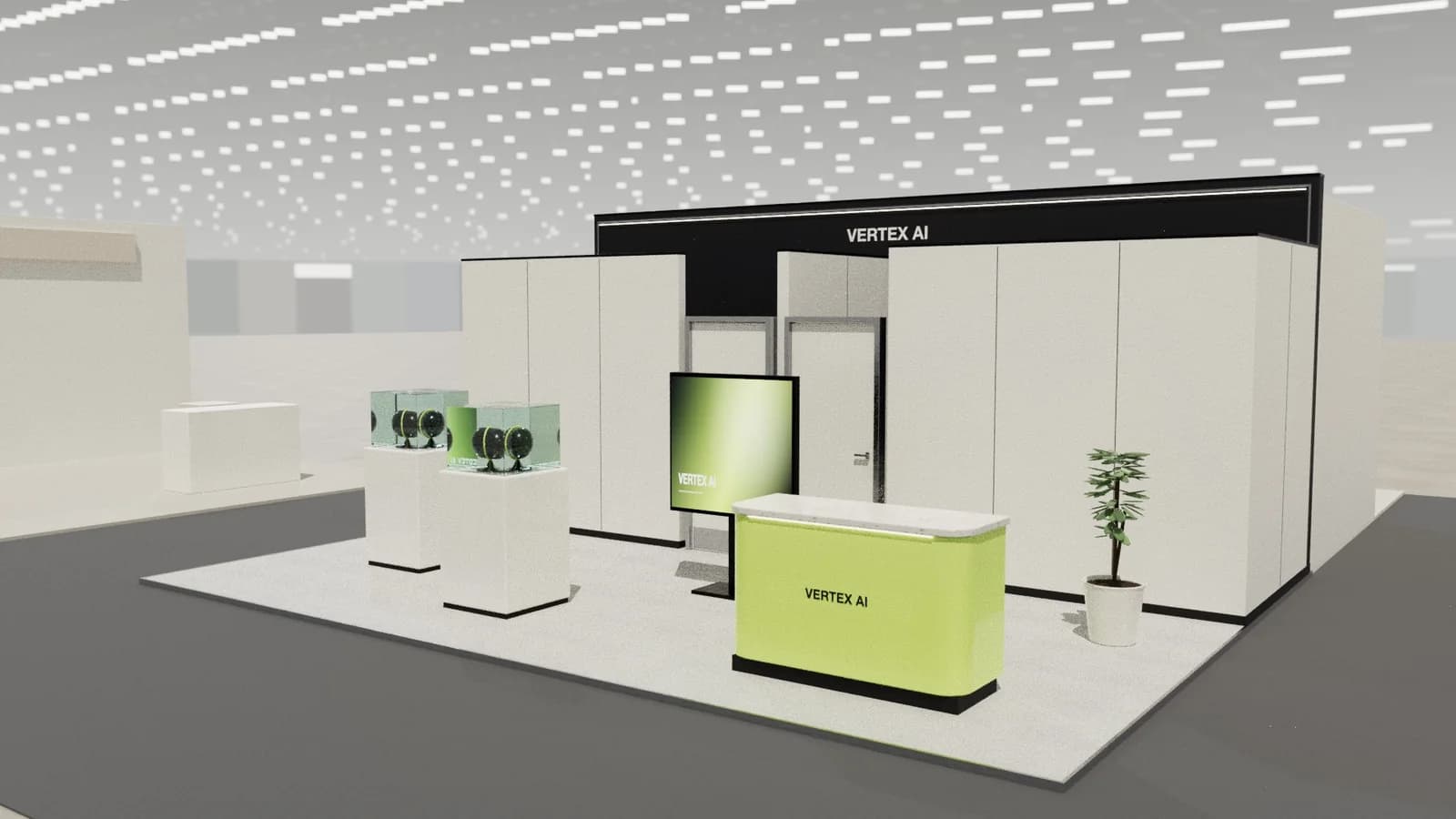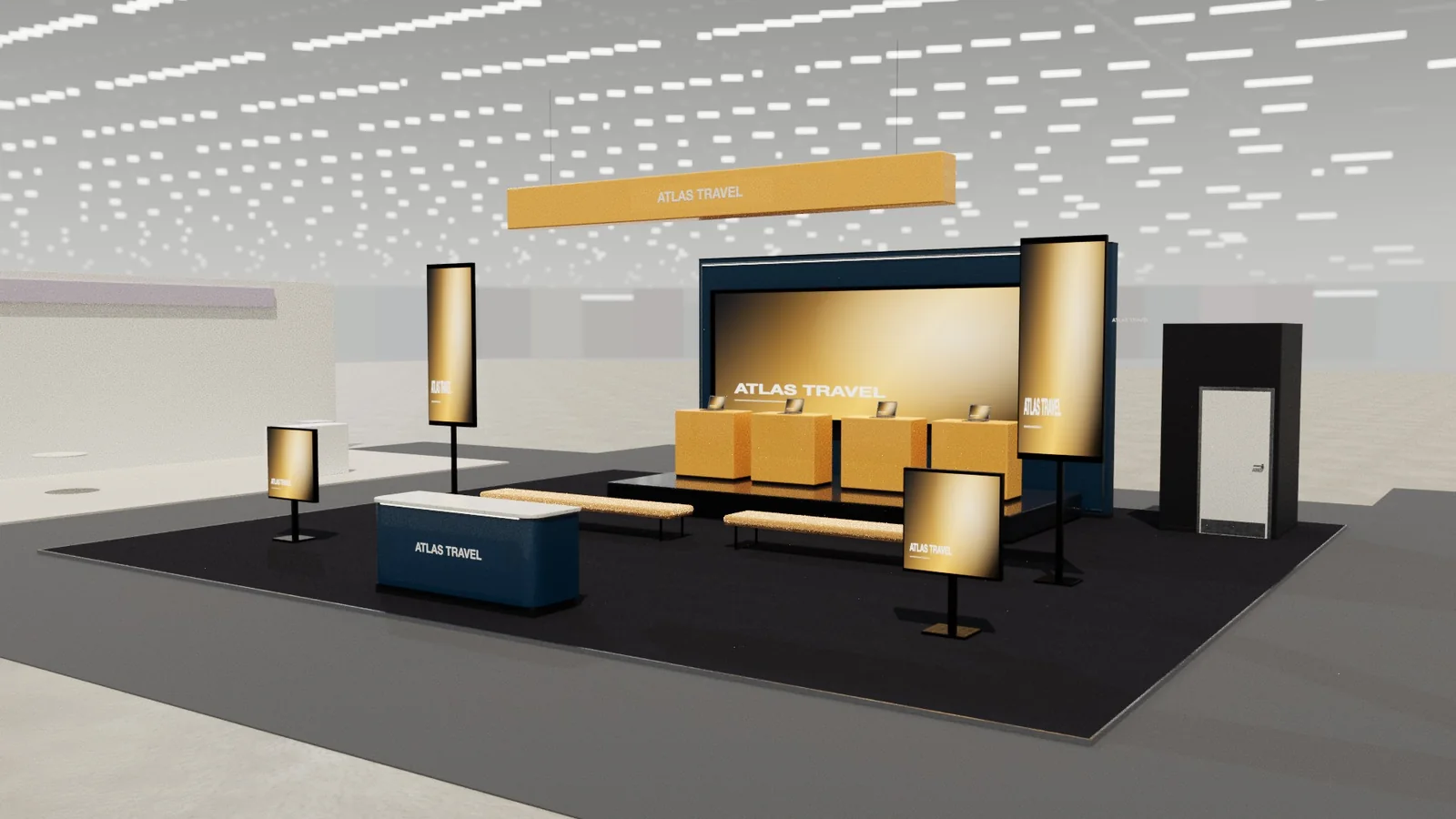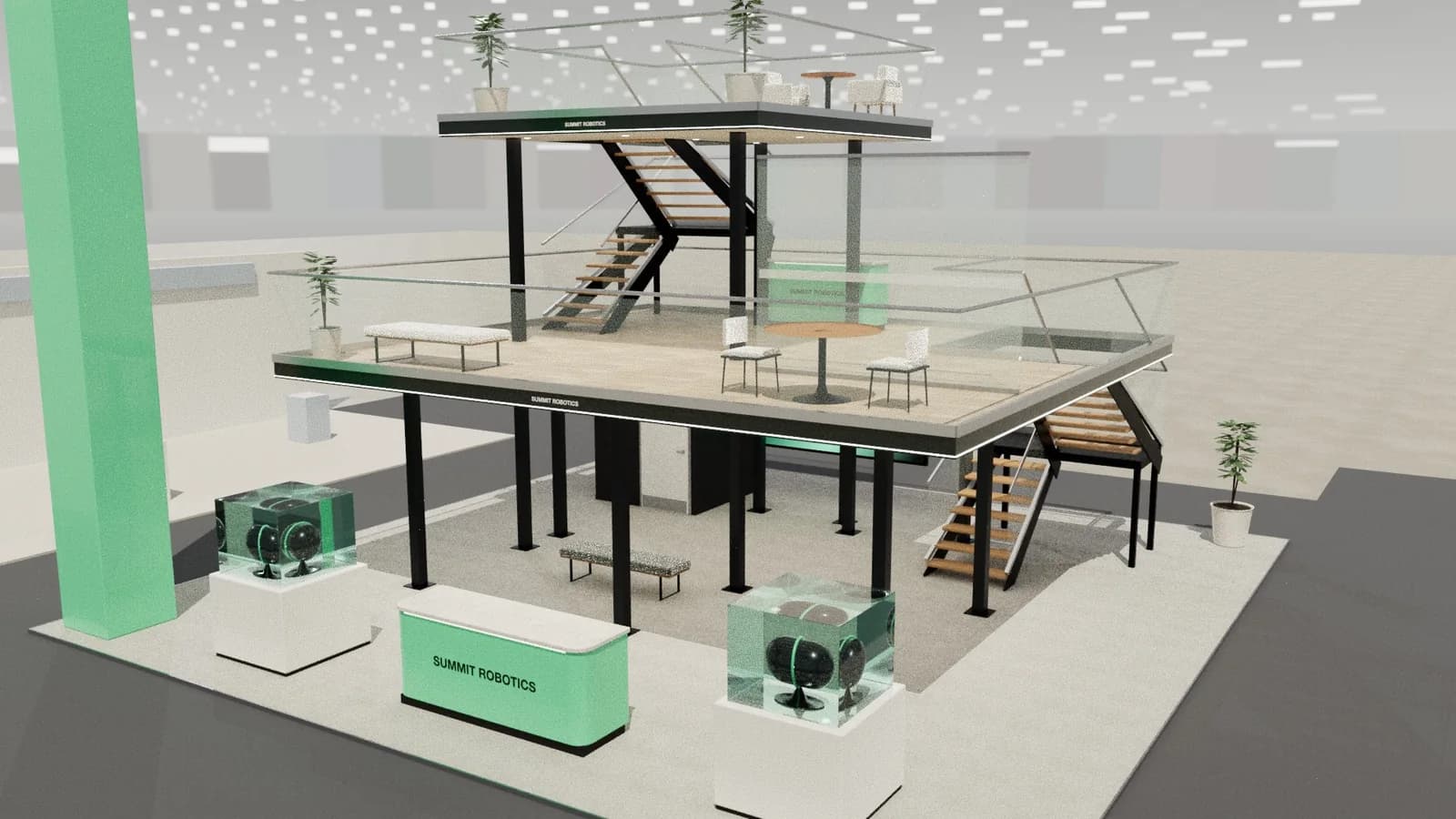
In short
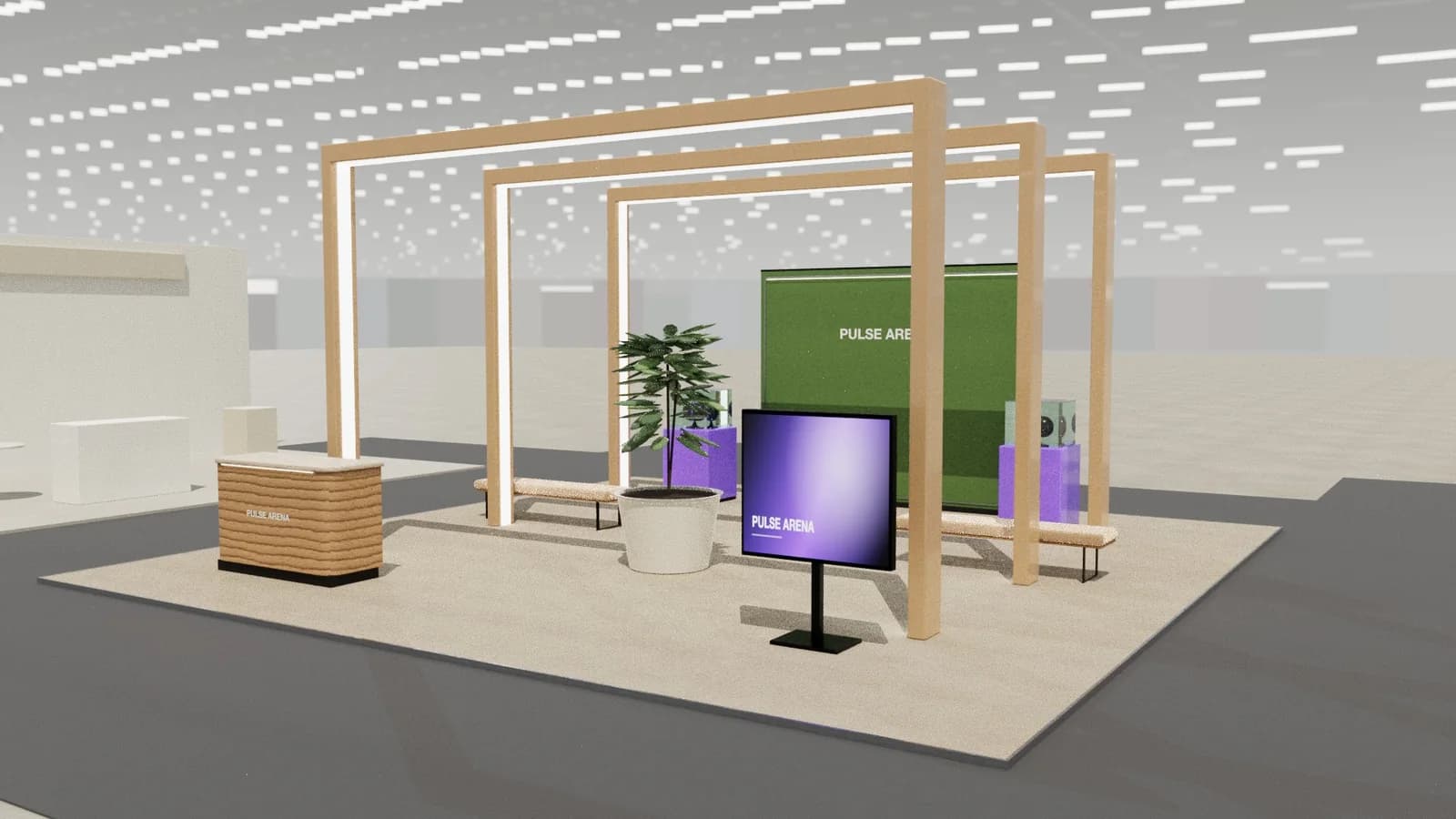
The clearest stand design trends heading into 2027 are practical: reusable and low-waste builds, layouts led by meetings rather than display, warmer materials such as timber and textiles, LED content in place of printed graphics, step-free and accessible design, and AI tools used to produce concepts and visuals faster.
Key points
- Reusable modular builds and fabric graphics over single-use joinery.
- More floor for meetings and hospitality, less for display.
- Warmer materials: timber, textiles, plants.
- LED walls and screens replacing printed panels.
- AI-assisted concepts and renders shortening design cycles.
Reusable, lower-waste stands
Organisers and exhibitors increasingly measure stand waste. Modular aluminium frames, tension fabric, hired furniture and LED lighting make stands reusable across shows. See sustainable exhibition stands.
Meeting-led layouts
Many exhibitors judge shows by meetings held, so floor shifts from display to lounges, pods and meeting rooms. See meeting rooms and hospitality.
Warmer materials and biophilic touches
- Timber and timber-effect finishes.
- Acoustic textiles that also soften sound.
- Plants as dividers and backdrops.
- Softer, indirect lighting in meeting areas.
Digital content and AI
- LED walls replace printed panels: one structure, content per show. See LED walls.
- AI design tools produce layouts and photoreal renders in minutes, so clients see options earlier. See AI exhibition stand design.
- Virtual walkthroughs and shared 3D links replace static PDFs for approval.
Accessibility as standard
Step-free floors, lower counter sections, clear routes and readable graphics are moving from nice-to-have to expected. See accessible stands.
One structure, new content each show
Instead of rebuilding a stand for each show, more exhibitors keep a structure and change what is on it: fabric graphics, LED content and furniture configuration. The design brief shifts from "design a stand" to "design a kit that works at 3 × 3 m, 6 × 3 m and 6 × 6 m". Planning the kit in 3D at each size before buying prevents surprises on site.
Trends to treat with care
- Giant LED walls on small stands: impressive in renders, overwhelming up close and expensive to run.
- Sustainability claims without data: visitors and organisers increasingly ask for proof.
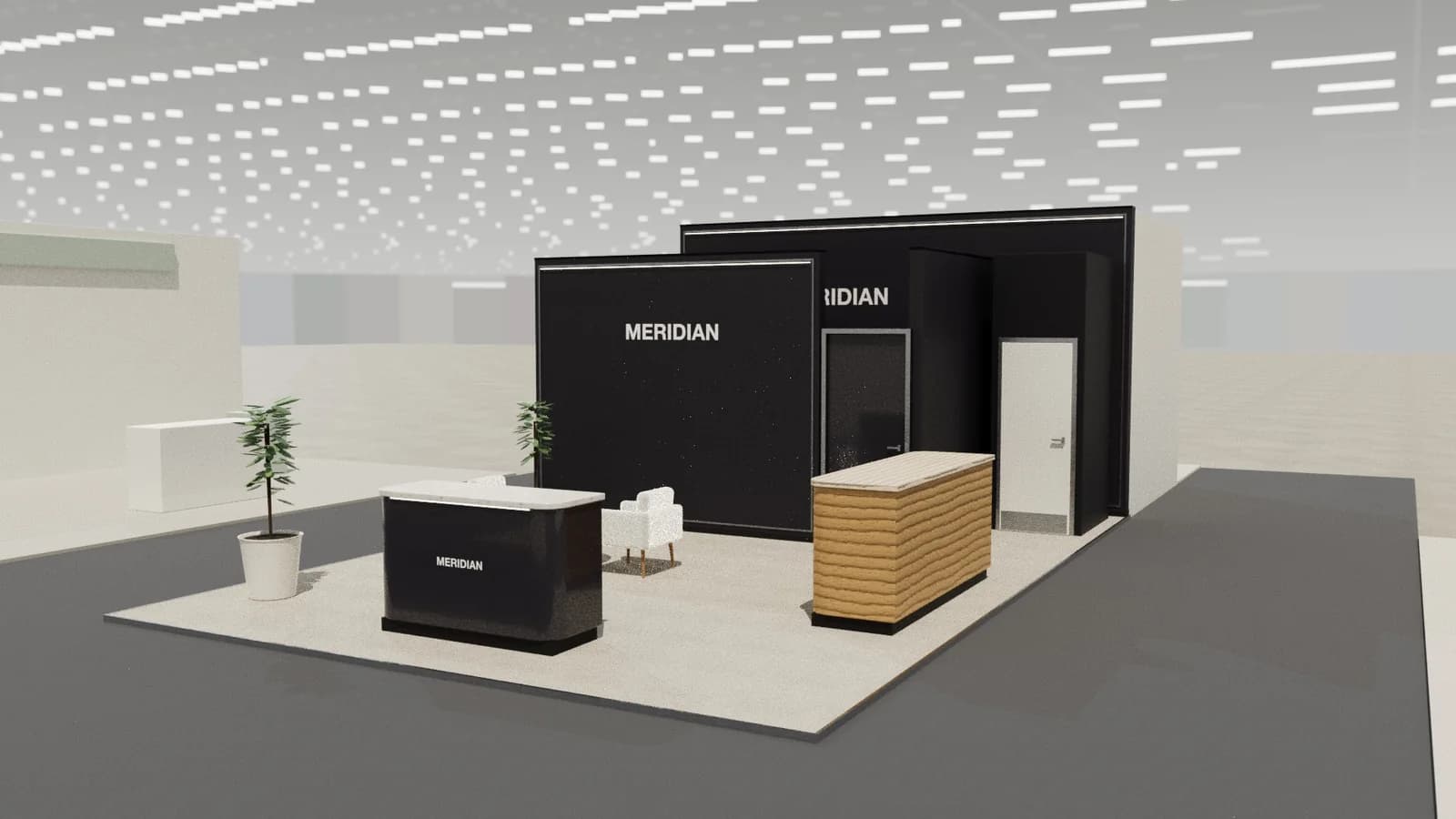
- Fully closed, dark stands: dramatic, but many visitors will not walk into a space they cannot see into.
- AI images presented as designs: an image without a model has no dimensions; check it can be built before showing a client.
Frequently asked questions
01What is the biggest stand design trend?
Reusability: stands built from reusable systems with graphics or LED content changed per show.
02Are double-deck stands still popular?
At large shows, yes, mainly for meeting capacity.
03Is AI used in stand design now?
Yes, mostly for concepts and renders. Builders still engineer and detail the stand.
04Are printed graphics going away?
Not entirely: fabric graphics remain cheap and effective, but screens and LED take more of the brand job.
05How do I future-proof a stand investment?
Buy a modular structure in standard sizes, keep graphics free of dates and stand numbers, plan for screens rather than printed panels where content changes often, and check the kit fits the plot sizes you book most.
Put it into practice
Generate a 3D exhibition stand you can edit
Generate an editable 3D exhibition stand from your brief, refine the layout and export renders, CAD drawings and the model.
Guidance here reflects common practice. Venues, organisers and countries set their own rules: always check the exhibitor manual and work with a qualified stand builder and engineer for structures.