In short
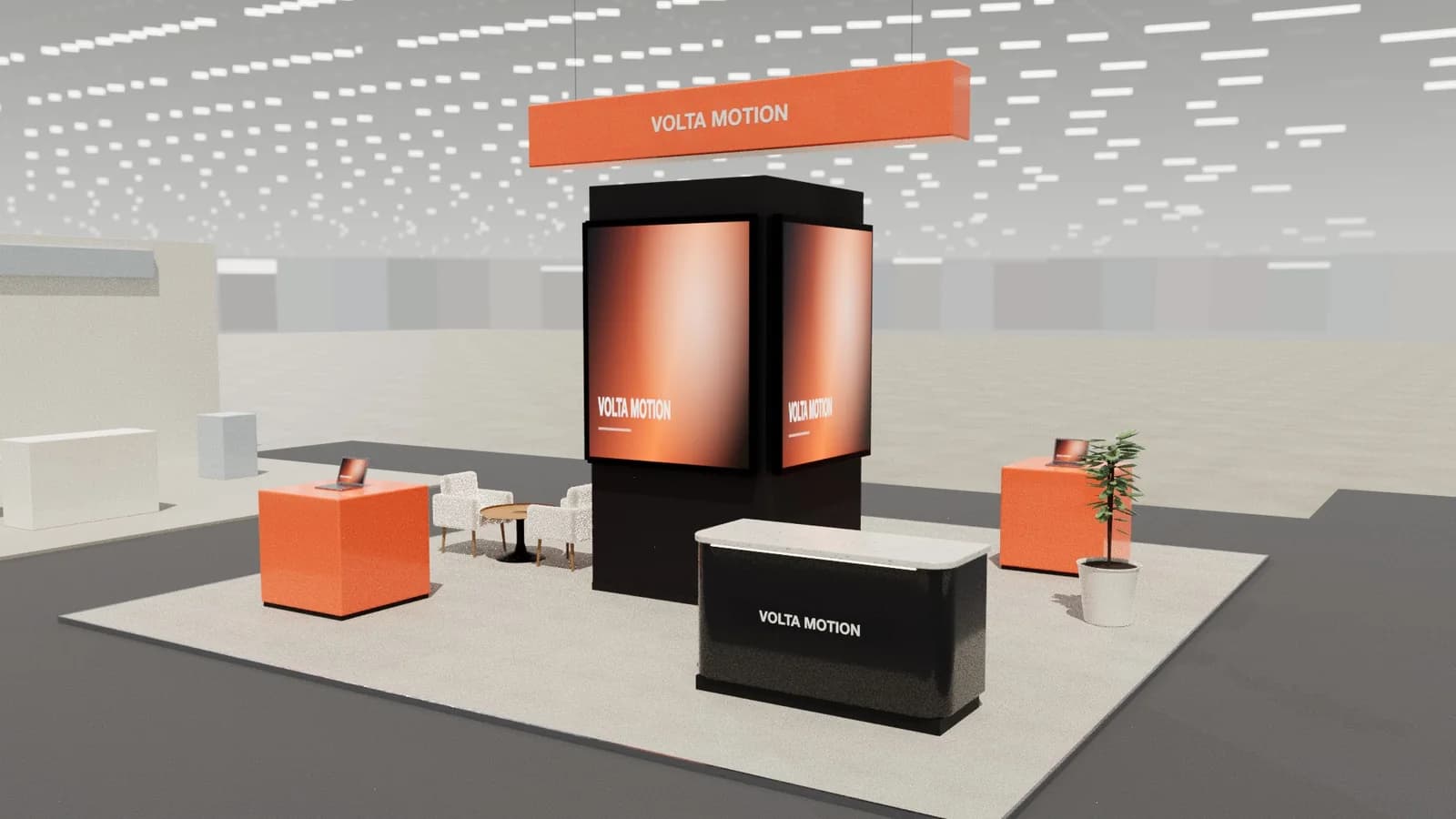
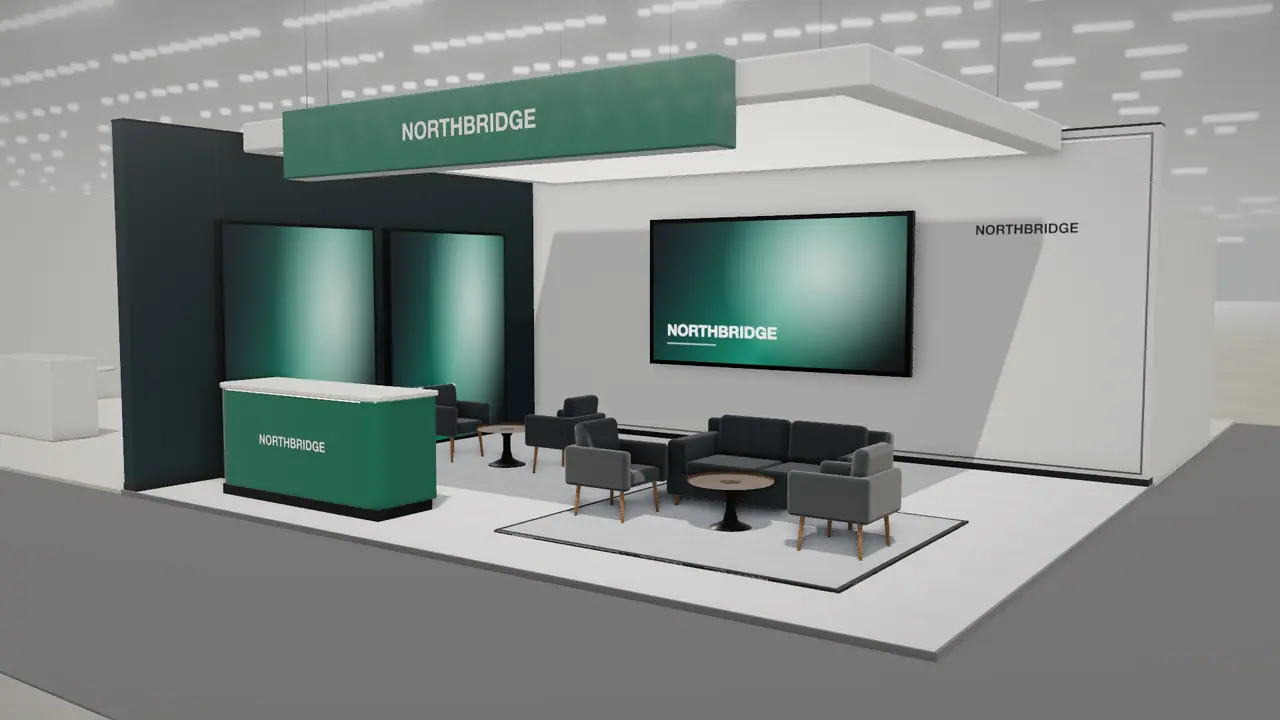
Overhead features let a stand own the space above it. A lit raft creates a room without walls, a ring or halo marks the stand from far away, and timber baffles add warmth while staying open to the hall's sprinklers. Because these items are hung or high up, they involve rigging, fire rules and height limits. Check them before you design around them, and prefer open structures to solid ceilings.
Key points
- A ceiling defines a room without blocking the view.
- Open baffles and rings are easier to approve than solid ceilings.
- Hanging means rigging, and rigging means official contractors.
- A lit overhead shape is the quickest way to be found.
The main types
| Type | What it does | Approval risk |
|---|---|---|
| Lit raft | A floating panel of light over a lounge or reception | Medium: the area covered matters |
| Halo or ring | A hung circle that marks the stand from afar | Low to medium: mainly rigging |
| Baffles or fins | Parallel strips of timber or fabric, open above | Lower: stays open to sprinklers |
| Ribbon | A continuous curved band overhead | Medium: depends on span and rigging |
| Fabric canopy | Soft, light and easy to light | Check fabric classification |
| Solid ceiling | A full room feeling | Higher: fire and sprinkler rules often apply |
What gets checked
- Covered area: many venues limit it, or ask for sprinkler changes above a set size.
- Rigging: points, weights and who may install them. See hanging signs and rigging.
- Height: including anything above the limit on your plot.
- Whether structures may be ground-supported instead of hung.
- Fabric and timber classification. See fire rules for materials.
Design tips
- Keep overhead shapes bigger and simpler than you think; they are seen from far away.
- Align a ring or raft with something on the floor, such as a lounge or a counter.
- Think about the view from above if the hall has a mezzanine or balcony.
- Put the logo on the outside of a ring, facing the main approaches.
- Light should fall on people, not only glow from the object.
Rings and rafts cost little floor, so they suit stands where floor space is limited. They have to clear the head height of everyone below, so a low raft will make a big plot feel cramped.
Getting it approved
- 01
Read the rules
Check overhead coverage, rigging and height in the manual.
- 02
Sketch it early
Share a plan and a section with your builder.
- 03
Price the rigging
Get a rigging quote before you commit.
- 04
Submit with the drawings
Include weights, heights and fixing points in the approval pack.
Frequently asked questions
01Can an exhibition stand have a ceiling?
Often, within limits on covered area and materials. Open ceilings are easier to approve. Check your manual.
02What is a halo on an exhibition stand?
A ring or band of light hung above or fixed around the top of a stand, used to mark it from far away.
03Do hanging structures need official riggers?
Usually. Many venues reserve rigging for an official contractor and require weights and a plan.
04How do I light under a raft?
Fit lights into the raft, or use a glowing surface for general light. Add spots for faces and products if the raft is high.
Put it into practice
An AI booth designer that designs in 3D, not in pixels
An AI booth designer that plans an exhibition stand in 3D at your size, checks it can be built, and changes it when you ask in plain English.
Guidance here reflects common practice. Venues, organisers and countries set their own rules: always check the exhibitor manual and work with a qualified stand builder and engineer for structures.