In short
Many US shows base their display rules on the IAEE guidelines. A linear booth commonly has an 8 ft back wall, with display items limited to 4 ft in the area nearest the aisle so neighbours can be seen. Peninsula booths usually start at 20 × 20 ft, and islands are open on all four sides, often with higher limits. Each show writes its own rules, so check your show's exhibitor rules before you design anything.
Key points
- IAEE guidelines are a common base, not a law.
- Linear booths often keep an 8 ft back wall.
- Line-of-sight rules restrict height near the aisle.
- Peninsula and island rules are more generous, with variations.
US booth types
| Type | Typical rule | Check for |
|---|---|---|
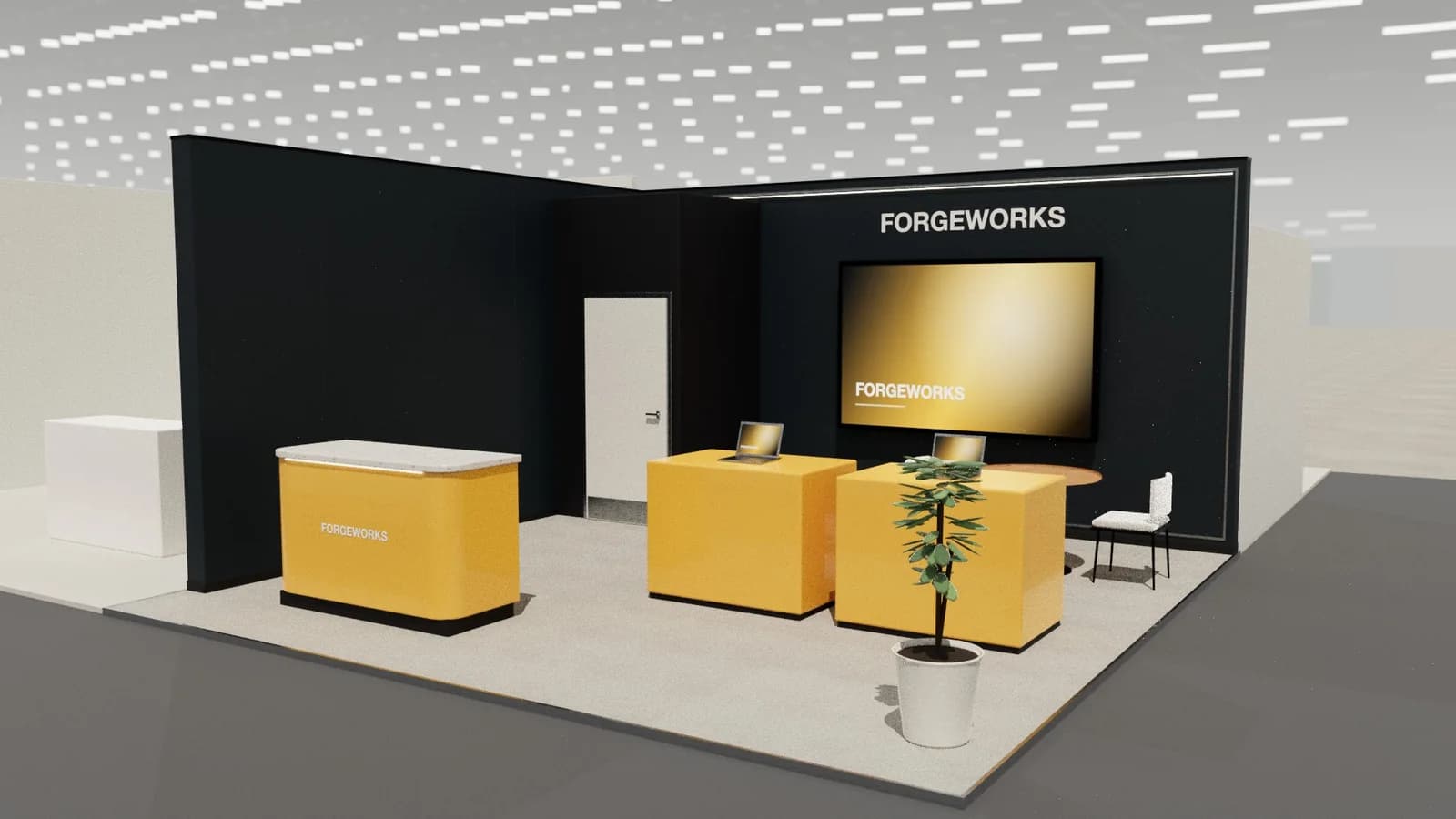
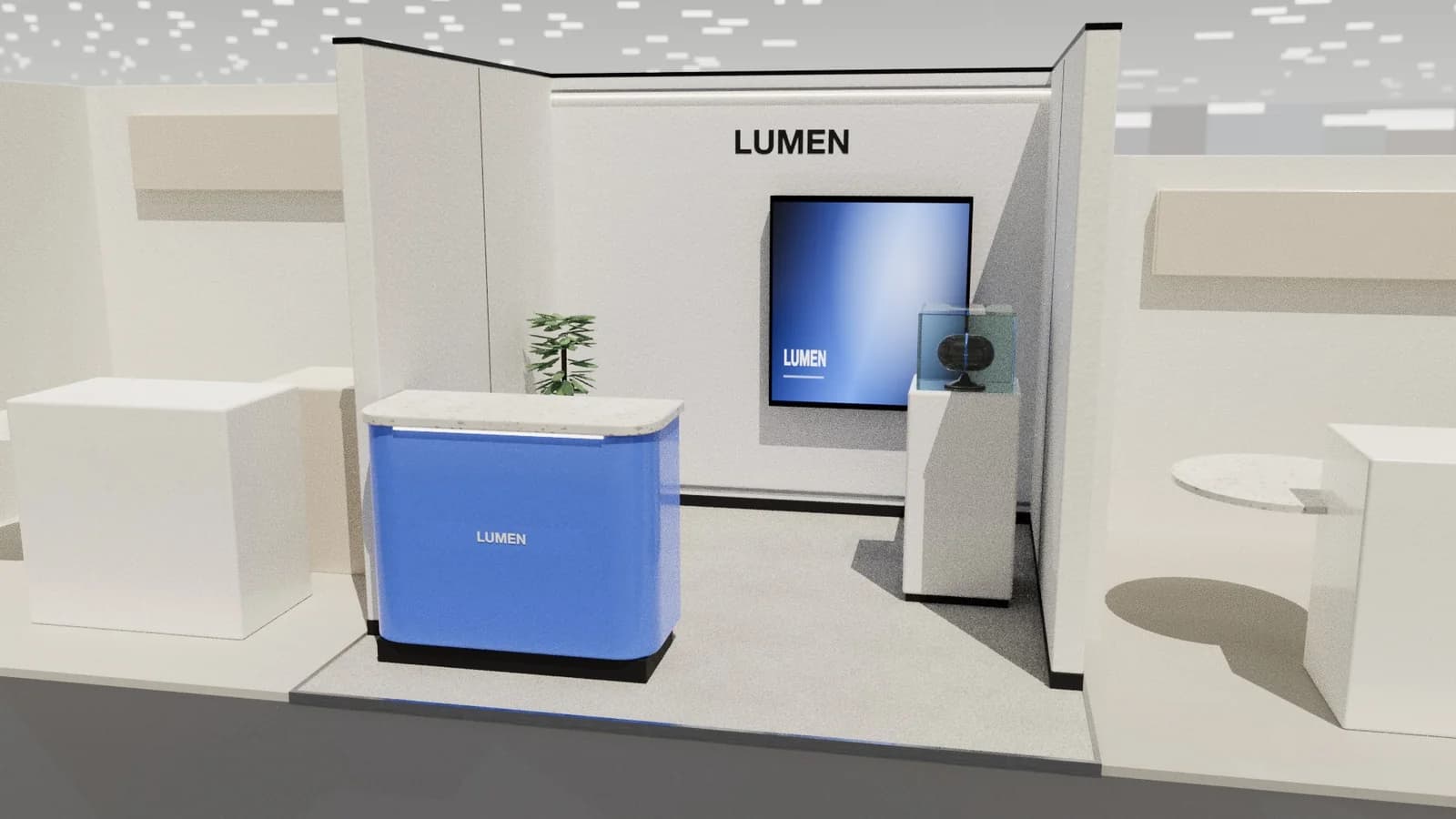
| Linear (inline) | Often an 8 ft back wall, with a line-of-sight limit near the aisle | Side-wall limits; your show's exact wording |
| Corner | A linear booth at the end of a row | Whether the same limits apply to the open side |
| Perimeter | A linear booth on the hall's outer wall; higher back walls can be allowed, often up to 12 ft | Hall obstructions |
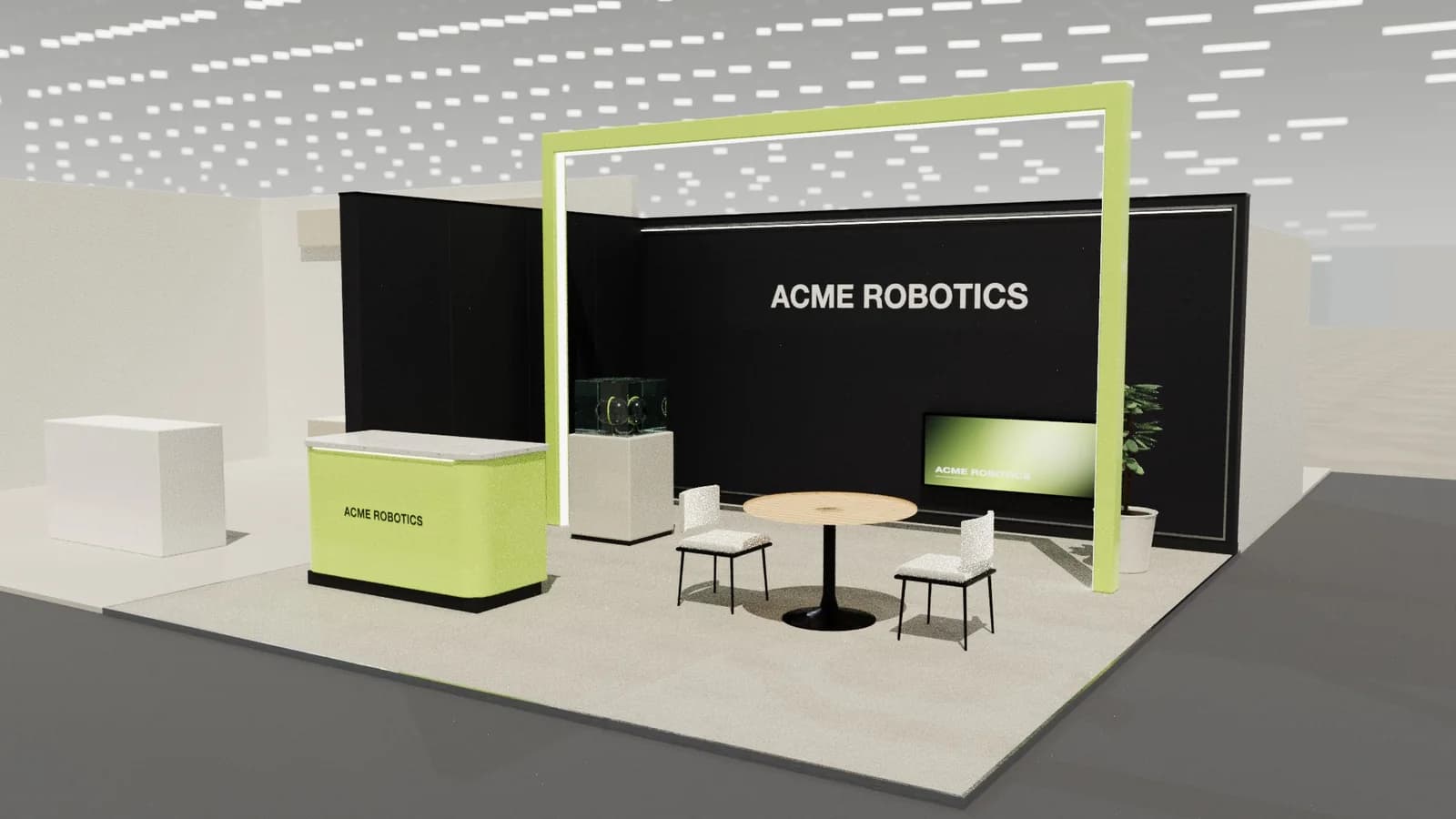
| End-cap | Open on three sides, in a row end | Height limits near the back wall |
| Peninsula | Often 20 × 20 ft or larger, open on three sides | Whether it backs on to linear booths |
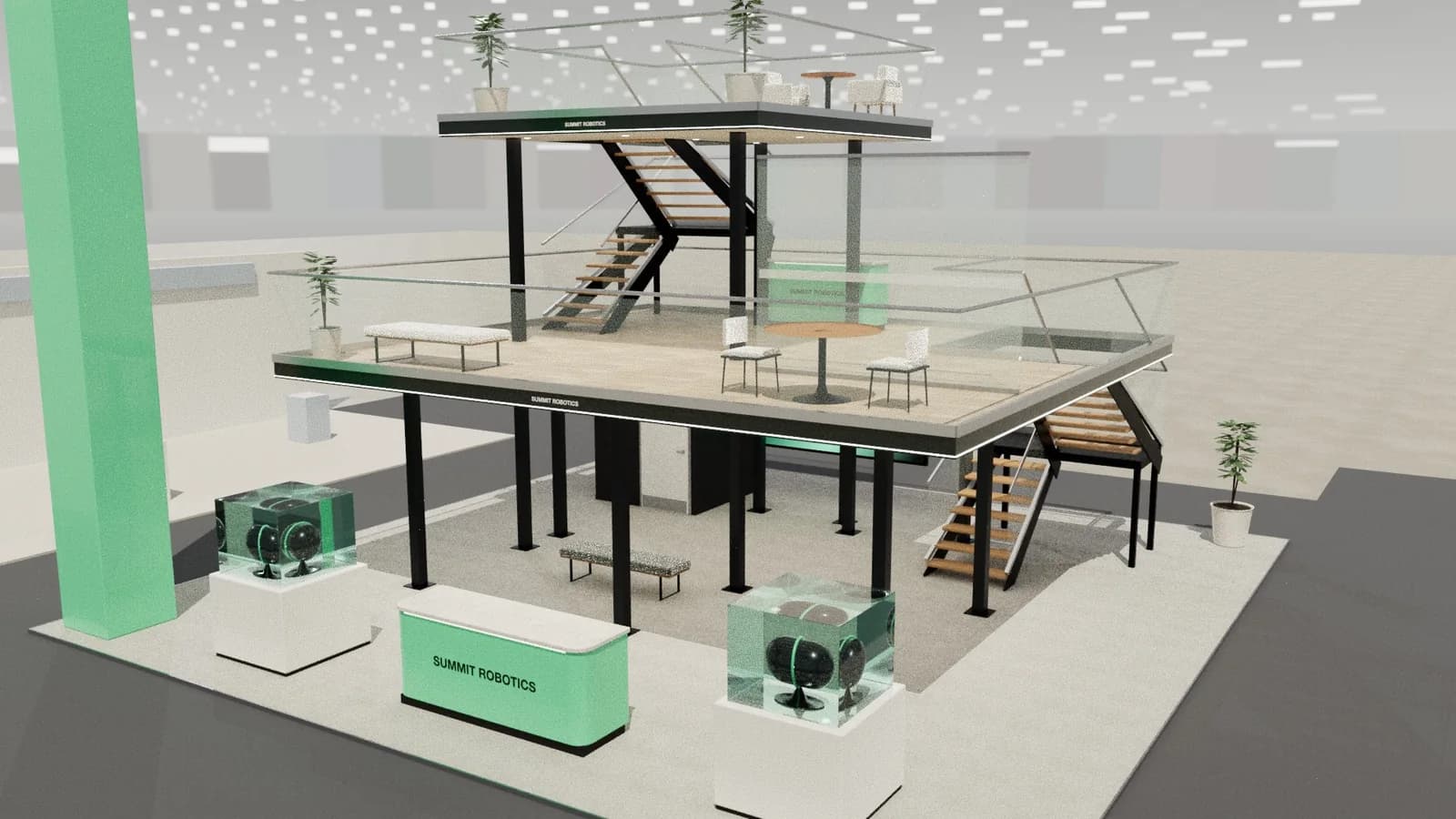
| Island | Open on all four sides, often with a higher limit | Rigging, hanging signs, ceilings |
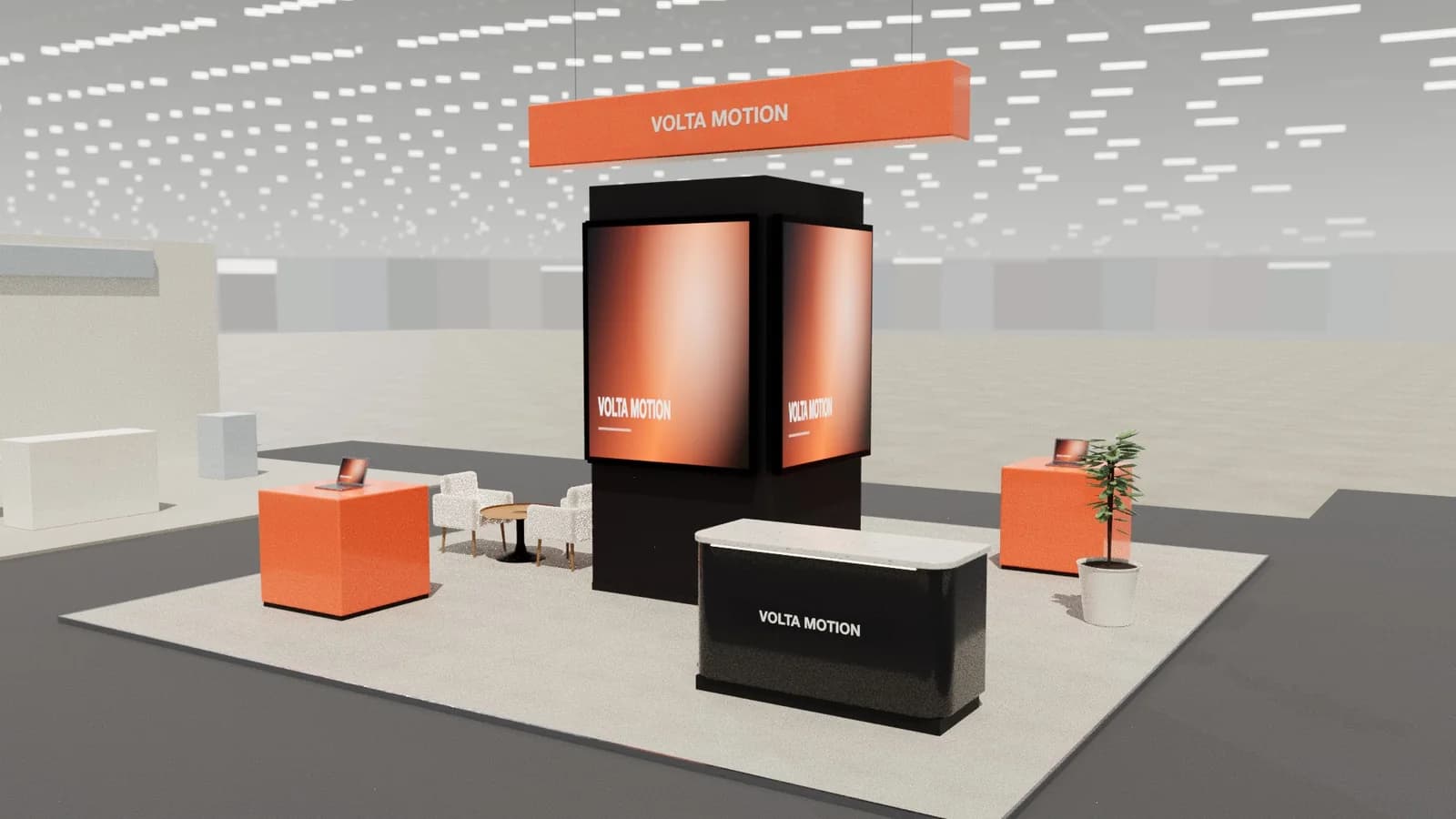
Line of sight
A line-of-sight rule stops one exhibitor blocking the next. A common version keeps display items at 4 ft or lower within the first 5 ft from the aisle, leaving higher elements towards the back of the booth. If you are used to European stands, this is the rule that most often rules out your design.
A peninsula that backs on to linear booths may have a height limit along its back wall, too, for the same reason.
Beyond the display rules
- Hanging signs usually have height limits, and need a rigging order.
- Multi-level booths need approval, often with an engineer's stamp.
- Fire marshals may need to approve ceilings and enclosed areas.
- Finish back walls that can be seen from the aisle or a neighbouring booth.
Labor and handling are separate subjects. See trade show booth cost.
Designing for US rules
- 01
Find the rulebook
Read the display rules in the service kit or exhibitor manual.
- 02
Mark the 5 ft zone
Draw the line-of-sight limit on your plan.
- 03
Convert the sizes
Use the booth size converter.
- 04
Design to it
Keep high elements behind the line.
Frequently asked questions
01What is the IAEE?
The International Association of Exhibitions and Events, whose display guidelines many US shows base their rules on.
02What is the height limit for a 10x10 booth?
Commonly 8 ft at the back wall, with a lower limit near the aisle. Check your show's rules.
03What is a line-of-sight rule?
A limit on height near the aisle, which stops one booth blocking its neighbours.
04How high can an island booth be?
Often up to about 20 ft including signs, but limits vary by show and by hall. Check the rules and the hall height.
Put it into practice
Design your trade show booth in 3D before you brief the builder
Design a trade show booth in 3D at your exact booth size, from a 10x10 inline to a 20x20 island, with renders and drawings for your builder.
Guidance here reflects common practice. Venues, organisers and countries set their own rules: always check the exhibitor manual and work with a qualified stand builder and engineer for structures.