In short
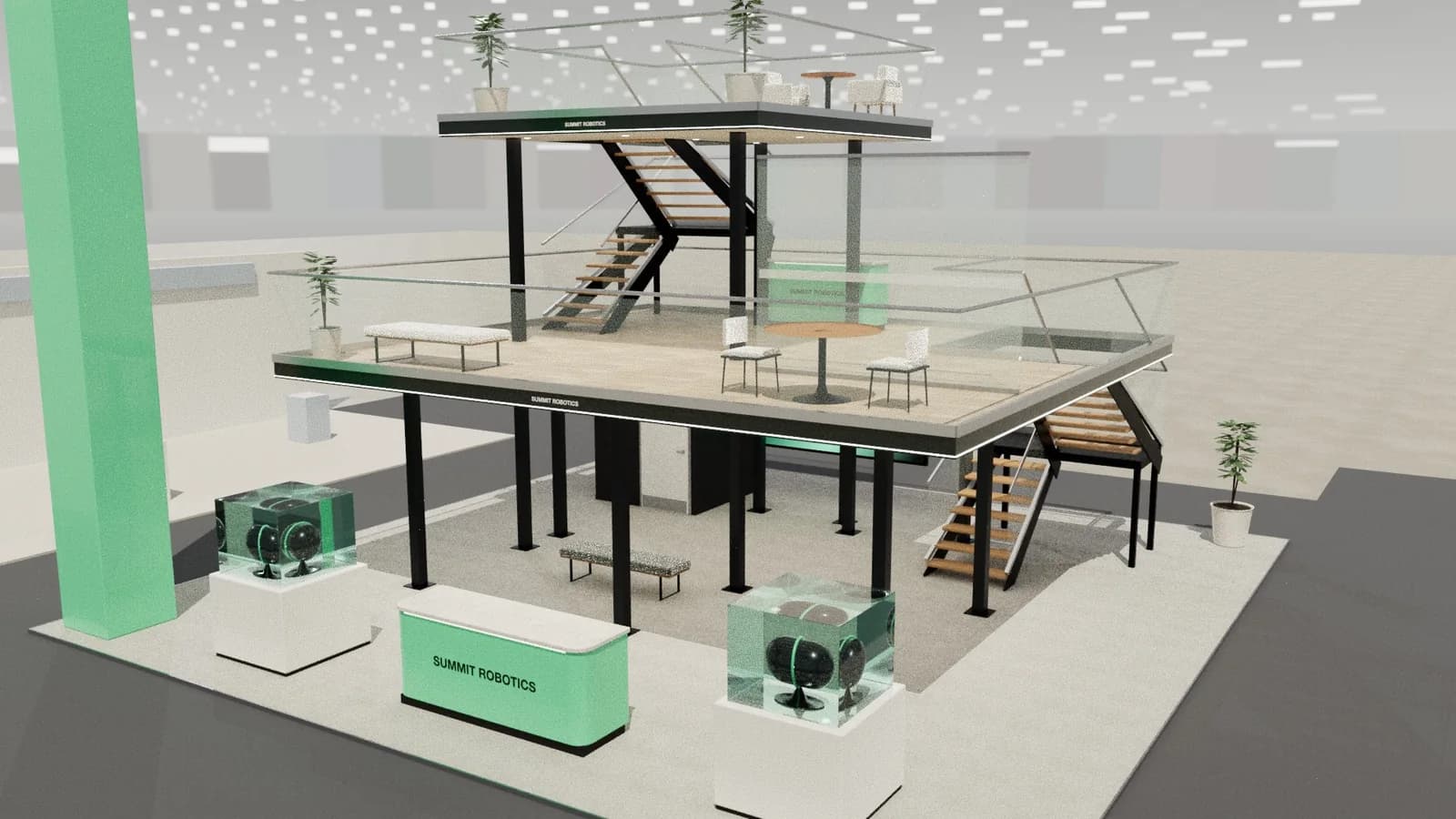
Most stands need more storage than the first sketch allows. Plan for coats, bags, stock, giveaways, water, cables and rubbish. A counter with shelves can be enough on small stands; from about 20 m² a small closet of 1–2 m² pays for itself; large stands need several square metres. Put it against a closed side, keep it tidy and do not stack anything flammable behind walls, because fire inspectors look there first.
Key points
- List what will be stored before drawing the room.
- A counter can be the store on small stands.
- Keep the door away from the main visitor view.
- Empty crates go to the organiser's storage, not your stand.
How much space
| Stand size | Typical storage | Form |
|---|---|---|
| Up to 12 m² | Inside the counter | Lockable shelves |
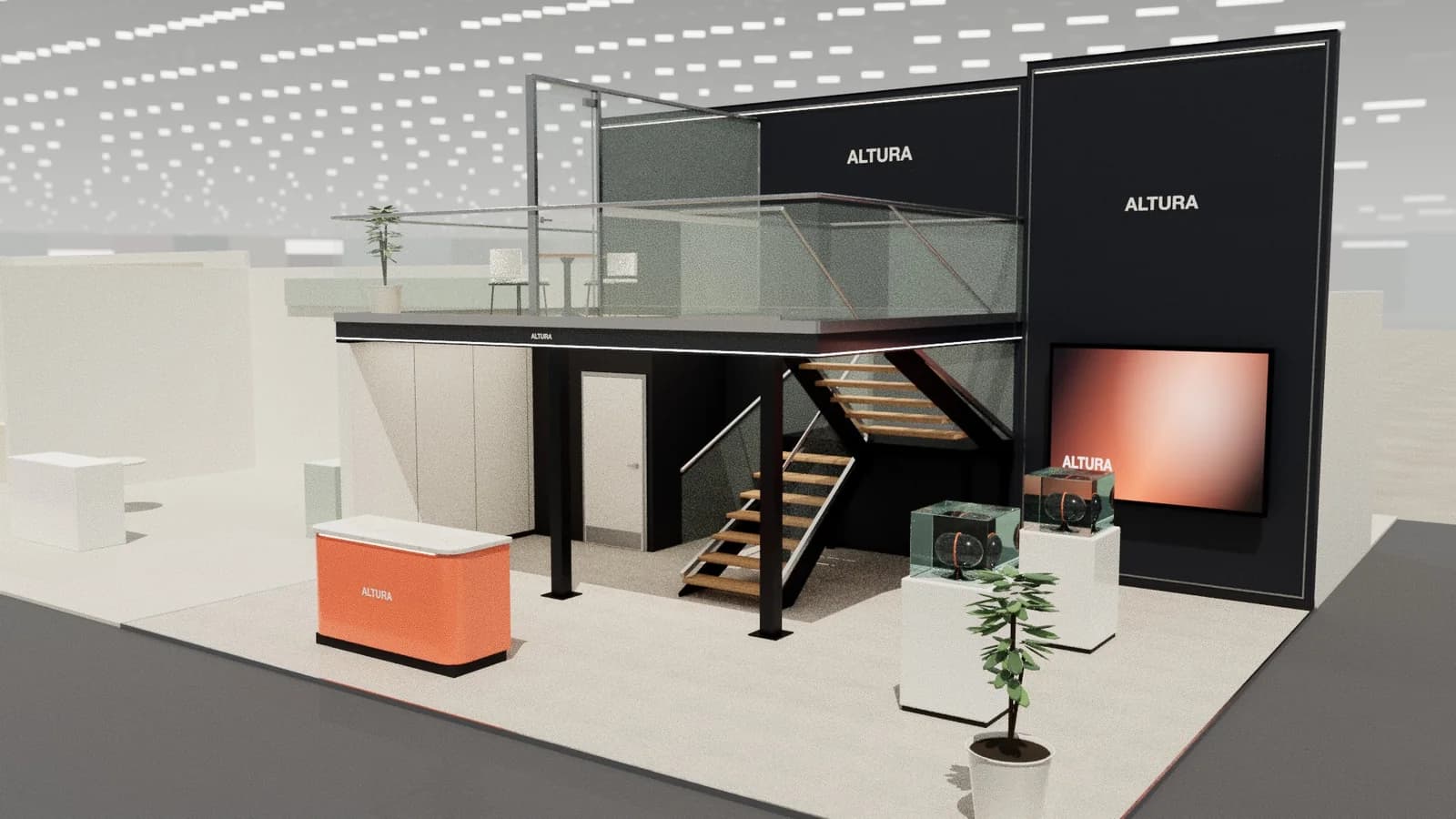
| 12–25 m² | About 1 m² | A small closet or false back wall |
| 25–60 m² | About 2–3 m² | A proper store with a door |
| 60 m² or more | About 3–6 m² or more | A core, with a kitchen or prep space |
What goes in it
- Staff coats and bags.
- Stock, samples and giveaways.
- Water, cups and a small fridge.
- Cleaning kit: cloths, glass cleaner, a small vacuum.
- Spare graphics, tape, tools and a first-aid kit.
- A waste bin that is emptied daily.
Where to put it
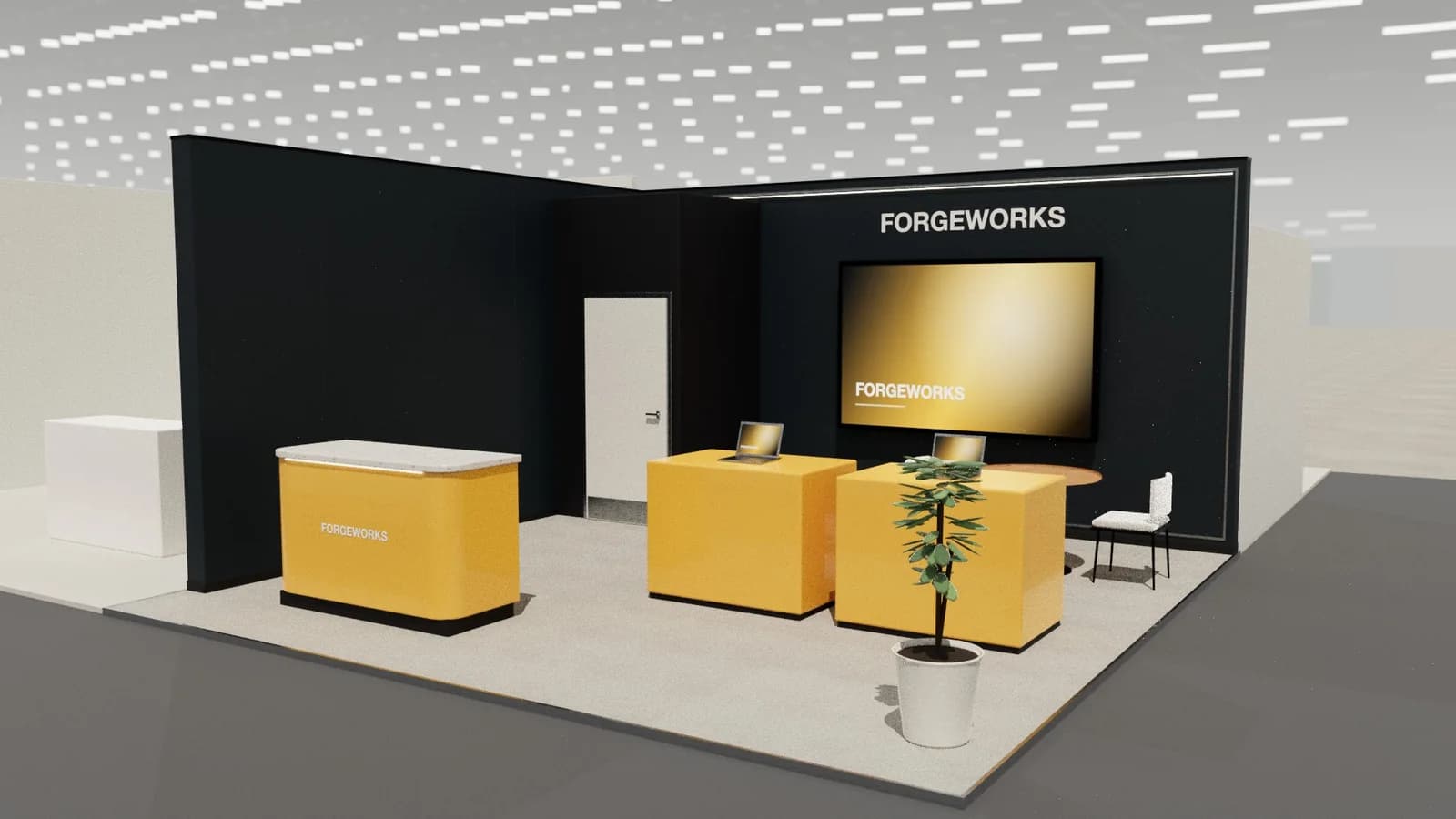
- Row: at the back or in a rear corner, behind a door in the graphic.
- Corner: against the closed walls where the tallest brand element stands.
- Peninsula: behind the back wall.
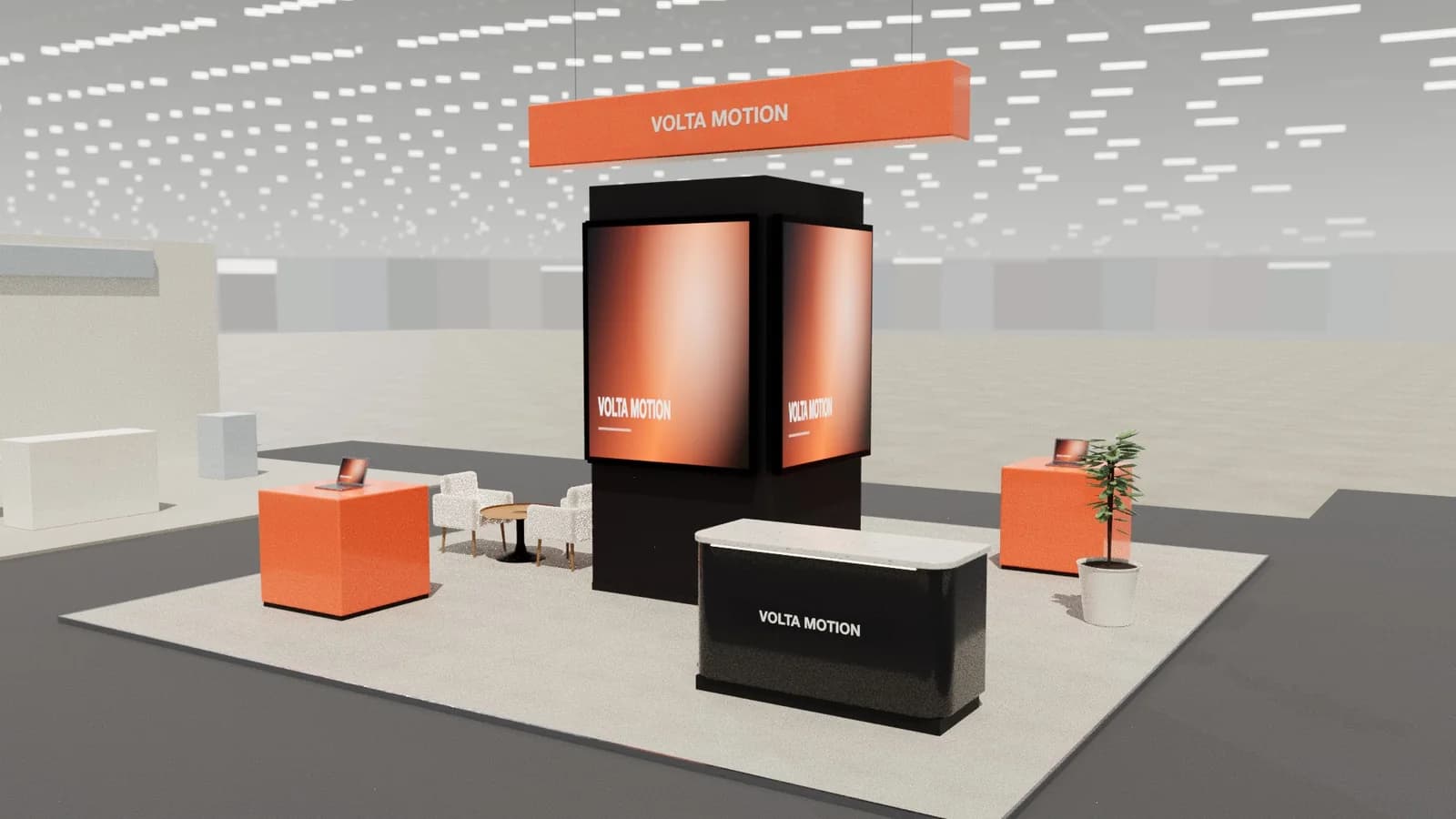
- Island: in a central core, which doubles as a support for a sign or screens.
Make the door part of the wall graphic so that it disappears. Keep the swing clear of the staff zone, and give it a lock. See stand types.
Rules and good habits
- Do not store crates or combustible packaging behind walls. See fire rules.
- Ask your forwarder or the organiser about empty-crate storage.
- Count the door: enclosed rooms may need ventilation or an approved door.
- Keep valuables locked up overnight, or take them with you.
Frequently asked questions
01How big should a storeroom be on a stand?
About 1 m² on small stands and 2–3 m² on medium ones, more for sampling. It should hold what you actually bring.
02Where do I put packaging during the show?
Empties go to storage through your forwarder or the official handler. Check the manual.
03Can I build a false wall for storage?
Usually yes, on a space-only stand. Do not stack packaging or flammable items behind it.
04Does a storeroom need a door?
It looks better with one, and a lockable door protects stock overnight. Check the venue's rules about enclosed rooms.
Put it into practice
From a client brief to a 3D stand concept in minutes
An editable 3D exhibition stand concept from a written brief and the brand's website, at your exact size.
Guidance here reflects common practice. Venues, organisers and countries set their own rules: always check the exhibitor manual and work with a qualified stand builder and engineer for structures.