In short
RSNA is the annual meeting for radiology, and its exhibition attracts clinicians looking at imaging systems and AI tools. Booths need to show clinical images on proper displays, let radiologists try the workflow and meet strict medical promotion rules. Low light and diagnostic screens are normal here. Start a custom booth about 9–12 months ahead and confirm dates, height limits and rules in the exhibitor manual.
Key points
- Where and when: Chicago, annual in Chicago, around the end of the year.
- The audience is mostly radiologists.
- Workstations with real clinical workflow.
- Low, controlled lighting for image reading.
- Plan a custom booth about 9–12 months before the show.
RSNA for exhibitors
Imaging manufacturers build large booths with scanners and reading rooms, while AI companies show workflow software. Claims about clearance status are watched closely, and products that are not cleared for sale must be labelled clearly.
| RSNA | |
|---|---|
| City | Chicago |
| Venue | McCormick Place |
| Sector | Radiology and medical imaging |
| Cycle | Annual in Chicago, around the end of the year |
| Main stand activity | Demonstrations |
| Custom stand lead time | 9–12 months |
Who you are designing for
Radiologists, imaging technologists, hospital administrators and researchers.
What matters most on a RSNA booth:
- Workstations with real clinical workflow.
- Low, controlled lighting for image reading.
- Clear regulatory labelling.
- Clinical specialists on the floor.
Layouts for demonstrations, by stand type
Most RSNA exhibitors build around demonstrations. How that works depends on how many sides of your plot are open. If you are unsure which type you have, see exhibition stand types.
| Stand type | Open sides | What works |
|---|---|---|
| Row (inline) | 1 | One demo point at the front edge with a screen behind it and a counter to one side; visitors watch from the aisle and step in. |
| Island | 4 | A hero product or small stage at the centre, demo pods on each face, and a closed core for storage and a meeting room. |
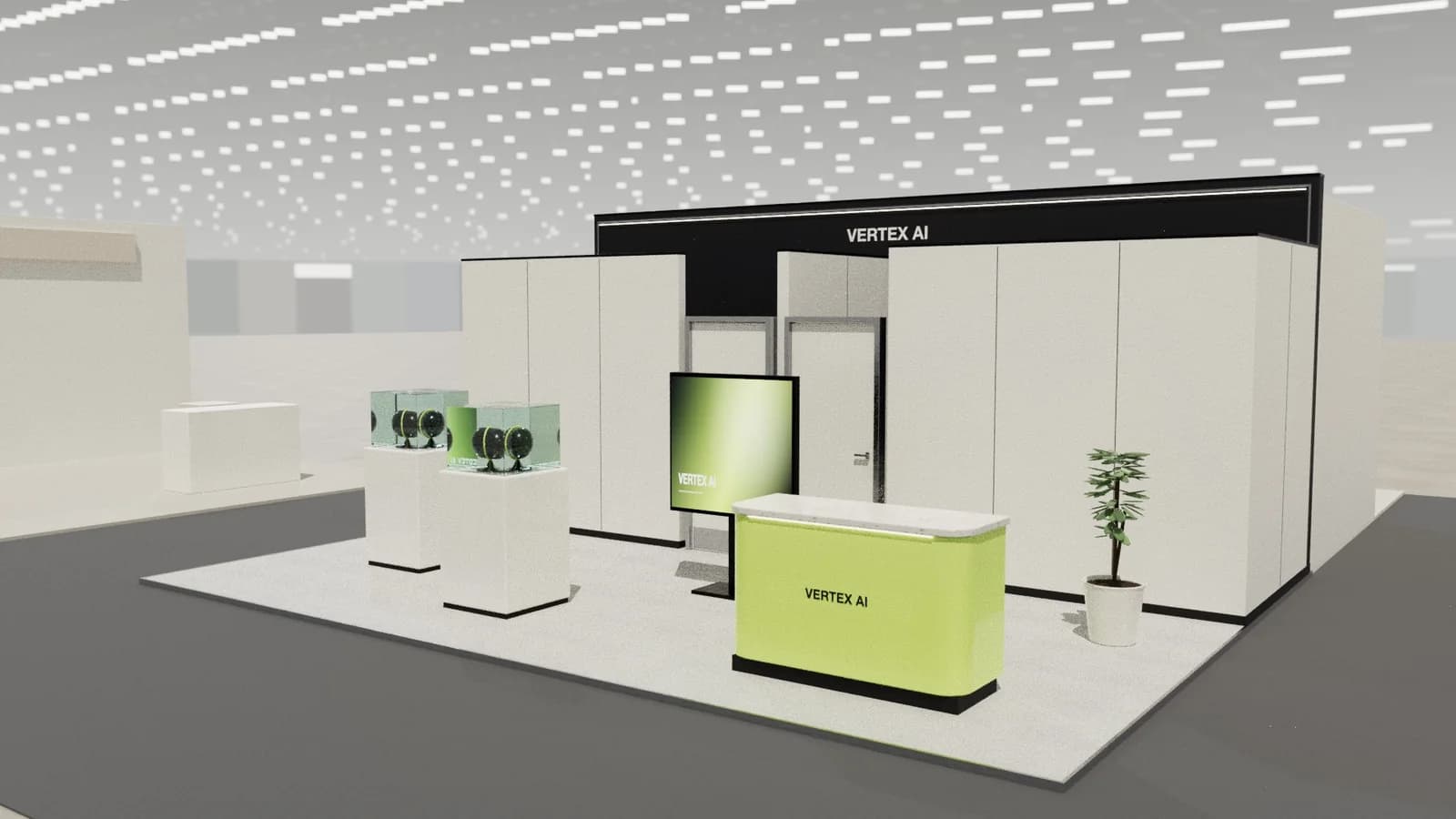
Stand ideas for RSNA
- A darkened reading room for hands-on workflow demos.
- A scanner with its covers open.
- An AI case-review station with before-and-after cases.
Planning, approvals and logistics
Scanners are heavy and need specialist handling, power and possibly shielding. McCormick Place labor rules apply; see US booth costs.
Allow about 9–12 months for a custom booth. The exhibitor manual sets height limits, open-side rules and service deadlines; see venue approval and technical drawings.
Where the budget goes at RSNA
Heavy imaging equipment, specialist installers and clinical staff take most of the budget. Keep room for careful lighting, as it is central to the demos.
Mistakes we see at RSNA
- Bright spotlights over diagnostic displays.
- Vague claims about AI with no clearance detail.
An example RSNA brief
A 30×30 ft booth with a low-lit reading room, three AI workstations, a scanner with its covers removed and a regulatory-status label on each product.
Replace the size and the zones with your own. The plot and height limit come from your contract and the exhibitor manual.
Try your RSNA layout in 3D
ExhibitionBase Studio turns your plot size, open sides and a brief about demonstrations into an editable 3D booth for 5 credits, renders it and exports a plan for your builder. New workspaces get 5 free credits.
Frequently asked questions
01Where is RSNA held?
At McCormick Place in Chicago, at its annual meeting. Check the organiser's site for this year's dates.
02Can I show products not yet cleared?
Only under the show's and regulator's rules, usually with clear labels. Your regulatory team decides.
03How early should I start designing a RSNA booth?
For a custom booth, about 9–12 months ahead: long enough for design, organiser approval, production and shipping. Shell scheme booths can be planned in weeks.
04Can I reuse my RSNA booth at other shows?
Often, if it is modular. Design the core (walls, counters, demonstrations area) to work on several plot sizes, and swap graphics per show. See [modular vs custom stands](/guides/modular-vs-custom-exhibition-stands).
Put it into practice
From a client brief to a 3D stand concept in minutes
An editable 3D exhibition stand concept from a written brief and the brand's website, at your exact size.
Guidance here reflects common practice. Venues, organisers and countries set their own rules: always check the exhibitor manual and work with a qualified stand builder and engineer for structures.