In short
Logistics booths explain invisible services and complex systems, so the best ones make them tangible: live automation or robots in a safe demo zone, network maps and dashboards on large screens, and tables for project and tender discussions.
Key points
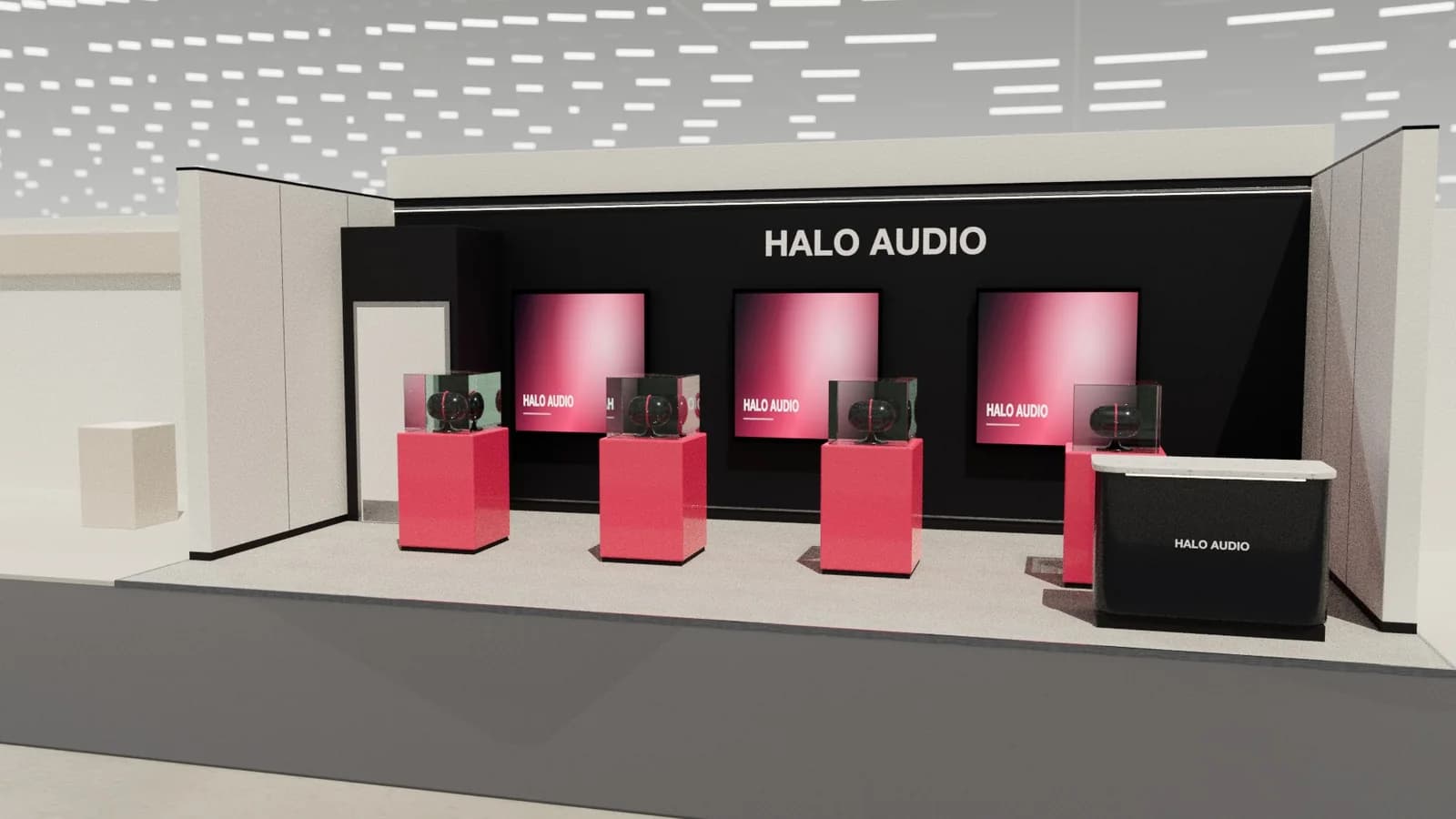
- Automation demo, Dashboard wall, Consultation tables, Welcome are the core zones.
- Avoid: abstract globe imagery instead of concrete services.
- Avoid: robots behind opaque fences.
- Avoid: no throughput or ROI figures.
- See the template and trade show guides linked below for logistics providers and warehouse technology companies.
Who visits and what they want
Supply chain directors, warehouse and operations managers, procurement and integrators.
What to show
Robots, conveyors, shuttles and handheld devices; network maps; live tracking dashboards; case studies with throughput figures.
Zones for a logistics and supply chain stand
| Zone | Purpose | Where it goes |
|---|---|---|
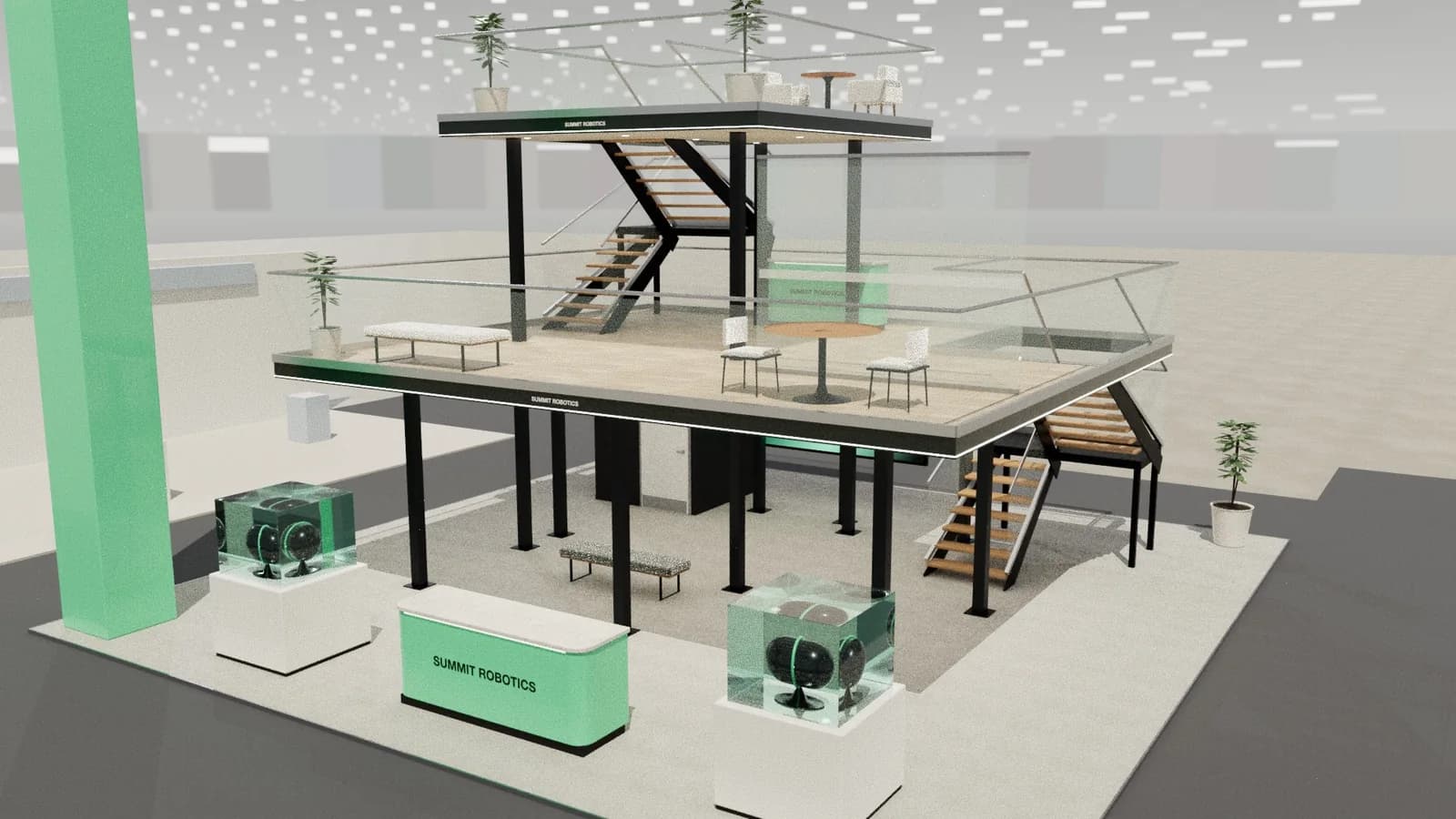
| Automation demo | Live equipment with safety zone | Centre or corner |
| Dashboard wall | Network and tracking on screens | Back wall |
| Consultation tables | Projects and tenders | Rear or side |
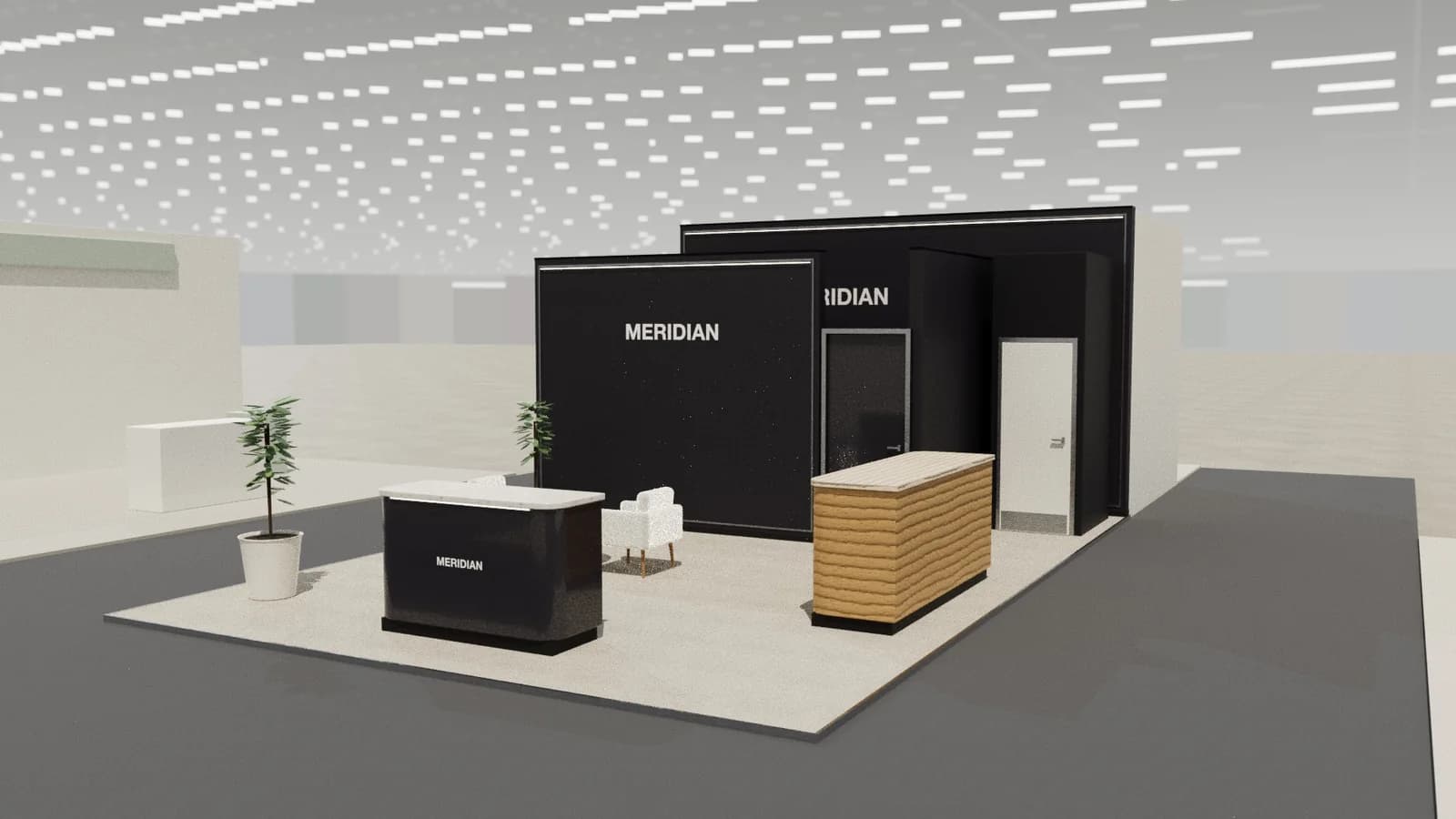
| Welcome | Qualify and route visitors | Front |
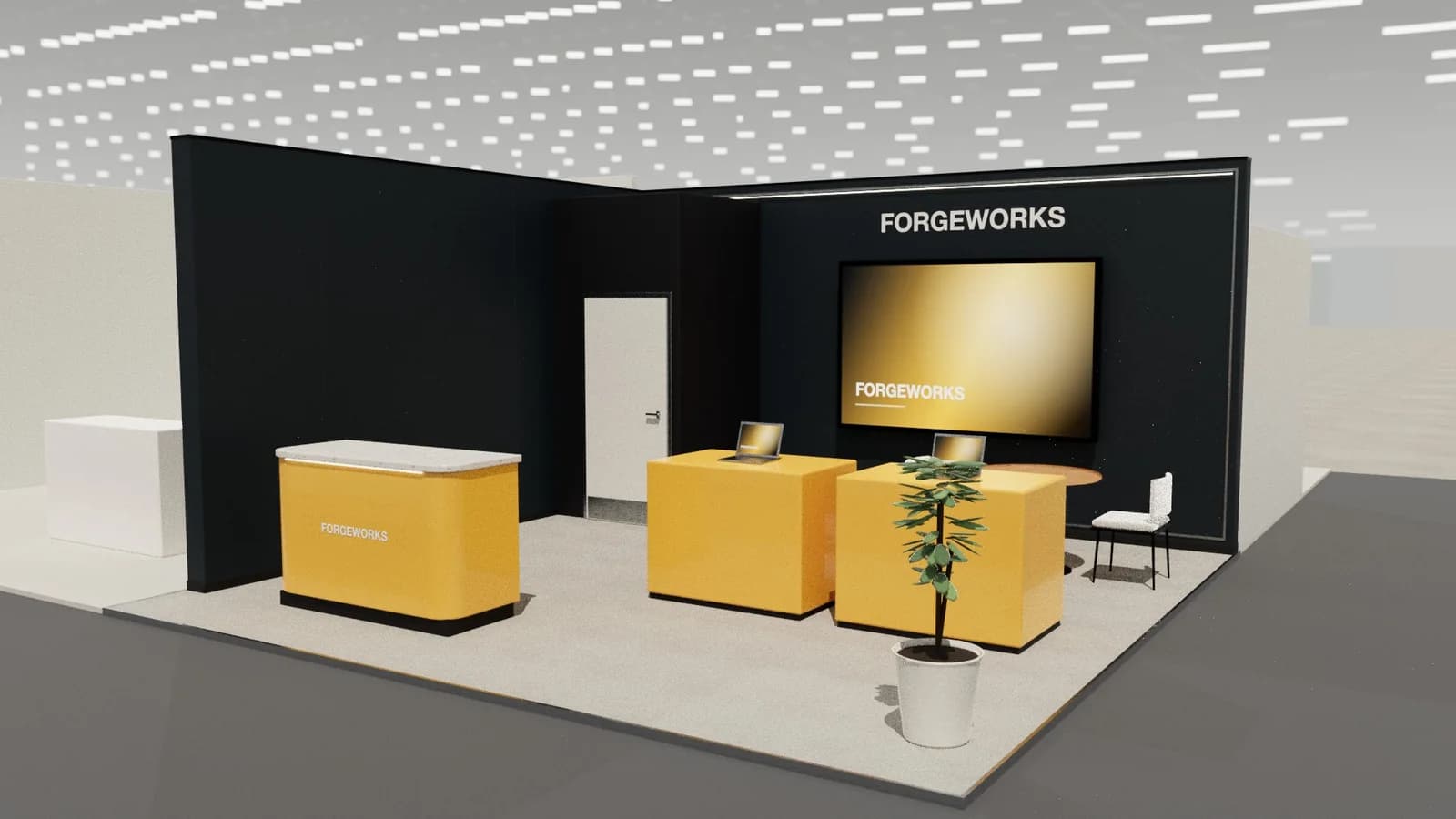
On a 3 × 3 m stand, keep the first two zones and book meetings elsewhere. From about 36 m² every zone fits; see stand sizes for what fits at each size.
Materials, lighting and graphics
Industrial clarity: clean structures, good lighting, and data visualisation as the main graphic.
For detail on light levels and colour rendering, see stand lighting; for wall graphics, see graphics and branding.
Starting conversations and capturing leads
Ask about the visitor's current bottleneck (picking, sorting, last mile) and walk them to the matching demo. Throughput and payback figures on a screen beside the equipment keep the conversation concrete.
Rules and practicalities
Moving equipment needs guarding and safety approval; check power and compressed air needs.
Venue rules on height, open sides, fire safety and services still apply; see venue approval.
Common mistakes
- Abstract globe imagery instead of concrete services.
- Robots behind opaque fences.
- No throughput or ROI figures.
Trade shows for logistics providers and warehouse technology companies
Show-specific guides: LogiMAT, PACK EXPO. For more, see stand design by trade show.
Frequently asked questions
01How do I make a logistics service tangible?
Show live tracking, maps and case figures on screens, and bring any physical part of the service: devices, packaging, robots.
02Is live automation worth the effort?
Usually yes: moving equipment draws crowds and proves performance. Plan safety and power early.
03What size stand does a logistics and supply chain exhibitor need?
Size to the activities: about 9 m² for one conversation point, 18–36 m² to add demos and a meeting table, and 50 m² or more for meeting rooms and hospitality. See [stand sizes](/guides/topics/exhibition-stand-sizes).
04Can AI design a logistics and supply chain booth?
AI can produce a complete concept quickly: [Studio](/ai-booth-designer) lays out the zones above at real scale and renders the result. A stand builder still checks structure, services and compliance before building.
Put it into practice
Design your trade show booth in 3D before you brief the builder
Design a trade show booth in 3D at your exact booth size, from a 10x10 inline to a 20x20 island, with renders and drawings for your builder.
Guidance here reflects common practice. Venues, organisers and countries set their own rules: always check the exhibitor manual and work with a qualified stand builder and engineer for structures.