In short
A complete stand budget has eight groups: floor space, stand design and build, graphics and AV, venue services, logistics, staff and travel, marketing and contingency. A common split puts space and build at about two thirds and the rest at about one third. Set the budget in those groups, name who invoices each line, and record the deadline, because late service orders are where budgets leak.
Key points
- List every line with who bills it and when it is due.
- Space and build are usually about two thirds of the total.
- Hold a contingency, and do not spend it on upgrades in month one.
- Staff time is a real cost, even if finance does not book it to the show.
The template
| Group | Lines | Who invoices | When it bites |
|---|---|---|---|
| Floor space | Square metres, position premium, registration, media fee | Organiser | Booking, then instalments |
| Design and build | Concept, drawings, structure, furniture, install, dismantle | Stand builder | Deposit, then stage payments |
| Graphics and AV | Print, screens, content, hire | Builder or suppliers | Artwork deadline |
| Venue services | Power, internet, rigging, water, cleaning, waste | Official contractors | Early-order deadline |
| Logistics | Freight, handling, storage, customs | Forwarder, venue handler | Build-up |
| Staff and travel | Flights, hotels, badges, meals, staff time | You | Book when the rate is low |
| Marketing | Invitations, giveaways, lead capture, hospitality | Various | Six weeks out |
| Contingency | A reserve for the unknown | You | Show week |
A sensible first split
Our stand cost guide uses a typical split with space and build at about two thirds of the total. It is a starting point. A machinery show moves money into freight and rigging; a hospitality show moves it into catering; a shell-scheme start-up has almost no build line at all.
The free cost calculator does this arithmetic from your stand size and floor rate. Use it for the first number, then replace each line with a real figure as quotes arrive.
How to keep the budget alive
- 1Add a column for estimated, quoted and actual cost, so you can see where the estimate drifted.
- 2Add a deadline column and sort by it. A budget is also a calendar.
- 3Record what each quote leaves out, not just its total.
- 4Decide who can approve spending from contingency.
- 5After the show, keep the actuals. Next year's estimate should start from them.
Where to cut when the total is too high
- Reduce the plot size before reducing quality. Less floor saves on space, build and services at once.
- Replace bespoke joinery with hired furniture and a modular system.
- Swap a large LED wall for one good screen.
- Reuse last year's frame and reprint the graphics.
- Bring orders forward, so that you pay early rates for services.

Frequently asked questions
01What should an exhibition budget include?
Space, design and build, graphics and AV, venue services, logistics, staff and travel, marketing and a contingency.
02How much contingency should I hold?
It depends on how fixed your quotes are. Hold more on a first show, a new venue or a custom build, and less on a repeat of a known stand.
03How much of the budget should go on the stand itself?
In a common split, space and build together take about two thirds. The build alone is a smaller share, and the right figure depends on the show and the brief.
04Should staff time go in the budget?
Yes, if you want an honest return figure. Several people out of the business for a week is a real cost, even when it does not produce an invoice.
Put it into practice
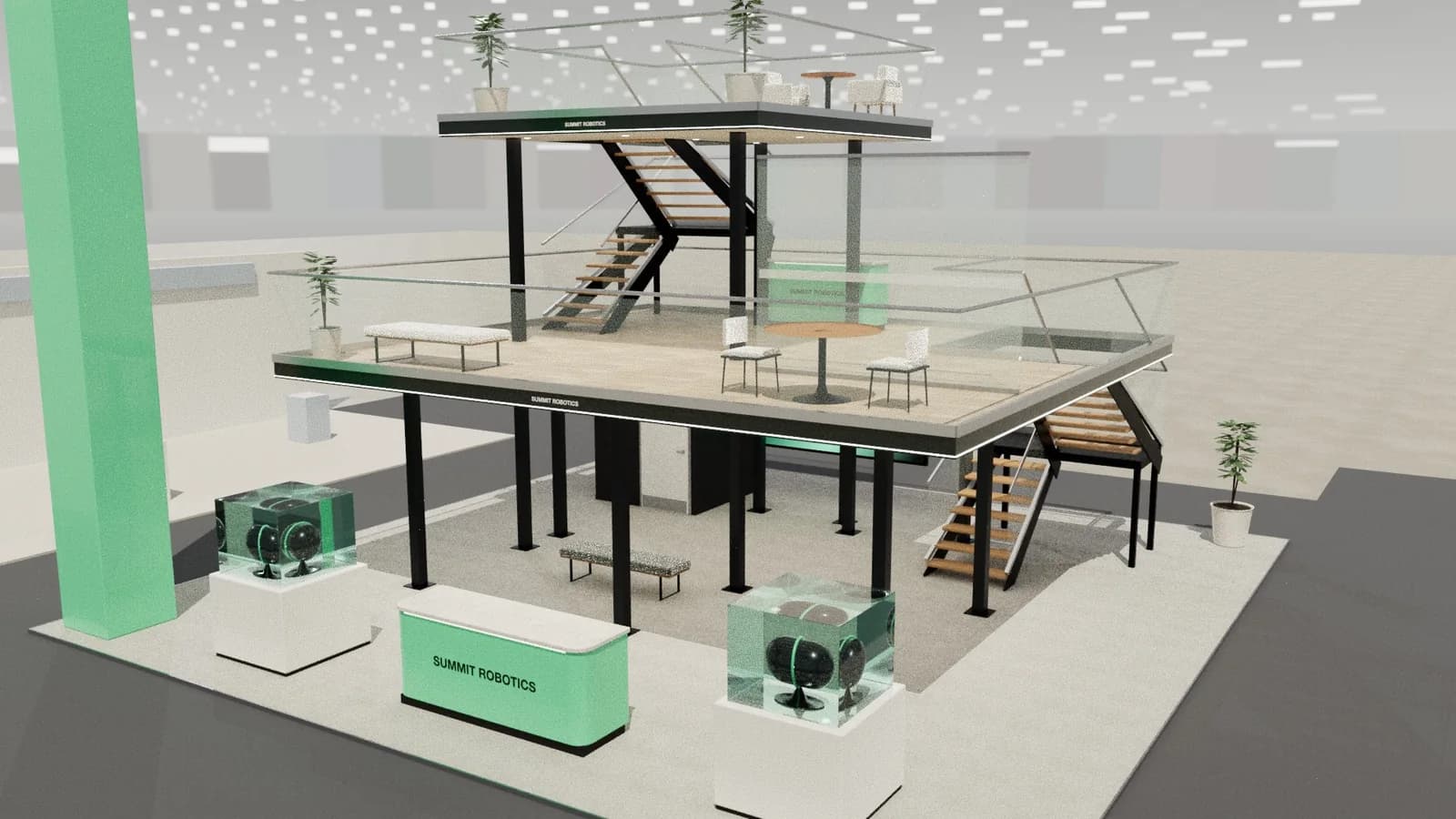
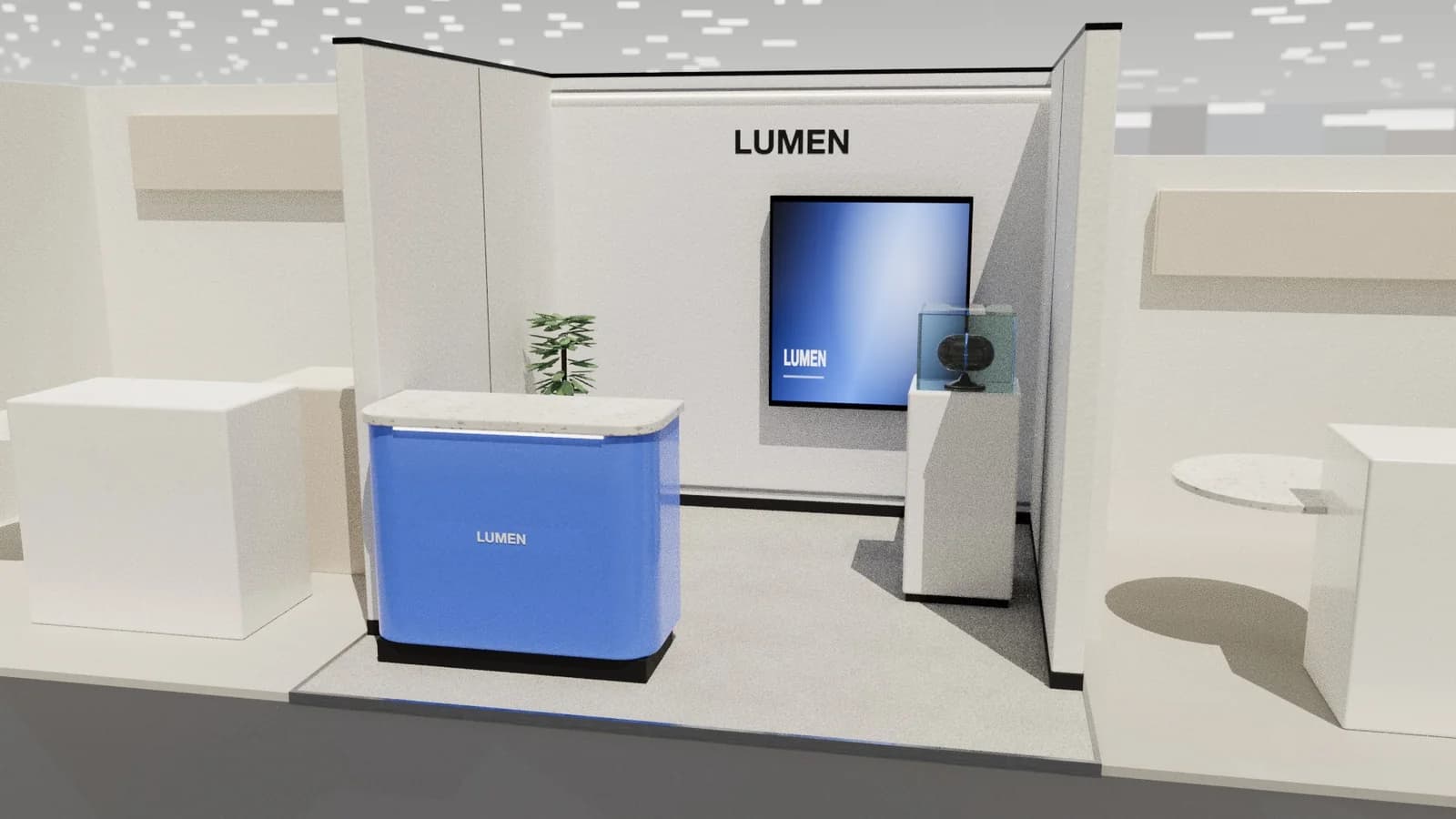
From a client brief to a 3D stand concept in minutes
An editable 3D exhibition stand concept from a written brief and the brand's website, at your exact size.
Guidance here reflects common practice. Venues, organisers and countries set their own rules: always check the exhibitor manual and work with a qualified stand builder and engineer for structures.