In short
Oil and gas stands host senior, scheduled meetings and explain complex technology, so they combine polished meeting rooms and hospitality with scale models, cutaways and digital twins, plus clear energy-transition and safety messages for a wide audience.
Key points
- Reception, Technology display, Meeting rooms, VIP lounge are the core zones.
- Avoid: too little meeting space for executive schedules.
- Avoid: technical displays without explanation for non-engineers.
- Avoid: ignoring the energy-transition questions visitors now ask.
- See the template and trade show guides linked below for energy and oilfield service companies.
Who visits and what they want
National and international oil company executives, engineers, procurement, contractors and government officials.
What to show
Scale models of rigs, plants and vessels; cutaway tools; digital twins and reservoir visualisations on large screens; safety and emissions data.
Zones for a oil and gas stand
| Zone | Purpose | Where it goes |
|---|---|---|
| Reception | Manage scheduled guests | Main aisle |
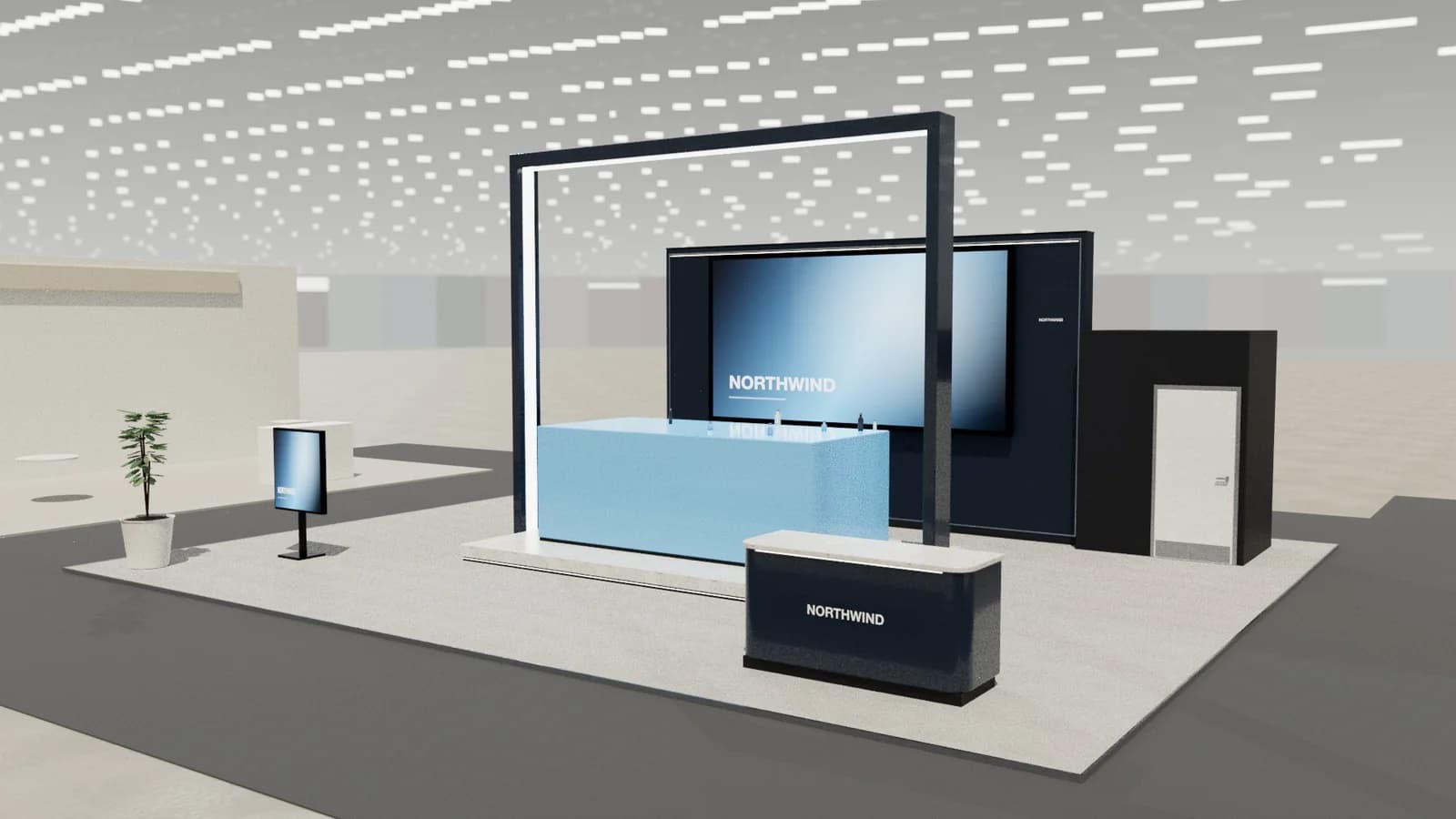
| Technology display | Models, cutaways, screens | Front and centre |
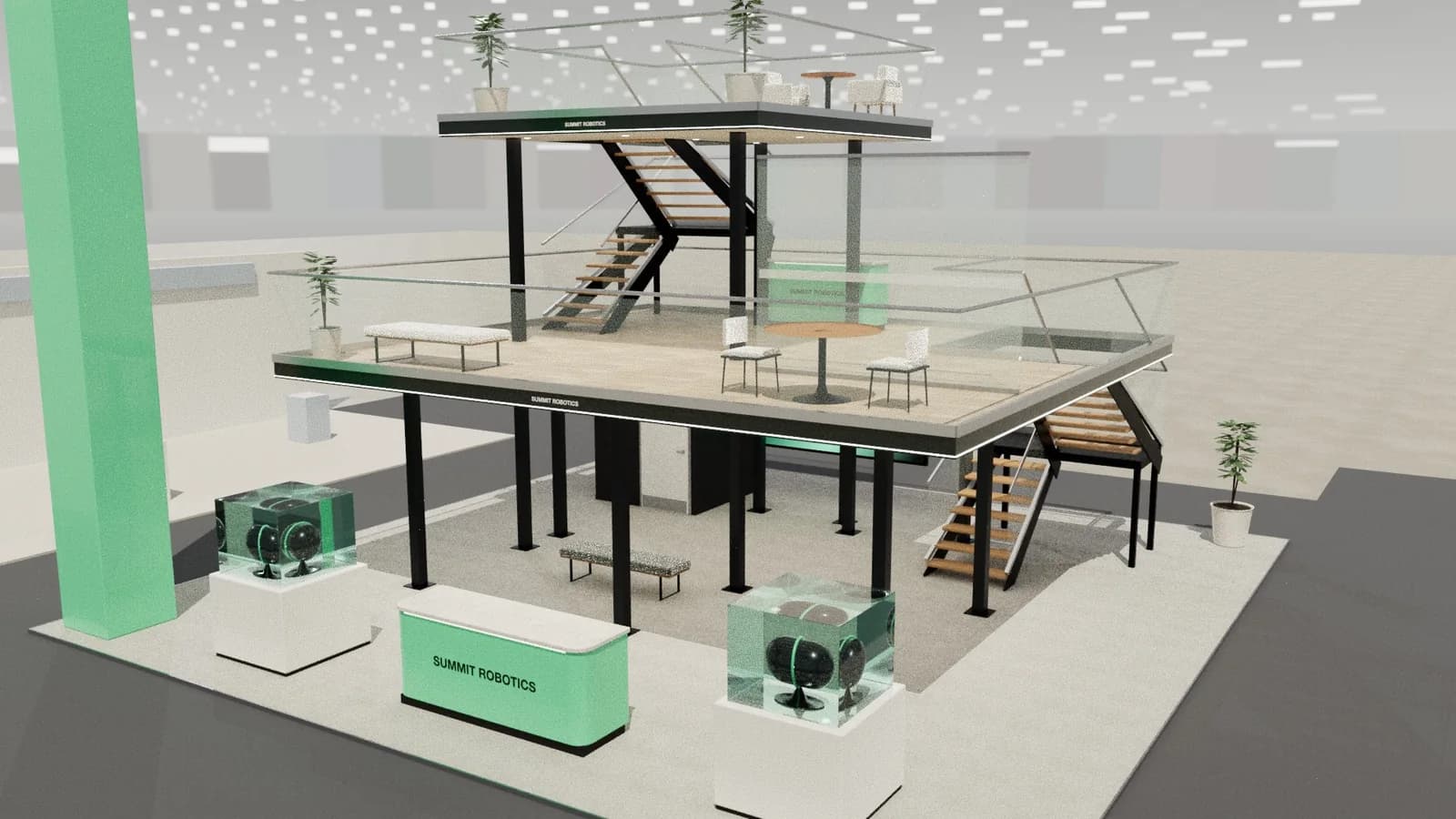
| Meeting rooms | Executive and technical meetings | Rear core or upper deck |
| VIP lounge | Senior guests and delegations | Private, high-quality finish |
On a 3 × 3 m stand, keep the first two zones and book meetings elsewhere. From about 36 m² every zone fits; see stand sizes for what fits at each size.
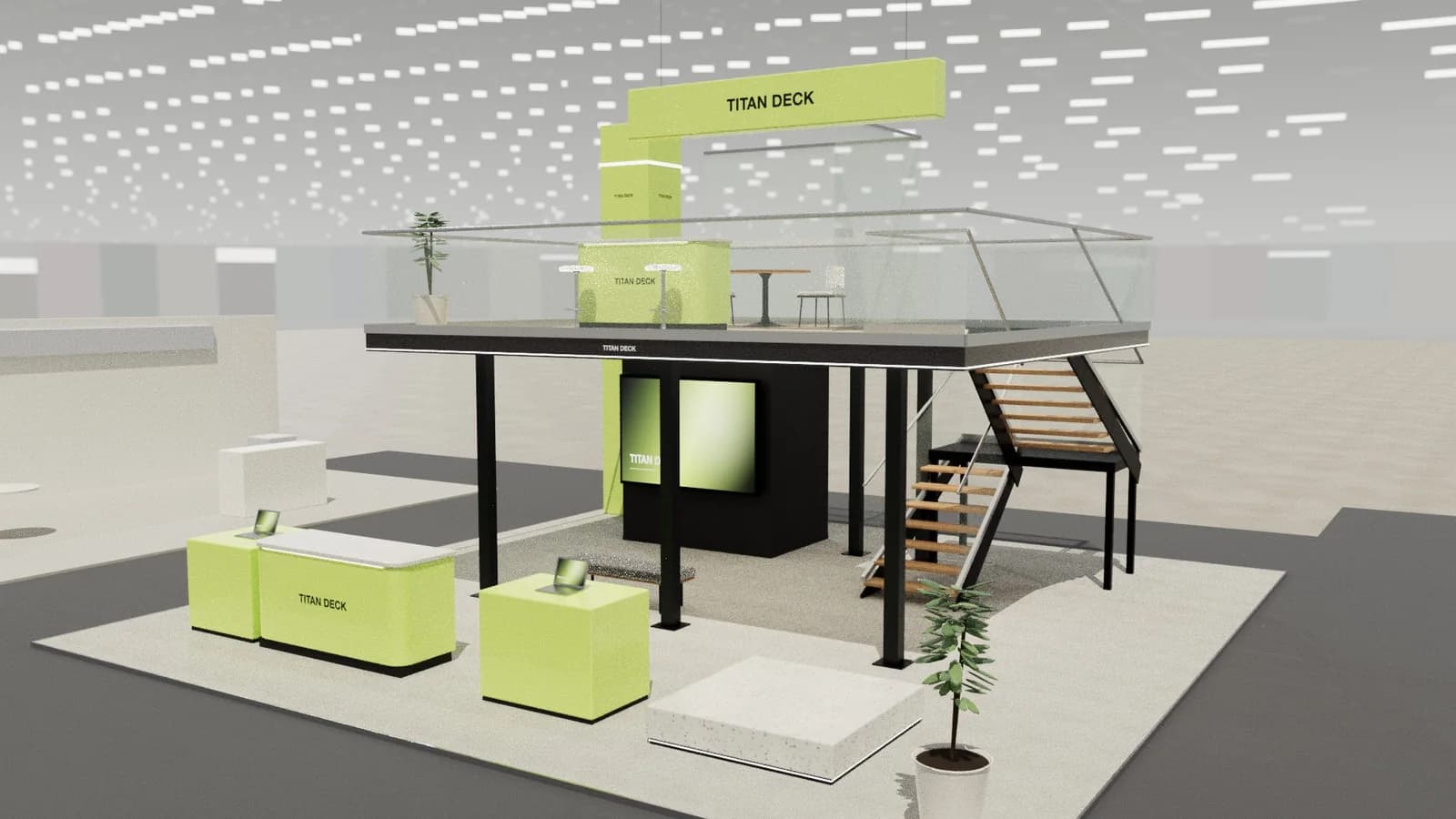
Materials, lighting and graphics
High-quality finishes, confident scale and branding visible across large halls. Models need dedicated lighting and protective covers.
For detail on light levels and colour rendering, see stand lighting; for wall graphics, see graphics and branding.
Starting conversations and capturing leads
Most important visits are scheduled, so the reception's job is to greet guests by name and get them to the right room on time. For walk-ups, a technology model with an engineer beside it is the best opener.
Rules and practicalities
Large and double-deck stands need structural approval. Some equipment and data may be subject to export controls.
Venue rules on height, open sides, fire safety and services still apply; see venue approval.
Common mistakes
- Too little meeting space for executive schedules.
- Technical displays without explanation for non-engineers.
- Ignoring the energy-transition questions visitors now ask.
Trade shows for energy and oilfield service companies
Show-specific guides: ADIPEC, Hannover Messe. For more, see stand design by trade show.
Frequently asked questions
01How do I show large equipment on a stand?
Scale models, cutaways of key components and digital twins on large screens communicate more than photographs.
02Are double-deck stands common in energy?
At large regional shows, yes, for meeting capacity. See [double-deck stands](/guides/double-deck-exhibition-stands).
03What size stand does a oil and gas exhibitor need?
Size to the activities: about 9 m² for one conversation point, 18–36 m² to add demos and a meeting table, and 50 m² or more for meeting rooms and hospitality. See [stand sizes](/guides/topics/exhibition-stand-sizes).
04Can AI design a oil and gas booth?
AI can produce a complete concept quickly: [Studio](/ai-booth-designer) lays out the zones above at real scale and renders the result. A stand builder still checks structure, services and compliance before building.
Put it into practice
Generate a 3D exhibition stand you can edit
Generate an editable 3D exhibition stand from your brief, refine the layout and export renders, CAD drawings and the model.
Guidance here reflects common practice. Venues, organisers and countries set their own rules: always check the exhibitor manual and work with a qualified stand builder and engineer for structures.