In short
Fashion booths are showrooms: a curated edit of the collection on rails and mannequins with room to touch fabric, lighting that shows true colour, mirrors, a brand mood created with materials and props, and a table where buyers sit to write orders.
Key points
- Hero looks, Collection rails, Fitting / mirror, Order table are the core zones.
- Avoid: overloaded rails hiding hero pieces.
- Avoid: lighting that distorts colour.
- Avoid: no space for buyers to sit.
- See the template and trade show guides linked below for fashion and apparel brands.
Who visits and what they want
Retail and department store buyers, agents, distributors, stylists and fashion press.
What to show
Key looks on mannequins, the line on rails, fabric swatches, lookbooks and order systems on tablets.
Zones for a fashion and apparel stand
| Zone | Purpose | Where it goes |
|---|---|---|
| Hero looks | Mannequins at the entrance | Front |
| Collection rails | The line, grouped by story | Side walls |
| Fitting / mirror | Try-on or styling | Corner |
| Order table | Buyers writing orders | Rear |
On a 3 × 3 m stand, keep the first two zones and book meetings elsewhere. From about 36 m² every zone fits; see stand sizes for what fits at each size.
Materials, lighting and graphics
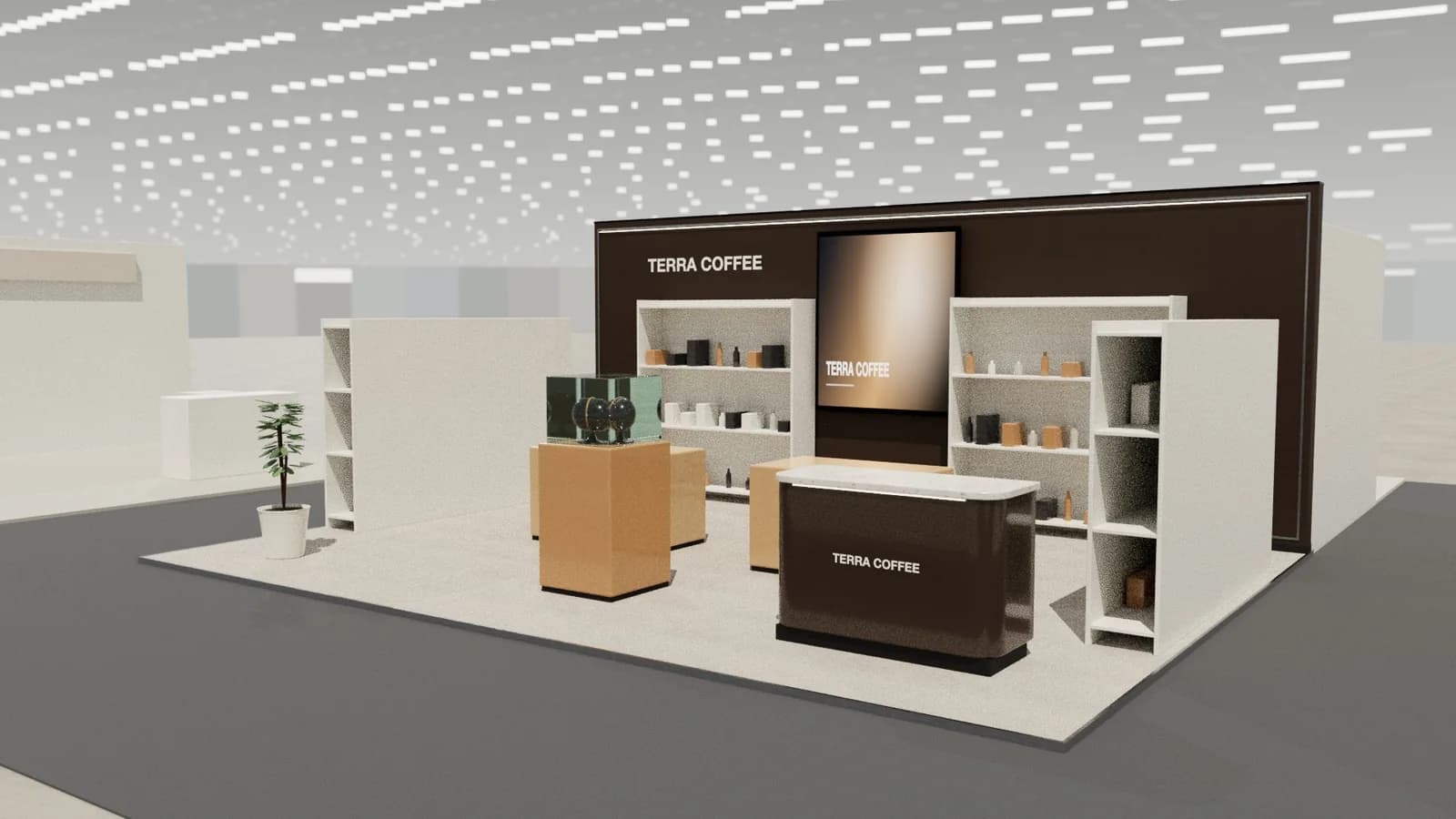
High-CRI lighting, natural materials or a strong set design that expresses the brand; restraint beats clutter.
For detail on light levels and colour rendering, see stand lighting; for wall graphics, see graphics and branding.
Starting conversations and capturing leads
Buyers browse first and talk second. Let them handle the collection, then approach with the story behind a hero piece and offer a seat at the order table.
Rules and practicalities
Historic venues and fashion fairs may have strict rules on structures and fixings; check the organiser's guidelines.
Venue rules on height, open sides, fire safety and services still apply; see venue approval.
Common mistakes
- Overloaded rails hiding hero pieces.
- Lighting that distorts colour.
- No space for buyers to sit.
Trade shows for fashion and apparel brands
Show-specific guides: Pitti Uomo. For more, see stand design by trade show.
Frequently asked questions
01How many pieces should a fashion booth show?
Fewer than you think: a curated edit with space between pieces reads better than full rails.
02What lighting suits fashion?
CRI 90+ with soft, directional light to show texture, avoiding hard shadows.
03What size stand does a fashion and apparel exhibitor need?
Size to the activities: about 9 m² for one conversation point, 18–36 m² to add demos and a meeting table, and 50 m² or more for meeting rooms and hospitality. See [stand sizes](/guides/topics/exhibition-stand-sizes).
04Can AI design a fashion and apparel booth?
AI can produce a complete concept quickly: [Studio](/ai-booth-designer) lays out the zones above at real scale and renders the result. A stand builder still checks structure, services and compliance before building.
Put it into practice
Booth renders that start from the brief, not a blank prompt
Photoreal exhibition booth renders made from a dimension-controlled 3D model, with the brand's colours and logo.
Guidance here reflects common practice. Venues, organisers and countries set their own rules: always check the exhibitor manual and work with a qualified stand builder and engineer for structures.