In short
SIAL Paris visitors are retail and food service buyers hunting for new products, so stands that do well make innovation obvious: a featured new product at the aisle, tasting with proper prep space, and tables for buyers to talk listings and prices. Start a custom stand about 6–9 months ahead and confirm dates, height limits and rules in the exhibitor manual.
Key points
- Where and when: Paris, every two years, in October (even years).
- The audience is mostly supermarket and food service buyers.
- A clear new-product feature at the front, with packaging lit to read.
- Tasting with hand washing, waste and refrigeration behind the counter.
- Plan a custom stand about 6–9 months before the show.
SIAL Paris for exhibitors
SIAL Paris is a large international food fair organised by sector halls, with country pavilions and an innovation programme. Buyers come to source new lines; producers come to find importers and retailers in new markets.
| SIAL Paris | |
|---|---|
| City | Paris |
| Venue | Paris Nord Villepinte |
| Sector | Food innovation and retail |
| Cycle | Every two years, in October (even years) |
| Main stand activity | Tasting and sampling |
| Custom stand lead time | 6–9 months |
Who you are designing for
Supermarket and food service buyers, importers, distributors and press from many countries.
What matters most on a SIAL Paris stand:
- A clear new-product feature at the front, with packaging lit to read.
- Tasting with hand washing, waste and refrigeration behind the counter.
- Buyer tables with catalogues and price lists.
- Language support for the markets you are targeting.
Layouts for tasting and sampling, by stand type
Most SIAL Paris exhibitors build around tasting and sampling. How that works depends on how many sides of your plot are open. If you are unsure which type you have, see exhibition stand types.
| Stand type | Open sides | What works |
|---|---|---|
| Row (inline) | 1 | A sampling counter on the aisle edge with prep space and bins behind it, and stock in a small store. |
| Corner | 2 | A tasting bar along one aisle and display shelving along the other, store in the closed corner. |
| Peninsula | 3 | A bar on the front edge, seated buyer tables inside and a kitchen or store against the back wall. |
| Island | 4 | A central bar or kitchen island, buyer seating on the quieter sides and an enclosed prep room with water. |
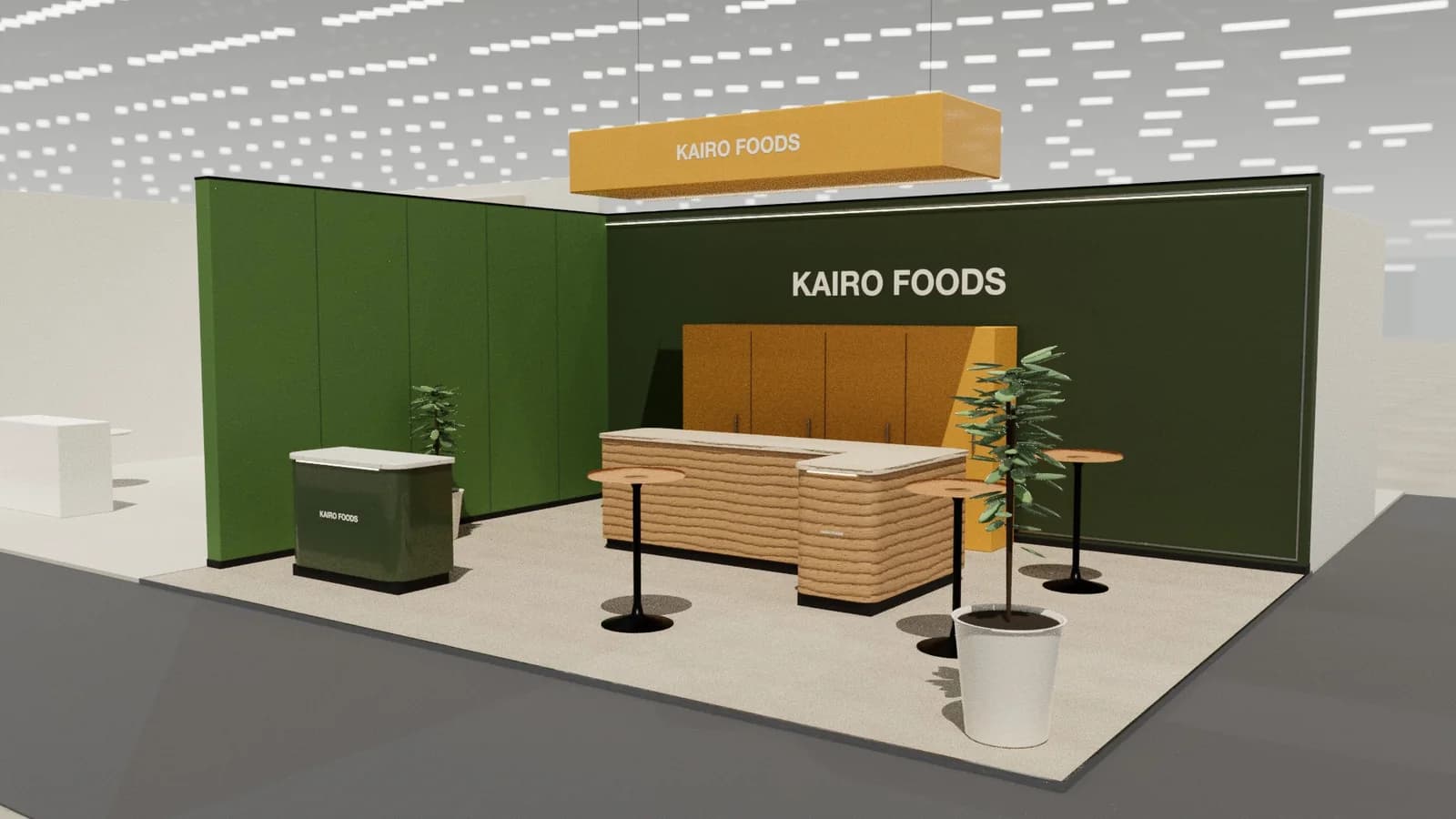
Stand ideas for SIAL Paris
- A spotlit innovation shelf for products launched this year.
- A tasting counter facing the aisle with chilled storage behind it.
- A buyer corner with catalogues in the languages of your target markets.
Planning, approvals and logistics
Paris Nord Villepinte is outside central Paris; plan staff travel and deliveries accordingly. Food handling and cooking rules apply; order water and electrics early.
Allow about 6–9 months for a custom stand. The exhibitor manual sets height limits, open-side rules and service deadlines; see venue approval and technical drawings.
Mistakes we see at SIAL Paris
- Showing the whole range at the same weight so nothing looks new.
- Forgetting storage for stock and samples, so the stand fills with boxes.
Try your SIAL Paris layout in 3D
ExhibitionBase Studio turns your plot size, open sides and a brief about tasting and sampling into an editable 3D stand for 5 credits, renders it and exports a plan for your builder. New workspaces get 5 free credits.
Frequently asked questions
01How often is SIAL Paris held?
Every two years, in October of even-numbered years. Check the official site for the exact dates.
02Is a national pavilion better than my own stand?
Pavilions are cheaper and come with a ready-made stand, but you share visibility. Your own stand gives control of branding, sampling and meeting space.
03How early should I start designing a SIAL Paris stand?
For a custom stand, about 6–9 months ahead: long enough for design, organiser approval, production and shipping. Shell scheme stands can be planned in weeks.
04Can I reuse my SIAL Paris stand at other shows?
Often, if it is modular. Design the core (walls, counters, tasting and sampling area) to work on several plot sizes, and swap graphics per show. See [modular vs custom stands](/guides/modular-vs-custom-exhibition-stands).
Put it into practice
From a client brief to a 3D stand concept in minutes
An editable 3D exhibition stand concept from a written brief and the brand's website, at your exact size.
Guidance here reflects common practice. Venues, organisers and countries set their own rules: always check the exhibitor manual and work with a qualified stand builder and engineer for structures.