In short
gamescom stands are built for queues and play: rows of play stations, a managed queue inside the footprint, a stage or big screen for content and creators, and a separate business area for publishers and partners. Start a custom stand about 6–9 months ahead and confirm dates, height limits and rules in the exhibitor manual.
Key points
- Where and when: Cologne, annual, in August.
- The audience is mostly players and fans on public days.
- Play stations with comfortable seating and headphones.
- Queue management inside the stand, with content to watch while waiting.
- Plan a custom stand about 6–9 months before the show.
gamescom for exhibitors
gamescom has a public entertainment area with huge crowds and a business area for B2B meetings. Large publishers build arenas; indie areas host smaller stands.
| gamescom | |
|---|---|
| City | Cologne |
| Venue | Koelnmesse |
| Sector | Video games |
| Cycle | Annual, in August |
| Main stand activity | Hands-on experiences |
| Custom stand lead time | 6–9 months |
Who you are designing for
Players and fans on public days, creators and press, and publishers, platforms and investors in the business area.
What matters most on a gamescom stand:
- Play stations with comfortable seating and headphones.
- Queue management inside the stand, with content to watch while waiting.
- A stage or large screen for streams and creators.
- A separate business lounge.
Layouts for hands-on experiences, by stand type
Most gamescom exhibitors build around hands-on experiences. How that works depends on how many sides of your plot are open. If you are unsure which type you have, see exhibition stand types.
| Stand type | Open sides | What works |
|---|---|---|
| Row (inline) | 1 | One try-it station at the front with the queue held inside the stand, not in the aisle. |
| Corner | 2 | An experience station facing each aisle and a content screen high on the corner. |
| Peninsula | 3 | A stage or play area at the front, the queue along one side and a quiet back area for press and partners. |
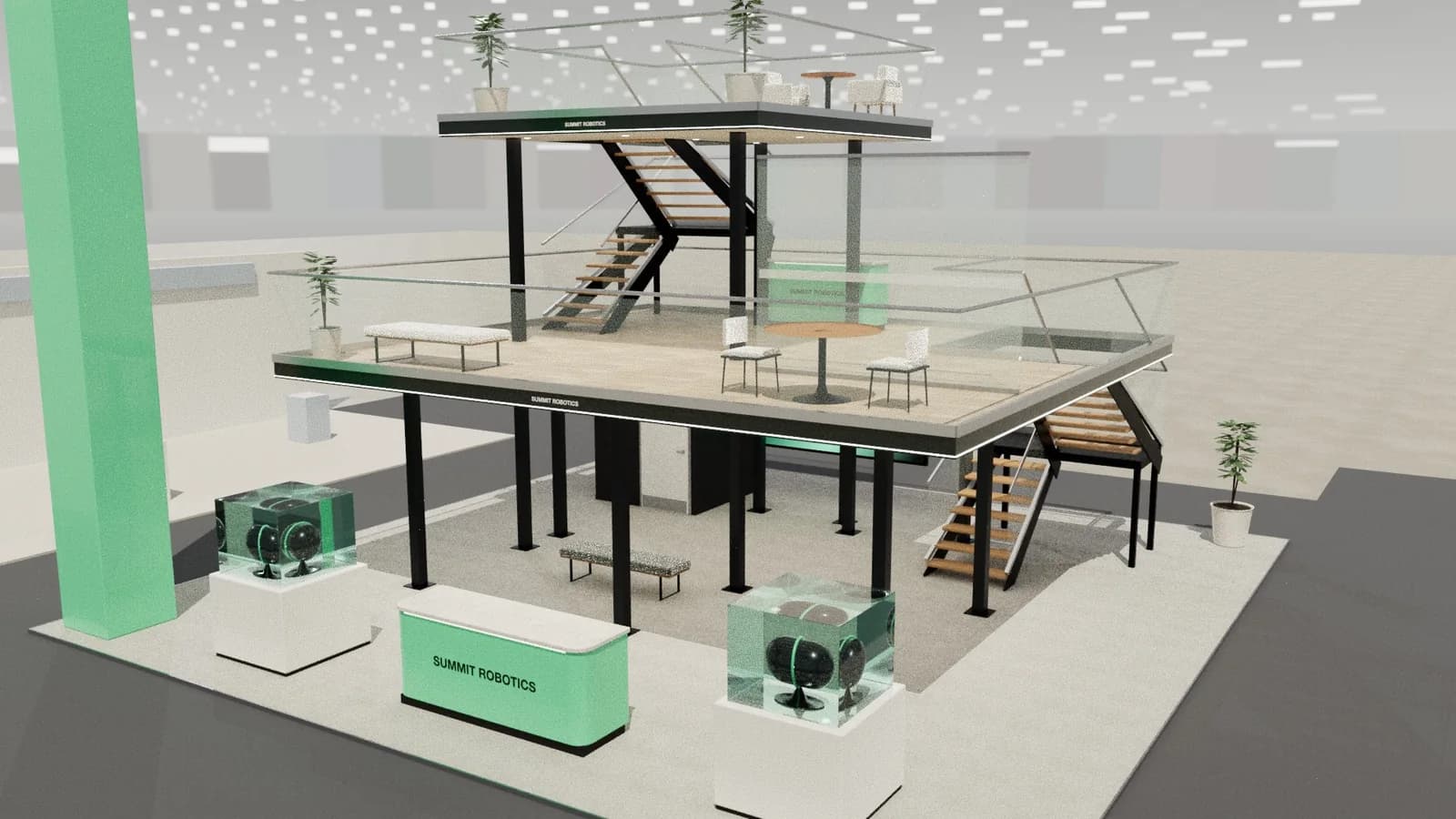
| Island | 4 | A central stage or arena, stations around the perimeter, queues inside the footprint and meeting space on a deck. |
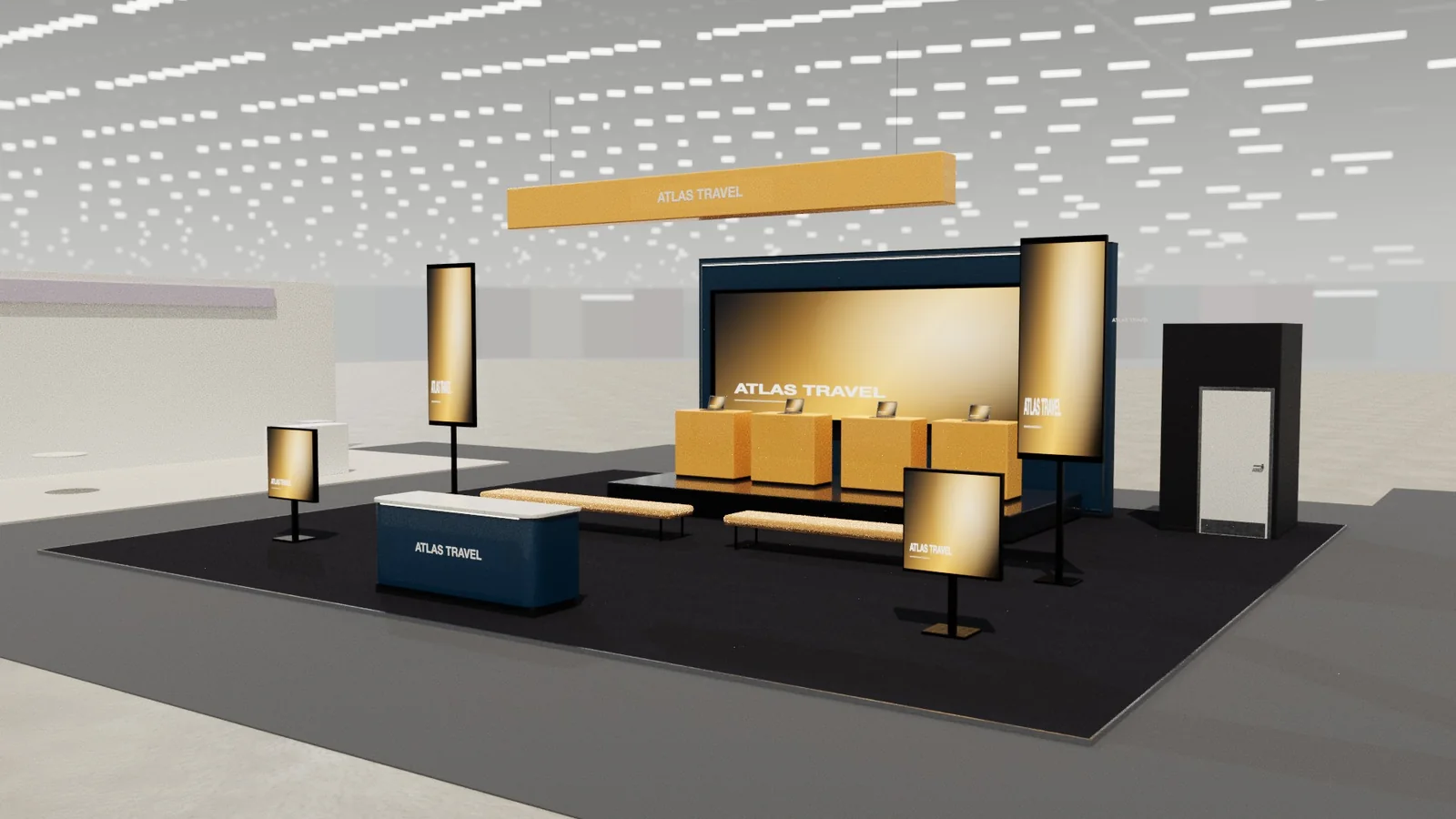
Stand ideas for gamescom
- Rows of play stations with headphones and comfortable seats.
- A queue lane inside the stand with trailers on screens.
- A stage for creators and live streams.
Planning, approvals and logistics
Crowd safety rules and capacity limits apply; organisers may require queue plans. Sound levels are often regulated.
Allow about 6–9 months for a custom stand. The exhibitor manual sets height limits, open-side rules and service deadlines; see venue approval and technical drawings.
Mistakes we see at gamescom
- Queues spilling into the aisle and being closed by the organiser.
- Demo stations without headphones in a loud hall.
Try your gamescom layout in 3D
ExhibitionBase Studio turns your plot size, open sides and a brief about hands-on experiences into an editable 3D stand for 5 credits, renders it and exports a plan for your builder. New workspaces get 5 free credits.
Frequently asked questions
01How do I manage queues at gamescom?
Hold the queue inside your footprint with barriers, show estimated waiting times and give people content to watch.
02Do I need a business area?
If you meet partners, yes. The business area is calmer and better suited to meetings than the entertainment halls.
03How early should I start designing a gamescom stand?
For a custom stand, about 6–9 months ahead: long enough for design, organiser approval, production and shipping. Shell scheme stands can be planned in weeks.
04Can I reuse my gamescom stand at other shows?
Often, if it is modular. Design the core (walls, counters, hands-on experiences area) to work on several plot sizes, and swap graphics per show. See [modular vs custom stands](/guides/modular-vs-custom-exhibition-stands).
Put it into practice
From a client brief to a 3D stand concept in minutes
An editable 3D exhibition stand concept from a written brief and the brand's website, at your exact size.
Guidance here reflects common practice. Venues, organisers and countries set their own rules: always check the exhibitor manual and work with a qualified stand builder and engineer for structures.